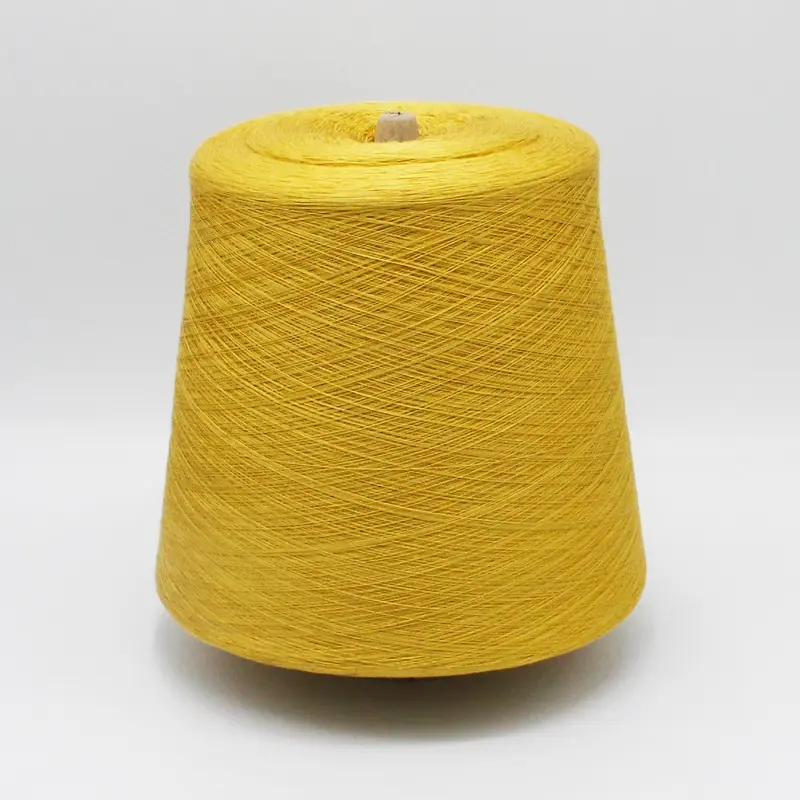
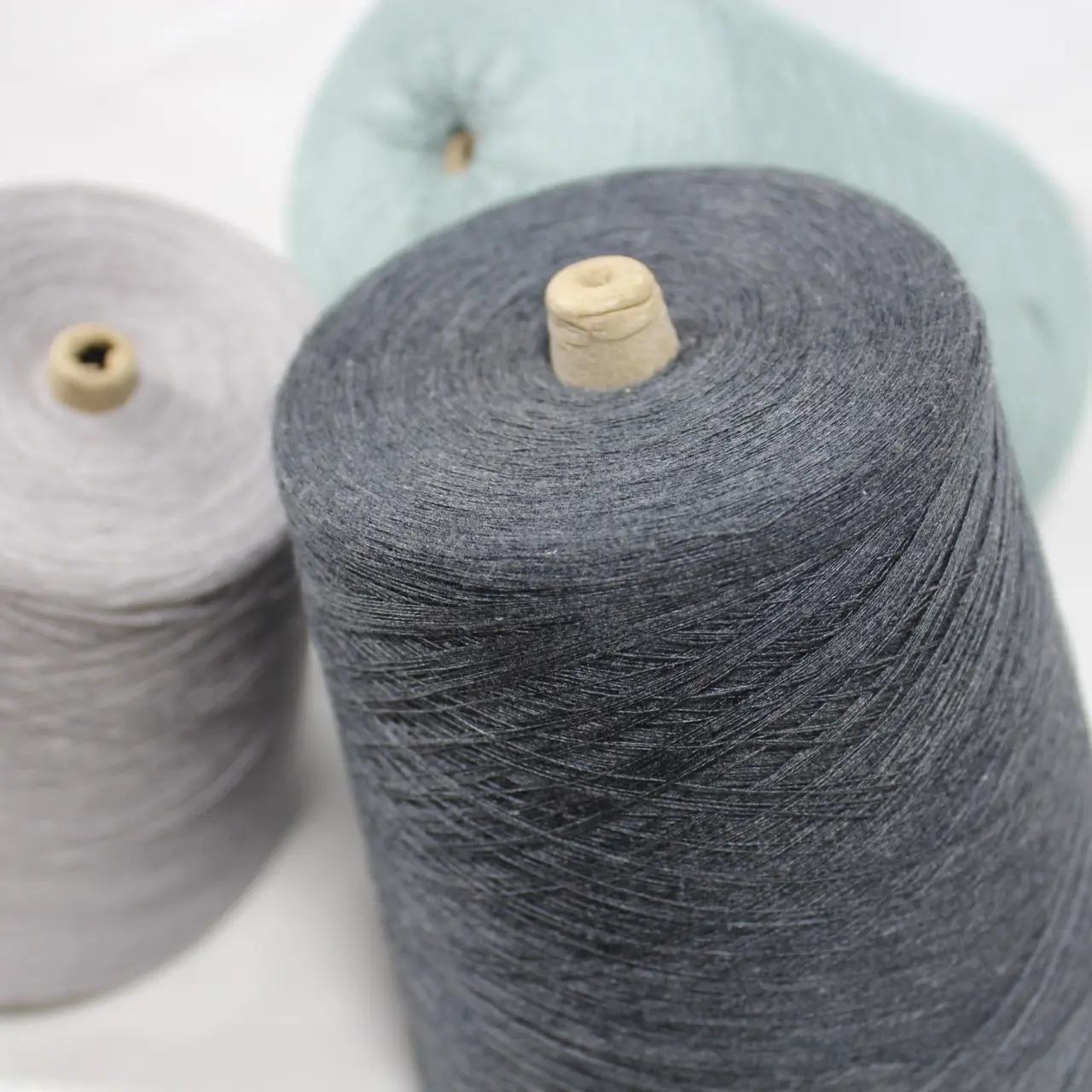
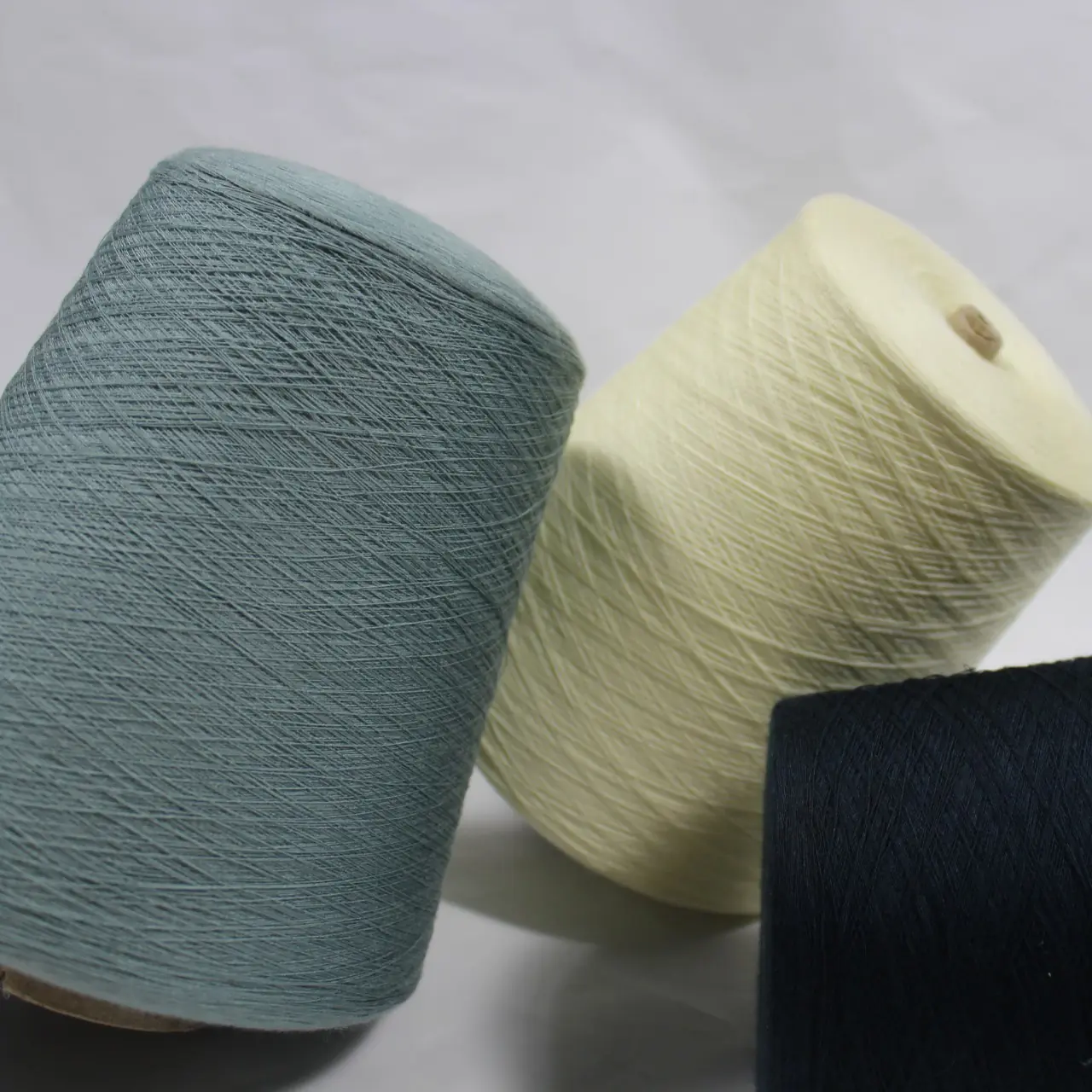
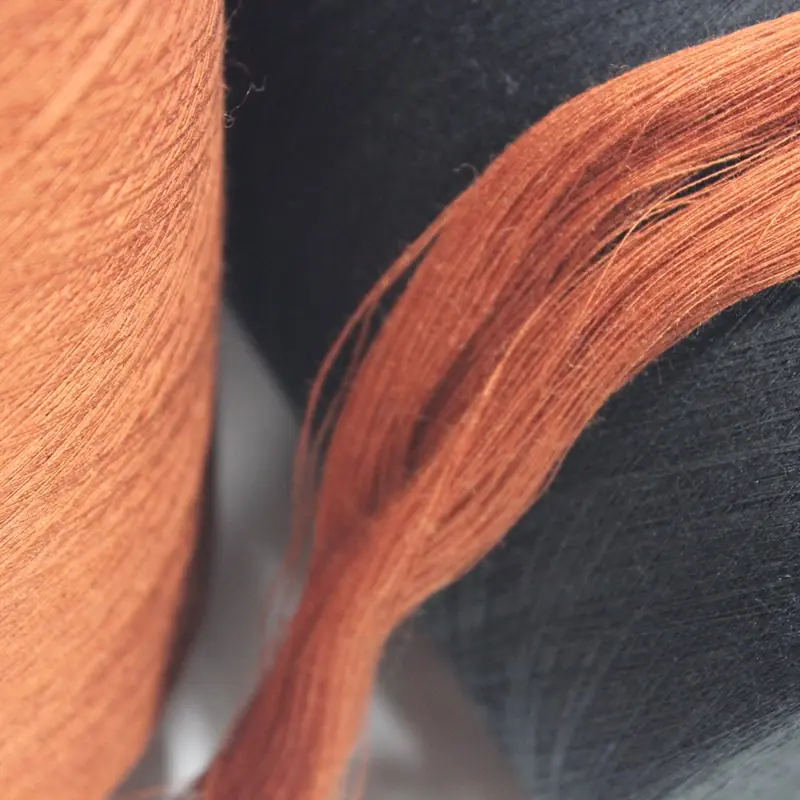
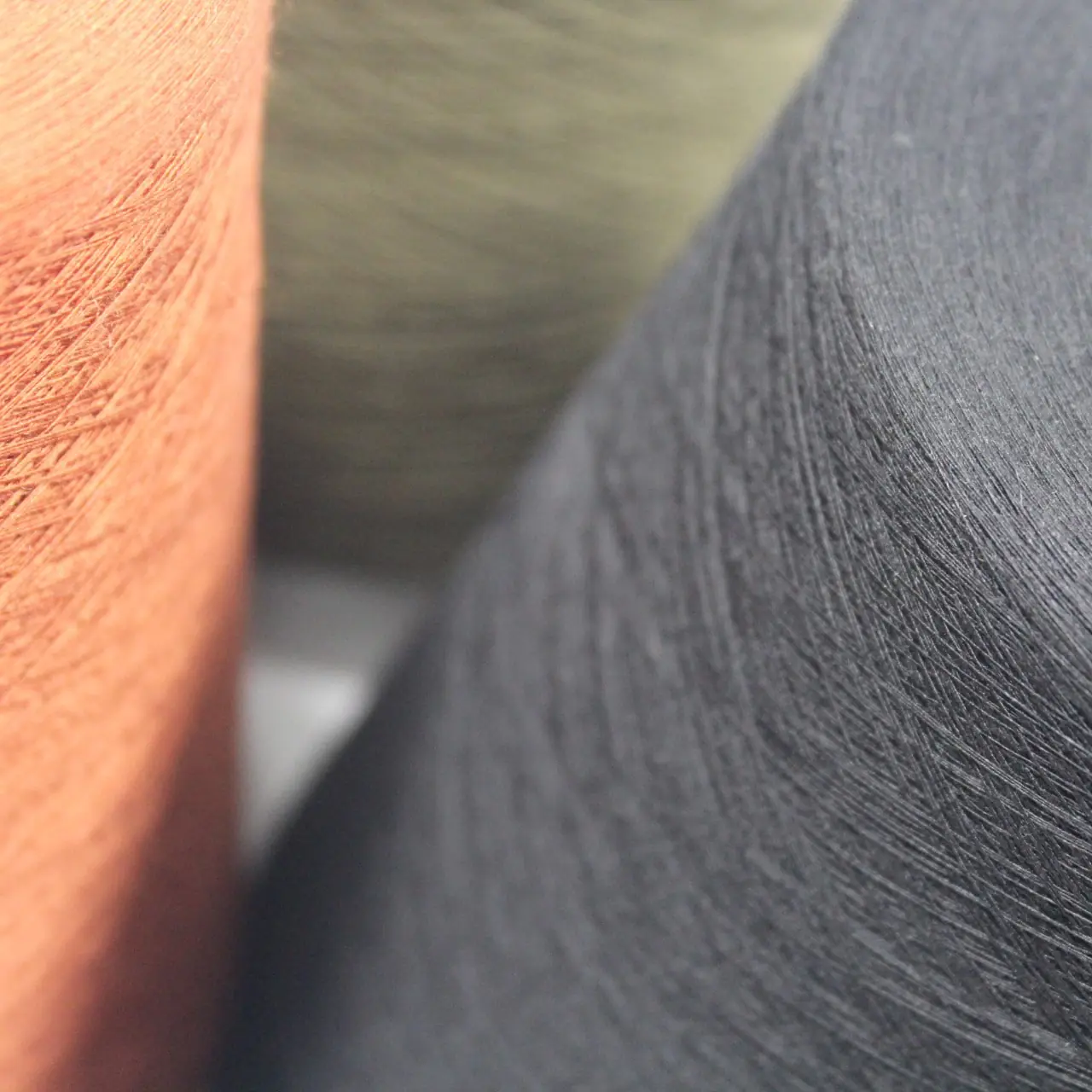
WARMPLUS-A is a heat-generating thermal yarn for fall-winter sweaters, base layers and thermal socks. The rayon and wool in the blend release heat as they absorb moisture from the skin, while the acrylic keeps the hand soft and the cost below wool-rich yarns.
WARMPLUS-A is a heat-generating thermal yarn spun from 10% wool, 30% viscose rayon and 60% acrylic. It is worsted-spun at 1/52 Nm and goes into fall-winter knits such as sweaters, base layers and thermal socks. Because its rayon and wool absorb moisture, the yarn warms up next to the skin rather than relying on bulk alone.
How WARMPLUS-A Heat-Generating Thermal Yarn Works
Skin gives off water vapor all day, even when you are not sweating. When the rayon in WARMPLUS-A takes up that vapor, the hydroxyl groups in its cellulose release heat of hydration. The wearer feels this as gentle warmth next to the skin.
Wool adds to the effect. In fact, wool has one of the highest moisture regains of any common fiber, at about 15%. So it also absorbs vapor and gives off heat. It also brings a warmer, woolly hand. Acrylic, on the other hand, absorbs very little moisture. Instead, it gives the yarn bulk and softness, and it keeps the cost well below a wool-rich blend.
The effect is strongest while the fibers are still taking up moisture. When they reach saturation, the heating stops. After that, warmth depends on how well the knitted fabric traps air. For more on why moisture warms one fabric but cools another, see our guide on why some fabrics cool while others generate heat.
Heat-Generating Thermal Yarn vs Acrylic, Wool and Far-Infrared Yarns
Not every thermal yarn warms the wearer the same way, so it is worth comparing how each one works. Below, WARMPLUS-A sits next to three options that buyers often weigh for winter knits.
Feature
WARMPLUS-A
Standard Acrylic Thermal Yarn
High-Wool Blend Yarn
Far-Infrared (Ceramic) Yarn
How it warms
Rayon and wool release heat as they absorb moisture, while acrylic adds bulk
Mainly through bulk and trapped air
Wool absorbs moisture and releases heat, and it also insulates well
Ceramic particles absorb body heat and re-emit it as far-infrared
Comfort when moisture builds
Less clammy, because two of its three fibers take up vapor
Acrylic absorbs little, so active wear can feel clammy
Good, since wool buffers moisture well
Depends on the base fibers and yarn structure
Handfeel
Soft and wool-like, with a smooth rayon touch
Often drier and more synthetic
Warm and full, but it can feel heavier or itchy
Varies with the base fibers and spinning route
Best fit
Sweaters, base layers and thermal socks
Basic warm fabrics
Premium wool-rich ranges
Programs that need an additive-based warmth claim
As a heat-generating thermal yarn, WARMPLUS-A sits between plain acrylic and a wool-rich blend. Unlike plain acrylic, it adds a moisture-driven warming effect, because two of its three fibers absorb vapor. At the same time, it costs less than a high-wool yarn, since wool makes up only 10% of the blend. If your program calls for a far-infrared claim instead, our HEATSOFT far-infrared thermal yarn uses ceramic particles rather than moisture uptake.
WARMPLUS-A or WARMPLUS-R?
Both yarns carry the WARMPLUS name, and they sit at a similar fineness. In fact, 1/52 Nm works out to about Ne 30.7, close to the 32/1 Ne of WARMPLUS-R moisture-absorbing yarn. The difference is in the fiber mix and the spinning route.
WARMPLUS-R is 60% viscose and 40% acrylic, compact-spun on the cotton system, with no wool. WARMPLUS-A, by contrast, uses 30% rayon plus 10% wool and comes off the worsted system. Choose WARMPLUS-A when you want wool on the content label and a woolly hand, for example in sweaters. On the other hand, WARMPLUS-R is the simpler choice when a product must be wool-free or needs a higher cellulose share.
WARMPLUS-A Specifications
The table lists the standard specs for WARMPLUS-A heat-generating thermal yarn. We confirm composition, count, color standard, packing and labels with you before production starts.
Product Name
WARMPLUS-A Heat-Generating Thermal Yarn
Composition
10% wool / 30% rayon (viscose) / 60% acrylic
Count
1/52 Nm (single ply, about Ne 30.7); custom counts available
Spinning Process
Worsted-spun
Color
Stock colors, or custom colors matched to your Pantone, swatch or internal code
Lead Time
Stock colors: 1-2 days after confirmation; custom production: 3-15 days after confirmation
Packaging
Carton or plastic bag, 25 kg per package
Main Applications
Fall-winter knitwear, sweaters, base layers and thermal socks
Knitting Trials for Socks, Sweaters and Base Layers
Run a small trial on your bulk machine before you commit to a season. That way, problems show up on one trial lot instead of a full order.
For socks, watch yarn feeding, needle condition and loop length first. Then check stretch, toe-linking, elastic recovery and the handfeel after washing. It also pays to match the yarn count to your machine gauge before you order trial cones.
For sweaters and base layers, the checks shift to gauge, tension and garment weight. In addition, agree on a pilling target, colorfastness and the finishing route early, because each one changes how the final fabric feels.
Test warmth on the finished fabric rather than judging the yarn alone. Fabric weight, structure and finishing all change how warm a garment feels. Before sampling, send us your target fabric weight, machine type, count, color list and packing needs. We will then suggest a sampling plan before you spend time on lab dips or knitting trials.
Ordering, Custom Colors and Packing
Most programs move through three stages. First comes a sample trial, then seasonal development, and finally bulk wholesale orders. Each stage needs different details. For a trial, we confirm count, color, package and your deadline. During seasonal development, the focus moves to SKU plans, color consistency and the reorder schedule. For bulk orders, we also align lot control, delivery terms, destination and carton marks, so repeat shipments match the first one.
Stock colors ship 1-2 days after confirmation. Custom colors take 3-15 days, so tell us your deadline first if sampling is urgent. For color matching, send a Pantone reference, a physical swatch or your internal color code. A physical swatch is the safest choice when color tolerance is tight, because wool, rayon and acrylic each take dye differently. Our guide to lab dips for functional knitted yarn covers what to approve before bulk dyeing.
We pack WARMPLUS-A heat-generating thermal yarn in cartons or plastic bags of 25 kg each. Each package shows color, count and lot information, so your warehouse can sort it quickly. If you need special carton marks or labels, send the format before production starts.
Also, if your market has a fixed winter launch date, start color approval and knitting trials early. Stock colors can leave within days. Custom colors, however, still need time for approval. When you ask for a quote, include the count, colors, quantity per color, packing, destination, delivery terms and target arrival date.
FAQ About WARMPLUS-A Heat-Generating Thermal Yarn
How does WARMPLUS-A produce heat?
The rayon and wool absorb water vapor from the skin. As they bind that moisture, they release heat of hydration, so the fabric feels warmer soon after you put it on. The acrylic does not add to this effect. Instead, it supplies bulk and softness.
Does the warming effect last all day?
No. Heat release slows as the fibers fill with moisture, and it stops at saturation. After that, warmth comes from the insulation of the knit. However, the fibers dry out again between wears, so the effect returns the next time the garment goes on.
Why does the blend use only 10% wool?
Ten percent gives a warmer, wool-like hand, adds moisture uptake and lets you list wool on the content label. At the same time, it keeps the price well below a high-wool yarn. If a product needs more wool, a wool-rich blend is the better fit, although it will cost more.
Why is WARMPLUS-A worsted-spun?
The worsted system handles longer, wool-type staple fibers of about 60-90 mm. Because these fibers lie parallel, the yarn comes out smooth, even and slightly lustrous. As a result, it knits cleanly and gives a neater fabric surface than a fuzzier woollen-spun yarn.
Is 1/52 Nm the same as a 52S yarn?
No. 1/52 Nm is a metric count for a single-ply yarn, and it equals about Ne 30.7. A 52S yarn, by contrast, uses the English cotton count, so it is much finer. Always check the count system before you compare prices or fabric weights.
Will the warming effect wash out?
The warmth comes from the rayon and wool themselves, not from a surface