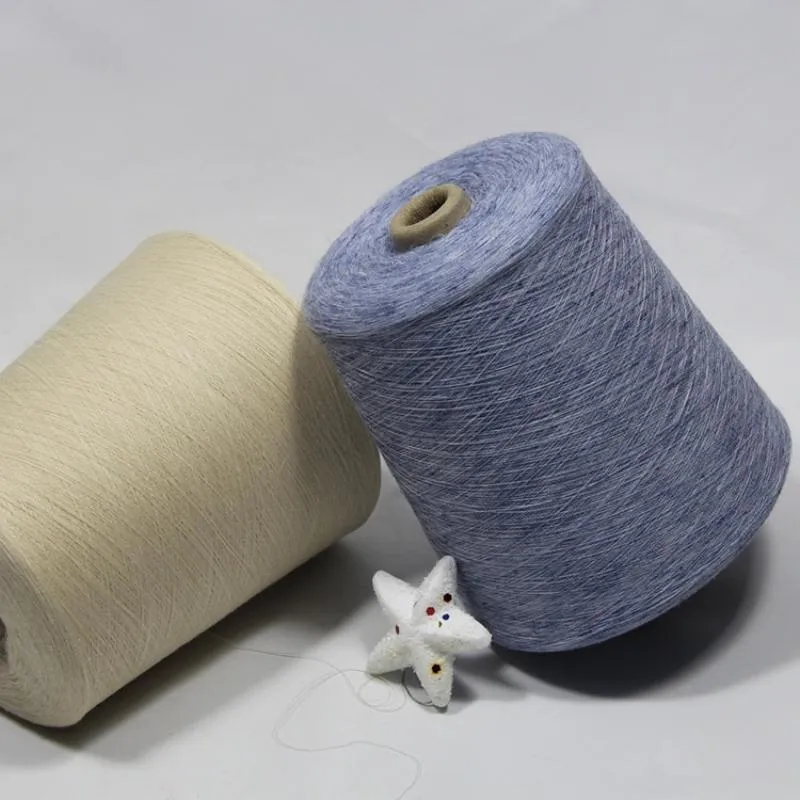
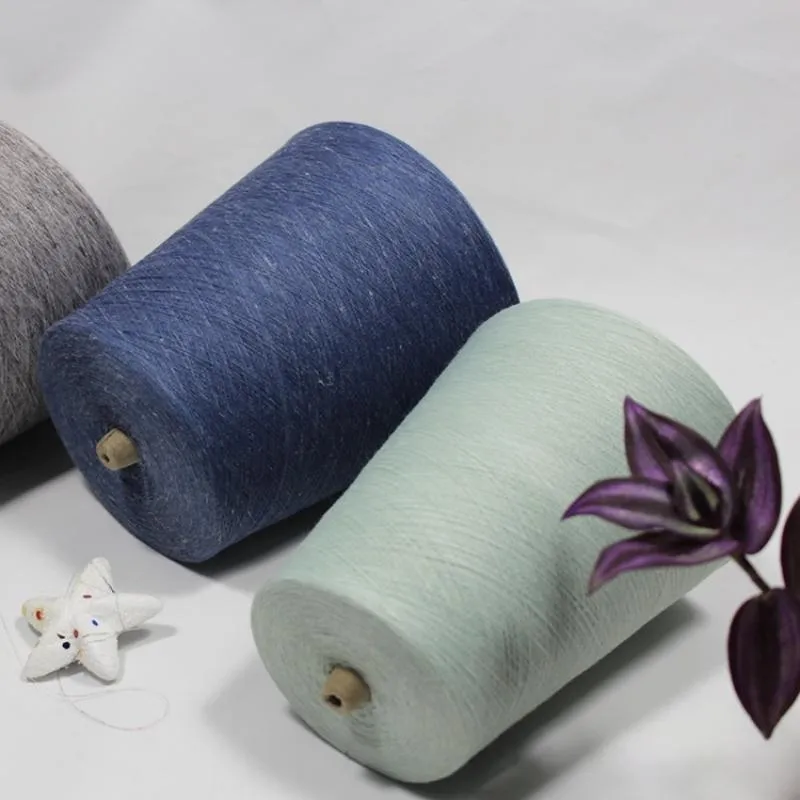
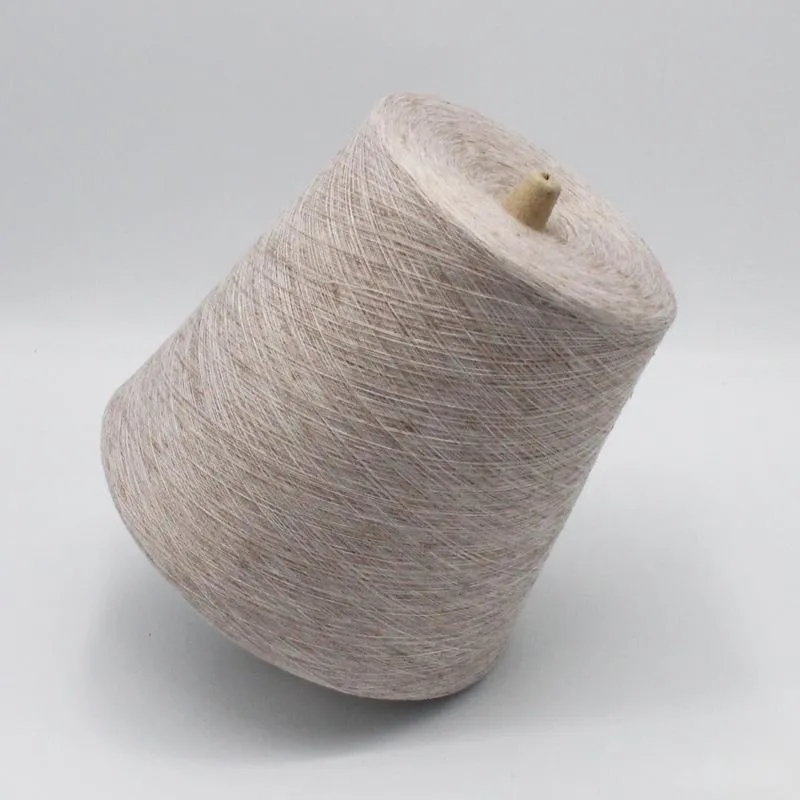
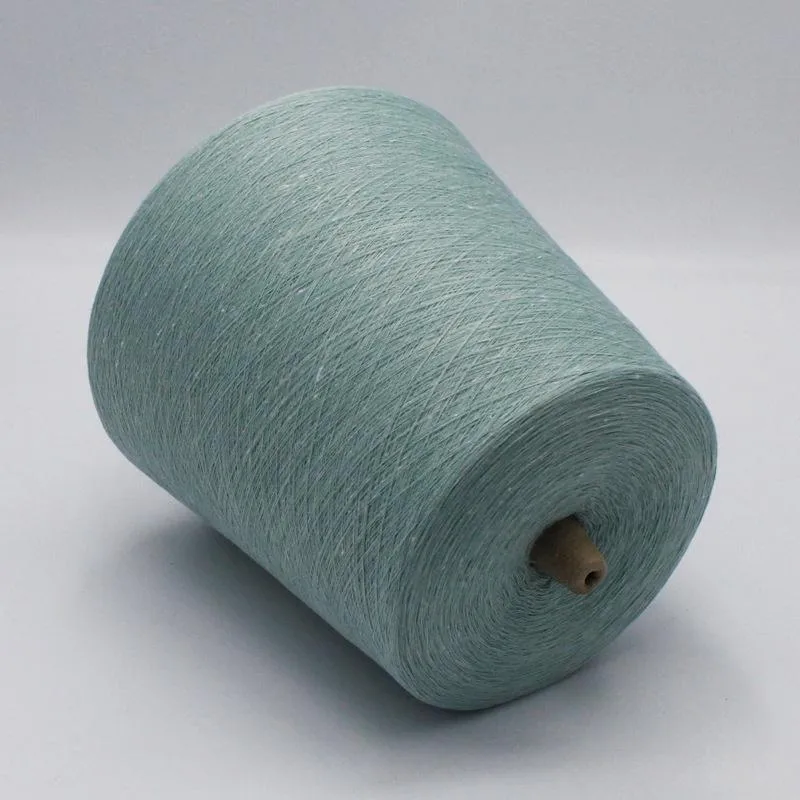
30s linen polyester sock yarn uses an ET85LI15 composition of 85% polyester and 15% linen. Its compact-spun cone format is intended for bulk sock knitting programs that require defined specifications, custom colors, and clear order planning.
VI-TEX offers this 30s linen polyester sock yarn for bulk sock programs that need clear specifications, color control, and a defined dispatch target. ET85LI15 combines 85% polyester with 15% linen in a compact-spun cone format. Therefore, buyers can review the blend, yarn count, twist reference, MOQ, and dispatch target before they schedule production. However, each order still needs a current technical data sheet and a confirmed quotation.
30s Linen Polyester Blended Yarn for Socks: Product Specifications
The following table keeps the original product parameters while adding the points that buyers should verify. In addition, it separates fixed product information from order-specific requirements.
Parameter
Product Data
Buyer Check
Product type
30s linen polyester blended yarn for socks
Confirm sock type and machine setup
Spinning process
Compact spinning
Run a knitting trial
Yarn count
30s/1
Confirm count system and tolerance
Composition
ET85LI15: 85% polyester / 15% linen
Check the blend declaration
Yarn form
Cone yarn
Confirm cone weight and winding
Reference linear density
18 tex
Compare the value with 30s/1 on the data sheet
Reference twist
780
Confirm TPM/TPI, tolerance, and S/Z direction
Reference gauge
18/inch
Test the yarn on the intended machine
Color
Custom requirement
Provide a shade code or color sample
Application
Sock knitting
Check the finished sock sample
MOQ
5,000 kg
Confirm quantity per shade
Bookable volume
Up to 100,000 kg
Confirm the applicable production period
Dispatch target
30 days
Define the countdown starting point
Packaging
Carton packing
Confirm carton and cone details
Trade unit
kg
Use net weight for order planning
These values give buyers a practical starting point. However, the quotation should define the final tolerance, color allocation, packaging, price, and delivery terms. Therefore, buyers should use the same confirmed document for sample approval and repeat orders.
How the Yarn Supports Bulk Sock Production
First, the 85/15 blend gives sourcing teams a clear composition for product planning. Polyester forms the larger part of the blend, while linen adds its characteristic dry and natural touch. As a result, buyers can evaluate the yarn for spring, summer, casual, or other sock programs that need this material profile.
Second, compact spinning helps create a cleaner yarn structure and more controlled cone winding. In addition, the cone format supports continuous feeding during knitting trials. However, machine gauge, tension, needle condition, knitting speed, and fabric structure still affect the final result. Therefore, every buyer should test the yarn on the intended sock machine.
Third, the custom-color program supports buyer-specific shades. Before production, both parties should agree on the shade code, reference sample, color tolerance, quantity per shade, and packaging mark. Consequently, the production team can use one clear standard for the first order and later replenishment.
Sample Approval Checklist
Sample approval should cover more than cone appearance. For example, buyers should check yarn identity, machine behavior, finished-sock appearance, and commercial terms. In addition, the approval record should give the next order a clear reference.
First, check the product identity. Confirm 30s/1, ET85LI15, compact spinning, cone form, 18 tex, and the twist reference.
Next, confirm the missing technical details. Ask for the count system, count tolerance, twist unit, twist tolerance, and S/Z direction.
Then, run a knitting trial. Record machine gauge, tension, speed, end breaks, surface appearance, and handling results.
After that, check the finished sock. Review hand feel, appearance, pilling, dimensional change, colorfastness, and any buyer-specific test.
Finally, approve the commercial terms. Confirm color, quantity, MOQ, shade allocation, packaging, price, dispatch date, and shipping documents.
If the finished product will carry moisture-management or quick-dry wording, the buyer should define a test method and an acceptance value. Otherwise, the composition alone cannot prove a finished-fabric performance claim. Therefore, a finished-sock test gives both parties a stronger basis for product labeling.
Color and Repeat-Order Control
First, the buyer should provide a physical sample, a Pantone reference, or another agreed color standard. Next, the order should record the shade code and approval date. Moreover, the production team should keep the same reference for repeat orders.
However, material lots, dyeing conditions, and finishing routes can influence the final shade. Therefore, buyers should define how they will judge color difference before production starts. For example, the order can name a visual standard, an instrument method, or a buyer-specific tolerance.
Order Point
What to Confirm
Purpose
MOQ
5,000 kg and quantity per shade
Plan the bulk order
Color reference
Shade code, sample, and approval date
Guide first and repeat orders
Quote basis
Specification, volume, colors, packaging, and delivery window
Connect price with actual requirements
Dispatch target
30 days after the agreed starting conditions
Plan production and transport
Packaging and Logistics
VI-TEX uses carton packing for this cone yarn, while buyers place orders in kilograms. Before shipment, the buyer should confirm cone net weight, cones per carton, carton net weight, gross weight, carton dimensions, pallet requirements, lot marks, and outer labels. In addition, the packing list should carry the same product code, shade code, lot number, and quantity basis as the purchase order.
Meanwhile, the procurement team should compare the 30-day dispatch target with the required arrival date. If an order contains several shades, both parties should also confirm the production sequence and partial-shipment rules. Consequently, the shipping plan can reflect the actual color breakdown and destination schedule.
Technical FAQ
Can buyers use this yarn for high-speed sock knitting?
Compact spinning helps create a cleaner and more controlled yarn structure. However, machine gauge, feeding system, tension, needle condition, speed, and fabric construction all influence running performance. Therefore, buyers should run a sample trial and record the results before bulk production.
What does ET85LI15 mean?
ET85LI15 identifies a blend of 85% polyester and 15% linen. Nevertheless, buyers should check the current blend declaration when they need composition labels, compliance documents, or customer approval.
What should buyers confirm about the twist value of 780?
The number needs a unit, tolerance, and direction before it can support technical approval. Therefore, buyers should confirm TPM or TPI, the allowed tolerance, and the S or Z direction on the technical data sheet.
How can buyers control repeat-order color?
First, approve a color sample and record its shade code and approval date. Next, place the same reference on every repeat purchase order. In addition, agree on the color-checking method before the production team starts the next lot.
Can one order include several custom shades?
Buyers can request several shades when the quotation supports the planned color split. However, each shade may affect the minimum quantity, production sequence, packaging marks, and dispatch plan. Therefore, the buyer should list every shade and quantity before order confirmation.
When does the 30-day dispatch period begin?
The quotation should define the starting point. Usually, the countdown begins after both parties confirm the specification, price, shade, quantity allocation, payment terms, packaging, and production slot. Consequently, early technical and color decisions can reduce avoidable scheduling delays.