WhatsApp : (+86) 19058080181 Email : info@vi-tex.com

How Dyeing Holding Time Affects Color Fastness
Dyeing holding time directly affects color fastness in polyester, cotton, and nylon dyeing. In our factory, we do not treat holding time as a small recipe detail. It decides whether dye enters the fiber, stays on the surface, bonds properly, or starts to lose stability after too much heat or chemical exposure.
When color fastness fails, the first question is often simple: did the dye bath hold long enough at the target temperature? If the answer is no, floating color usually remains on the yarn or fabric surface. Washing fastness, rubbing fastness, perspiration fastness, and seawater fastness can all drop.
Longer time does not always solve the problem. Too much holding time can also reduce color fastness. Polyester may release oligomer. Reactive dyes on cotton may lose stability under alkali. Nylon may suffer in a long acidic bath. So the best result usually comes from a controlled holding window, not from rushing or over-extending the process.
We see this often during sample development. In our 28°C sample room, we compare lab dips, small dyeing samples, and knitted fabric from an 18G sock machine before confirming bulk production. A shade may look fine after drying, but the real answer comes after a wash test, wet rubbing test, and shade check under standard light.
Dyeing Holding Time and Color Fastness in Real Production
Holding time means the period when the dye bath stays at the target dyeing or fixation temperature. During this stage, dye molecules keep moving, leveling, diffusing, or reacting with the fiber. If the fabric leaves the dye bath too early, much of the dye remains near the surface. If the fabric stays too long, dye stability and fiber condition may both suffer.
For overseas B2B buyers, this is not only a dye house issue. Poor holding control can create testing failure, rework, delivery delay, rejected fabric, and customer claims. A lower dyeing cost does not help if the final fabric fails washing fastness or wet rubbing fastness.
Why We Check Holding Time First
When a batch has floating color, shade variation, weak wet fastness, or serious staining after washing, our team usually checks holding time early. We also review fiber type, dye class, heating rate, pH, liquor ratio, soaping, reduction clearing, and finishing. Color fastness depends on the full process, but holding time often gives the first useful clue.
When Holding Time Is Too Short, Fastness Usually Drops
Insufficient holding time is the most common reason for poor all-round color fastness. The fabric may look correct after dyeing, but dry rubbing, wet rubbing, washing, and perspiration fastness may drop by 0.5 to 1.5 grades. Dark shades carry more risk because they need deeper dye penetration and stronger removal of unfixed dye.
Polyester: Disperse Dyeing at 125-130°C
Polyester usually needs disperse dyeing at high temperature, often around 125-130°C. At this temperature, disperse dye molecules can move into the polyester fiber. If holding time is too short, the dye only sits on the fabric surface. This creates ring dyeing, heavy floating color, and weak washing or rubbing fastness.
Dye aggregates can also stay on the surface when the high-temperature stage ends too early. These particles come off during soaping or washing. Then the fabric shows shade loss, staining, and poor perspiration fastness.
Leveling also needs time. If disperse dye cannot migrate evenly, the fabric may show color flowers, uneven depth, or side-to-center shade difference. In some cases, light fastness also drops because some areas carry too much surface dye.
Polyester Holding Time Reference
For normal polyester dyeing, pale shades often need about 30 minutes of holding time. Medium shades may need around 40 minutes. Dark shades often need 50-60 minutes. These are practical references, not fixed rules for every dye or machine. Still, less than 20 minutes at the target temperature creates high risk in many polyester shades.
Cotton: Reactive Dye Fixation at 55-65°C
Cotton reactive dyeing depends on fixation. After alkali addition, reactive dye needs enough holding time, often around 55-65°C depending on the dye system. During this stage, the dye reacts with cellulose and forms stable bonds.
If the fixation time is too short, the reaction remains incomplete. A large amount of hydrolyzed dye or unfixed dye stays on the cotton surface. The fabric may continue to bleed during later washing. Washing fastness and perspiration fastness become weak, especially in cotton socks, underwear, bedding, and hygiene textile materials.
Extra soaping can remove part of the floating color, but it cannot replace proper fixation time. When a cotton blend lab dip loses too much shade after the first wash test, we check alkali addition, fixation temperature, holding time, and soaping strength together.
Nylon: Acid and Metal Complex Dyeing at 75-98°C
Nylon often uses acid dyes or metal complex dyes. These dyes need time to diffuse into nylon and interact with amino groups. If holding time is too short, the dye remains near the fiber surface. Wet rubbing fastness, perspiration fastness, and seawater fastness can become weak.
This matters for socks, sportswear, swim-related textiles, medical hosiery, automotive interiors, and industrial textiles. A fixing agent may improve the surface result, but it cannot fully correct poor dye penetration. If the dye did not enter the fiber well during dyeing, later finishing has limited repair value.
When Holding Time Is Too Long, Fastness Can Also Become Worse
Longer holding time does not always improve color fastness. Proper holding improves penetration and fixation. Excessive holding can damage dye stability, increase floating color, change shade, or affect hand feel. This problem appears more often when the process uses high temperature, strong alkali, acidic bath conditions, or heavy chemical treatment.
Polyester: Heat, Oligomer, and Dye Migration
Polyester disperse dyeing should not stay at high temperature longer than necessary. Long heat exposure can make some disperse dyes degrade. The shade may turn dull, dark, or slightly off-tone. Light fastness can also drop when the dye loses stability.
Polyester oligomer creates another real production problem. During long high-temperature dyeing, oligomers may move out of the polyester fiber and attach to the fabric surface. They can appear as white powder, oily spots, or dirty deposits after cooling. Once oligomer contamination stays on the surface, soaping fastness and rubbing fastness may decline.
Some disperse dyes also have migration or sublimation risk. If the fabric stays too long at high temperature, part of the dye may move back toward the surface. Floating color then appears again, even after the dyeing stage looked deep enough.
Cotton: Over-Fixation Under Alkali
Reactive dye needs enough time to bond with cotton, but excessive time in an alkaline bath can create new trouble. Already fixed dye may lose stability after long alkali exposure. The result can include more floating color, weaker wet fastness, and a pale or washed-out shade.
Reactive dyeing recipes need balance. We want enough fixation, but we also need to protect shade depth, fabric surface cleanliness, and hand feel. In bulk dyeing, we compare the approved lab dip with washed bulk samples, not only with dry fabric from the dye house.
Nylon: Acid Bath Stress and Hard Hand Feel
Nylon can suffer during long high-temperature treatment in an acidic bath. Excessive holding may weaken dye-fiber interaction and reduce wet treatment fastness. Sometimes the fabric also feels harder or less elastic.
For nylon-rich socks, compression hosiery, underwear, and close-to-skin knitwear, hand feel matters. A shade can look acceptable, but if wet fastness drops or the fabric feels harsh after dyeing, the process still needs correction.
Proper Holding Time Gives the Best Fastness Result
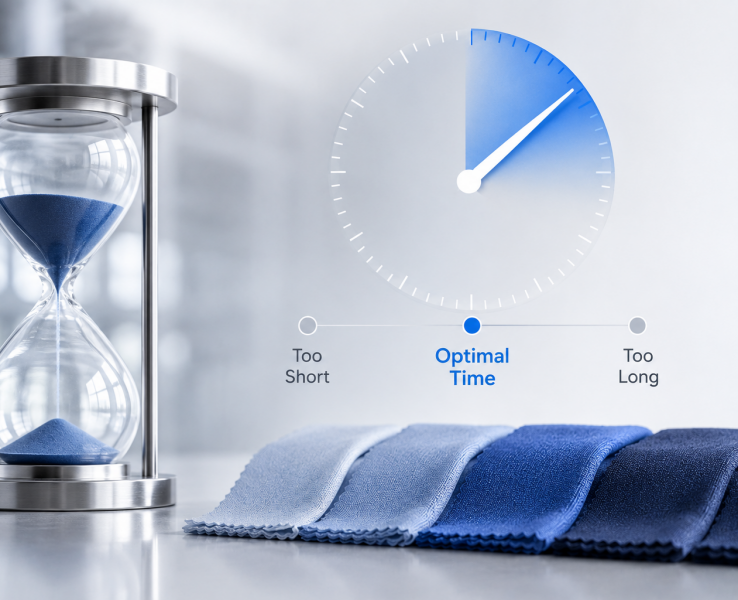
The best dyeing holding time is not the shortest time and not the longest time. It is the controlled time that gives enough dye diffusion, fixation, and leveling without damaging the dye or fiber.
What Proper Holding Does
For polyester, proper holding helps disperse dye enter the fiber and level evenly. For cotton, proper reactive fixation creates stable bonding. For nylon, enough holding supports stronger dye-fiber interaction. When this stage stays under control, the fabric has less floating color, better washing fastness, better rubbing fastness, and more stable shade after finishing.
This point also matters for functional yarn and fabric programs. Antibacterial performance may come from natural fiber structure, natural active substances, internal additives, or surface finishing. If dyeing and washing become too aggressive, some surface finishing effects may weaken. If too much floating color remains, bleeding and staining may interfere with finished fabric testing.
For socks, underwear, hygiene textiles, home textiles, automotive interiors, and industrial textiles, color fastness should match the final use. Our functional yarn collection shows common yarn directions where dyeing stability and final testing both matter.
Yarn Testing and Finished Fabric Testing Are Different
Yarn testing helps us check dyed material quality, but it cannot replace finished fabric testing. A dyed yarn may show acceptable washing fastness on the cone. After knitting, the fabric structure changes surface contact, tension, and rubbing behavior.
Why Fabric Testing Matters
When nylon, spandex, terry structure, brushing, or finishing enters the fabric, the fastness result may change again. A sock yarn may look stable after dyeing, but after knitting on an 18G sock machine and running a wash test, the fabric may show more shade change than expected.
This does not always mean the yarn is wrong. The dyeing process, finishing process, or fabric structure may need adjustment. Finished fabric testing is especially important for close-to-skin products, medical and hygiene textiles, sports socks, home textiles, automotive interiors, and industrial textiles.
Testing Methods, Compliance, and Buyer Documents
Color fastness should be discussed with clear test methods. For washing fastness, many buyers refer to ISO or AATCC methods. ISO 105-C06 covers color fastness to domestic and commercial laundering. AATCC TM61 is also widely used for accelerated laundering evaluation.
For skin-contact textiles, buyers may also need chemical safety documents. OEKO-TEX STANDARD 100 helps buyers check harmful substance control in textile materials and finished goods. For recycled polyester, recycled nylon, or recycled cotton programs, GRS-related documents may also be part of the supply chain file.
How We Check Before Bulk
Before bulk production, we confirm lab dip, material composition, dye class, target shade, test method, and delivery schedule. During bulk dyeing, we watch the heating curve, holding time, pH, bath movement, and post-washing. After dyeing, we check shade, hand feel, and wash result. For repeat orders, retained samples help us compare the next batch with a real physical reference.
For polyester cotton blend projects where recycled content, shade repeatability, and documentation need attention, our GRS recycled polyester cotton yarn page gives a useful reference for sourcing and sampling discussions. Company background and general certification information are available on the VI-TEX company page.
Factory Adjustment Rules for Holding Time
When color fastness is weak, adding more chemicals should not be the first reaction. We usually check the process sequence first. Holding time, heating rate, pH, dye compatibility, soaping, reduction clearing, and after-washing all need review.
Dark Shades
Dark shades often need a reasonable extension of holding time. This helps dye penetrate deeper and level better, especially when the original issue comes from surface dye or poor diffusion.
Pale Shades
Pale shades need stricter control against over-holding. Light colors show shade change, back-staining, dullness, and floating color more easily. Even a small amount of surface dye can affect white-ground socks, pale home textiles, or hygiene textile materials.
Quick Troubleshooting Order
For polyester, we first check whether high-temperature holding time was enough, whether heating moved too fast, and whether reduction clearing matched the shade. For cotton reactive dyeing, we check alkali addition, fixation time, soaping strength, and residual hydrolyzed dye. For nylon, we check pH, dye class, holding time, and fixing process.
A simple factory rule still works: first check insufficient holding time, then check heating speed, then check after-washing. This rule does not solve every dyeing problem, but it gives the dye house a practical starting point when wash fastness, rubbing fastness, or perspiration fastness comes back lower than expected.
Why Holding Time Also Affects Cost and Delivery
In sourcing, dyeing cost is often compared by unit price. That is normal, but color fastness risk should also count. If a batch fails testing, the real cost includes re-washing, re-dyeing, extra steam, extra water, labor, retest fees, fabric loss, delayed shipment, and possible claims.
This risk becomes more serious for socks, underwear, sportswear, medical textiles, bedding, automotive interiors, and industrial textile parts. These products face repeated washing, sweat, rubbing, or long-term use. If color fastness is unstable, the buyer may discover the problem only when the product is already close to shipment.
Sampling Should Match the Real Order
Stable bulk production starts from realistic sampling. Before dyeing, we prefer to confirm shade depth, fiber blend, end use, test method, tolerance, and document needs. If the target is deep polyester black, cotton reactive dark shade, or nylon with seawater fastness requirement, the process and lead time should reflect that. A rushed dye bath may save a few hours, but it can lose several days later if testing fails.
From Sample to Bulk: What We Usually Confirm
When a buyer sends us a development request, we do not only ask for color. We ask about yarn count, composition, fabric use, shade standard, washing requirement, and whether the order needs OEKO-TEX, GRS, or other supporting documents. For functional yarn programs, we also ask whether the antibacterial, cooling, moisture-control, or skin-care claim will be tested on yarn or finished fabric.
Sampling Stage
During sampling, we start with lab dip confirmation. If the yarn will be knitted, we prefer to check a small knitted piece instead of judging only by loose yarn. After washing, we compare shade change and staining. If the result is weak, we adjust holding time, dye selection, soaping, or reduction clearing before moving to a trial roll.
Bulk Stage
During bulk production, consistency matters more than one perfect sample. The same dyeing holding time must work with real machine loading, fabric density, bath circulation, and production schedule. Lead time communication also belongs to quality control. If the dye bath has to finish too quickly, color fastness problems often appear later.
Dyeing holding time and color fastness connect in a very practical way. Polyester needs enough high-temperature diffusion. Cotton needs complete reactive fixation. Nylon needs proper dye-fiber interaction. Too short leaves floating color and poor fastness. Too long can reduce dye stability, damage hand feel, or cause shade change.
A controlled holding stage, followed by suitable washing and testing, gives the best chance of stable color fastness from sample to bulk. If your yarn or fabric development has repeated problems with washing fastness, rubbing fastness, perspiration fastness, seawater fastness, or shade stability, our team can check the fiber blend, dyeing route, testing target, and bulk production risk before the next trial.