WhatsApp : (+86) 19058080181 Email : info@vi-tex.com

New Fancy Yarns in Textile Development: Types, Structures, and Applications
Fancy yarn gives a fabric a planned color effect, texture, or surface change before the fabric reaches the knitting or weaving stage. Unlike conventional yarn, which usually keeps a regular structure, fancy yarn can include loops, slubs, thick-and-thin sections, color breaks, dots, pile, or other visible effects.
In some textile development projects, the yarn effect comes before the final fabric structure. Once the team selects the right yarn, the fabric already has a direction. The cone may look attractive on the sample table, but the knitting trial reveals more. A color transition may lose clarity. A thick section may run too sharply. A decorative effect may also create pilling, linting, or unstable feeding.
That is why buyers and product developers should evaluate new fancy yarns in the fabric, not only on the cone. This fancy yarn guide provides additional background on loop yarn, chenille yarn, and slub yarn.
Gradient and segment color yarns
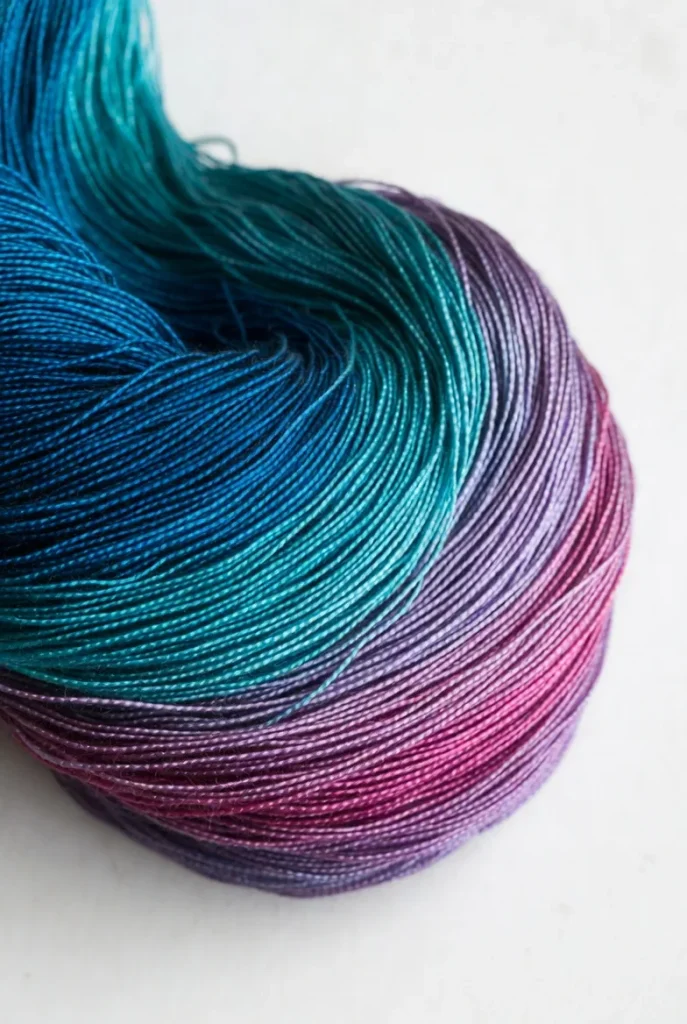
Gradient color yarn is one of the clearest directions in new fancy yarn development. It changes from one shade to another along the yarn length. When the transition works well, the finished fabric has a smoother color movement and a more layered surface.
The main challenge is control. A rough overlap between colors can make the fabric look blurred. Better strip mixing allows developers to manage more color strips and plan the transition more accurately. A side-by-side comparison of the cone and the knitted swatch usually shows the difference quickly.
Segment color yarn creates a sharper effect. Each color section has a clearer beginning and end, so the finished fabric shows a stronger rhythm. This gives the yarn a distinctive appearance, but it also makes the yarn less forgiving. If the segment length changes during production, the surface can look uneven or too busy.
During sample approval, buyers should check the color section length, the clarity of the transition, the compatibility between the yarn and the fabric structure, and the appearance after knitting. The same yarn can look very different in a loose knit and a dense knit.
Slub, thick-and-thin, color dot, and joint yarn structures
Not all new fancy yarn development focuses on color. Many changes take place inside the yarn structure itself.
Slub yarn creates intentional thick sections along the yarn. Traditional slub yarn can develop weak transition points, uneven running, or pilling during use. Wrapped slub structures add another yarn around the thicker section and can hold the effect more securely. The yarn still keeps its irregular appearance, but the construction may give developers better control during knitting.
Thick-and-thin yarn also gives product teams more control over hand feel and surface character. The final effect depends on the yarn count, twist, fiber blend, and fabric structure. Developers should review these details together instead of selecting the yarn from a cone photograph alone.
Color dot yarn places small colored dots inside a base yarn. The result depends on the way the dots form, blend, and move through the carding process. If the dots open too much, the yarn can look rough. If the structure holds them too tightly, the effect may lose its visual character. Buyers can read more about the process in this article about color dot yarn.
Joint yarn creates more freedom in the way color sections connect. It can place the color movement inside the yarn instead of relying on a more complex fabric design. However, the joining quality must remain stable. A small change at the joint can affect the appearance of the entire knitted surface.
| Fancy yarn direction | Main effect | Points to check | Typical development use |
|---|---|---|---|
| Gradient color yarn | Smoother color movement | Color overlap and transition clarity | Knitted garments, socks, and decorative fabrics |
| Segment color yarn | Clear color sections | Segment length and repeatability | Pattern-focused knitwear and fashion fabrics |
| Slub yarn | Irregular thick sections | Strength, pilling, and running stability | Textured knitwear and casual fabrics |
| Color dot yarn | Small colored dots inside the yarn | Dot firmness, blending, and surface cleanliness | Decorative and design-focused fabrics |
| Loop yarn | Raised loop texture | Loop size, yarn count, and machine compatibility | Seasonal knitwear and textured socks |
For a product-level example, this loop fancy yarn product page shows why buyers need to compare yarn count, composition, construction, and final fabric use together.
Functional and smart fancy yarn development
Some new fancy yarns combine a visible effect with a functional purpose. Depending on the project, the yarn may include conductive elements, sensing materials, thermal response, light-related functions, or other special components.
Some constructions insert another component into the yarn. Others use wrapping, coating, or engineered fibers. A conductive yarn can support smart textile development, but the technical requirements differ from those of an ordinary decorative yarn. Buyers should ask what function the yarn provides, how the supplier measures that function, and whether the function remains after knitting, washing, and handling.
Some experimental concepts also connect yarn structures with voice or sound-related functions. These ideas may remain at the research stage for a long time. For commercial sourcing, the supplier should provide a clear function definition, sample method, and test basis before the buyer treats the concept as a finished product.
Fancy yarn therefore covers more than surface decoration. It can also connect yarn development with conductive, thermal, sensing, or other textile applications. However, every functional claim needs product-specific evidence. A name or concept alone does not confirm performance.
Precision fancy spinning and effect repeatability
Irregularity gives fancy yarn its character, but uncontrolled irregularity increases waste and makes production harder to repeat. Precision fancy spinning changes the balance by guiding the size, position, color, and structure of the effect more accurately.
This matters during sampling. When the yarn keeps a stable pattern, the knitting result becomes easier to judge. Developers can identify the cause of a problem instead of changing several process variables at the same time. A clear sample also gives the production team a better reference for later lots.
Buyers should compare the sample cone with the knitted swatch and, when possible, with a washed swatch. Check the effect repeat, yarn feeding, surface appearance, strength, pilling, and color stability. This fancy yarn technology article explains why process control matters after the yarn leaves the spinning line.
Chenille yarn: lint control and pile structure
Chenille yarn gives fabric softness, volume, and a strong decorative surface. Its main production problem remains linting. Loose pile can affect the knitting area, the finished appearance, and the durability of the fabric.
Material selection can affect linting, but equipment and process settings also matter. Developers should check the pile structure, yarn strength, surface stability, and appearance after handling. A chenille yarn that looks full on the cone still needs a knitting trial.
Multi-color segment chenille and changes in pile length or density give developers more design options. These changes only help when the yarn can run consistently in the intended fabric structure. Production stability remains the practical test.
How buyers should evaluate new fancy yarns
Before requesting samples, buyers should define the final application. A yarn for socks may need different strength, softness, abrasion resistance, and machine compatibility from a yarn for sweaters, home textiles, or decorative fabric.
Use the following checks during development:
- Confirm the final application and fabric structure.
- Compare yarn count, fiber composition, twist, and spinning method.
- Check whether the yarn runs smoothly on the intended knitting or weaving machine.
- Review color section length, loop size, slub size, dot distribution, or pile density.
- Test the yarn in the final fabric instead of approving the cone alone.
- Check appearance, strength, pilling, linting, color fastness, and washing performance.
- Ask for current compliance documents when the program requires ISO, OEKO-TEX, GRS, or another standard.
- Confirm whether the supplier can repeat the effect from the sample lot to bulk production.
For a broader explanation of production methods and quality control, see Types of Fancy Yarns: Structures, Production Methods, and Quality Control. The article can help with the first comparison, but each product still needs its own specification and test record.
A practical note from VI-TEX
At VI-TEX, our team has worked in yarn development and production in Jiaxing since 2003. Fancy yarn is one part of that work. We also develop functional yarns for cooling, antibacterial, quick-dry, thermal, and recycled applications.
Our development work focuses on what happens after knitting and handling. Some yarns keep their texture and color movement. Others lose the effect quickly. The knitted fabric gives a more useful answer than a polished sample card.
For us, a new fancy yarn needs to do more than look different. It should run on the intended machine, keep its effect in the fabric, and repeat with reasonable consistency from sample to production. Buyers who are developing a new program should prepare the application, target count, color direction, fabric structure, performance requirements, and expected quantity before requesting samples.
Frequently asked questions about new fancy yarns
What are new fancy yarns in textile development?
New fancy yarns are yarns that use planned color changes, irregular structures, loops, dots, pile, or special components to create a visible or functional effect in the final fabric. The yarn should be evaluated through sampling and fabric testing, not only through its appearance on the cone.
How do gradient and segment color yarns differ?
Gradient yarn creates a smoother transition from one color to another. Segment yarn creates clearer color sections with a stronger rhythm. Gradient yarn needs good control of color overlap, while segment yarn needs stable section length and repeatability.
What should buyers compare before requesting fancy yarn samples?
Buyers should compare the final use, fabric structure, yarn count, composition, twist, machine compatibility, effect size, color behavior, test requirements, and expected quantity. The buyer should also check whether the supplier can repeat the approved effect during bulk production.
Can fancy yarn include functional materials?
Yes. Some fancy yarns combine decorative structures with conductive, thermal, sensing, cooling, recycled, or other functional materials. The supplier should provide a clear specification and suitable test evidence for the function.
What should a fancy yarn sample approval cover?
A sample approval should cover the yarn specification, fabric construction, machine running, color or structure effect, hand feel, strength, pilling, linting, washing result, compliance requirements, and repeatability. The final approval should relate to the finished fabric, not the cone alone.