WhatsApp : (+86) 19058080181 Email : info@vi-tex.com

Quick-Drying Yarn for Sportswear: Production Checks
Quick-drying yarn for sportswear is often judged by a small swatch or a line on a specification sheet. In production, the result appears after knitting, dyeing, washing and wear. Yarn selection matters, but the finished fabric also depends on yarn structure, fabric construction, finishing and the test method.
At VI-TEX, we compare quick-dry samples in workshop and customer production settings. The examples below show what we check before recommending a yarn. They are reference points, not a promise that every yarn will give the same result in every garment.
Why quick-drying yarn matters in sportswear production
During running, cycling or studio exercise, sweat needs to move away from the skin and then leave the fabric. Moisture wicking and quick drying describe different parts of that process. Wicking moves moisture away from the skin. Quick drying helps the moisture spread and evaporate.
A fabric can spread sweat quickly and still feel damp if evaporation is slow. For buyers, the useful question is not whether one drop spreads across a swatch. It is whether the finished fabric feels comfortable, dries at a known rate and keeps its performance after washing.
For a broader view of yarn choices for outdoor and functional knitwear, see our guide to moisture wicking yarn development.
What changes the result on the production line
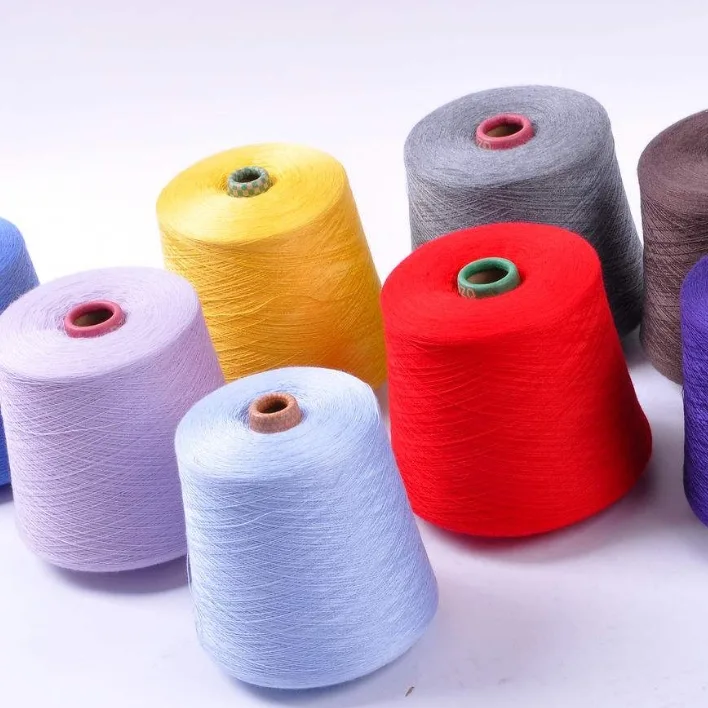
Fiber and yarn structure
VI-TEX dyes its process-optimized polyester at around 100 °C under normal pressure. A production comparison found that this route used more than 15 percent less dyeing energy than the previous route, while the dyed material retained the required color fastness and moisture-management performance. Use this figure with the comparison’s energy basis and dyeing route. Do not present it as a universal saving promise.
For a 30s option, 30s hydrophilic compact spun polyester yarn contains 100 percent hydrophilic polyester and uses compact siro spinning. The product page lists this yarn for sportswear, underwear and lightweight knitwear. Its structure can support moisture transfer and a cleaner knitted surface, but the finished fabric determines anti-pilling, drying and wash results.
For running and cycling programs, manufacturers can pair four-channel functional yarn with a capillary-friendly knit structure. In workshop and client observations, the skin side felt drier within minutes. Use this timing as a use-case observation, not a fixed performance time for every fabric.
Polypropylene offers another option when low weight and fast drying matter. It may suit lightweight base layers or outdoor garments. Base the final selection on fabric construction, wear conditions and care requirements.
Fabric construction
Yarn is only part of the system. A double-layer knit can use a hydrophobic skin-side layer to move sweat away from the body and a more hydrophilic outer layer to spread moisture for evaporation.
One-way moisture transfer usually comes from a combination of yarn selection, knit structure, surface wetting and finishing durability. Our article on one-way moisture wicking fabric explains why the finished fabric needs to be tested instead of judging the yarn alone.
What we learned from workshop and client testing
One workshop comparison took place in July on a humid 32 °C afternoon. We compared two running shirts. The control used ordinary polyester and remained wet and heavy after 45 minutes. The shirt made with quick-drying yarn felt close to dry.
This was a workshop observation rather than a standardized laboratory result. A fair comparison should also record the yarn count, knit structure, fabric weight, finishing, starting moisture, temperature and relative humidity.
In one anonymized sportswear factory case, the fabric made with our yarn dried about 60 percent faster than the previous material after 50 wash cycles. That result belongs to the customer’s construction and test setup. It is useful as a case reference, but the wash method, drying method and endpoint should be confirmed before using the number in a product specification.
In repeated workshop checks, one well-engineered structure reached dry-to-touch in under 20 minutes under the tested conditions. The phrase “dry-to-touch” needs a defined endpoint because different teams may judge it differently. The result should always be tied to the finished fabric and its test conditions.
How to choose a yarn for the product you are making
Different sports products place different demands on the fabric. The right starting point depends on sweat load, fabric weight, hand feel, abrasion, stretch and the expected care cycle.
| End use | Starting point | What to verify |
|---|---|---|
| Yoga and studio wear | Soft polyester or a 30s hydrophilic compact spun polyester yarn | Skin-side feel, drying time, shape recovery and wash result |
| Running and cycling | Four-channel functional yarn with a capillary-friendly knit structure | Moisture transport, air permeability, skin-side dryness and drying time |
| Hiking and outdoor layers | Lightweight polypropylene blends | Fabric weight, drying time under the intended weather conditions and care stability |
| Team and court wear | Durable double-layer construction | Abrasion, static, moisture transfer and performance after repeated washing |
There is no single best yarn for every sport. If one program covers several sports, compare the finished fabrics separately. Our guide on whether quick-drying yarns are right for every sport provides a useful way to frame that decision.
What to check before bulk approval
- Define the end use, activity level and expected sweat load.
- Confirm the yarn count, fiber composition, spinning method and fabric construction.
- Test the finished fabric or garment rather than relying on yarn composition alone.
- Record the temperature, relative humidity, starting moisture, drying endpoint and test method.
- Repeat the test after the agreed wash cycles and use the same care conditions for every comparison.
- Match every performance claim to the specific sample, test result and production route.
For lab work, useful indicators may include water absorption, droplet diffusion, wicking height and evaporation. The method should match the final product and target market. Our guide to quick-drying yarn standards explains these indicators in more detail.
Compliance information should also be tied to the selected product. State the exact OEKO-TEX or GRS document and scope, and describe the ISO quality management scope separately. These should not be combined into one broad certification statement.
Request samples for your fabric trial
When you contact a yarn supplier, include the end use, yarn count or denier, fabric structure, target fabric weight, colors, sample quantity and machine information. This gives the supplier enough context to recommend a useful trial.
VI-TEX can discuss options such as 30s hydrophilic compact spun polyester yarn and 32S cotton-polyester quick-dry yarn. Review the published product specification, then confirm the current color options, MOQ, lead time, technical data and certificate scope before bulk production.
Frequently asked questions
What is quick-drying yarn for sportswear?
Quick-drying yarn for sportswear is yarn selected or engineered to help move moisture through the fabric and support faster evaporation. The finished result also depends on yarn structure, fabric construction, finishing, fabric weight and the care process.
Is moisture wicking the same as quick drying?
No. Moisture wicking moves sweat away from the skin. Quick drying helps the moisture spread and evaporate. A sportswear fabric normally needs both functions, but the balance depends on the activity and fabric construction.
Which yarn is best for hot and humid climates?
There is no universal answer. For high sweat loads, four-channel yarns with capillary-friendly knit structures are a reasonable starting point. Compare them with a control in the actual fabric and record skin-side feel, drying time and wash stability.
Does low-temperature dyeing hurt yarn quality?
A stable low-temperature dyeing route does not automatically damage yarn quality. Color fastness, moisture management, pilling and wash stability should still be checked on the finished fabric. The around 100 °C figure described above belongs to a specific production route and should not be assumed for every polyester dyeing process.
How should we check the fabric before placing a big order?
Use the same yarn and fabric specification for the control and test samples. Record the fabric weight, test temperature, relative humidity, starting moisture, drying endpoint, wash method and number of wash cycles. Approve the result on the finished fabric or garment, not only on the yarn.
Can VI-TEX provide samples and technical data?
Sample cones or knitted swatches can be arranged for development and machine testing. Share the end use, target yarn count, fabric structure, colors, sample quantity and required test items. Current product specifications, MOQ, lead time and certificate details should be reconfirmed for the selected yarn before ordering.