WhatsApp : (+86) 19058080181 Email : info@vi-tex.com

What Is Pique Fabric? Understanding PK Knit, Single Pique, and Double Pique
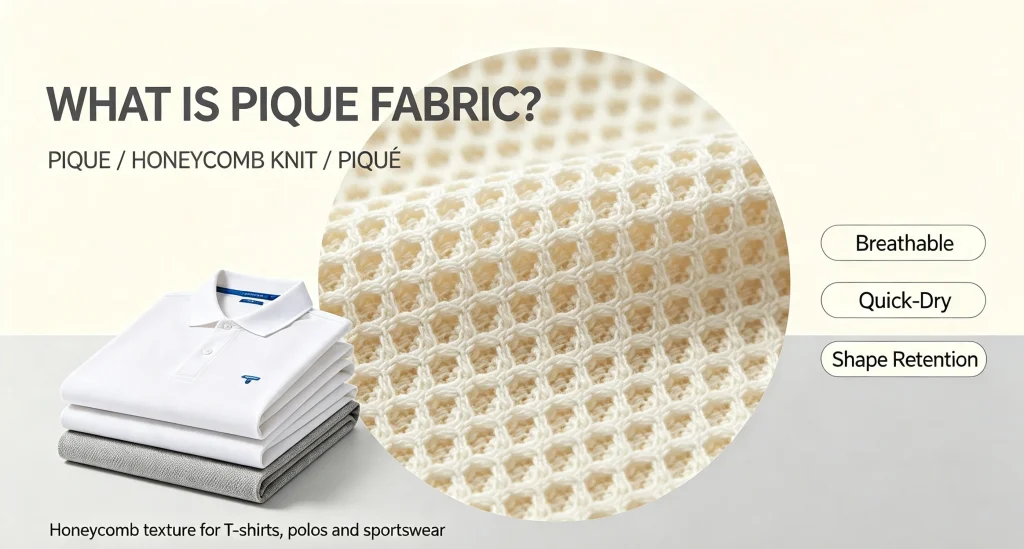
Pique Fabric, Often Called PK Fabric
In many Asian textile markets, pique fabric is often called PK fabric. The name comes from the pronunciation of the French word piqué. Its most recognizable feature is a raised-and-recessed surface, which may resemble a honeycomb, waffle pattern, or pineapple skin.
Pique is a type of weft-knit fabric commonly produced on circular knitting machines. Because the surface contains small openings and textured cells, it usually feels more breathable and drier than regular single jersey fabric.
Although people often say “pique cotton,” pique actually refers to the knitted structure, not one specific fiber. Manufacturers can produce it with cotton, cotton-polyester blends, modal, bamboo-derived fibers, lyocell, and other functional yarns.
How Pique Knit Creates Its Texture
Manufacturers create pique fabric by combining knit stitches with tuck stitches and, in some constructions, float stitches. These stitches form an even raised-and-recessed pattern across the fabric surface.
As a result, the fabric has less direct contact with the skin than smooth jersey fabric. Air can move more easily through the textured structure, while moisture can spread across the surface more effectively.
This structure also gives pique fabric a clean, casual appearance. Therefore, it remains a popular choice for polo shirts, T-shirts, sportswear, uniforms, and lightweight casual garments.
Single Pique and Double Pique
Pique fabric comes in several variations. The most common types are single pique and double pique.
Single Pique
Single pique is often called four-corner PK in the textile market. Its reverse side usually shows a quadrilateral or square-like texture.
This construction creates a lighter and more open fabric surface. It works well for breathable polo shirts, casual T-shirts, summer tops, and lightweight sportswear.
Double Pique
Double pique is often called six-corner PK because its reverse side may show a hexagonal texture. Some markets also describe it as football mesh because of its geometric surface effect.
Compared with single pique, double pique usually has a fuller and more structured feel. It can offer better body, texture, and dimensional stability, so brands often use it for higher-end polo shirts and more substantial knitwear.
Key Features of Pique Fabric
Breathable and Dry to the Touch
The small cells and openings in pique fabric allow air to circulate more easily. Therefore, the fabric often feels cooler and less sticky during warm weather.
For summer clothing, sportswear, and daily casual products, this breathable structure can improve overall wearing comfort.
Good Moisture Management
Cotton-rich pique fabric can absorb sweat effectively. Meanwhile, polyester-blended pique can help moisture spread and dry more quickly.
Because of this, pique fabric is widely used in polo shirts, sportswear, golf apparel, school uniforms, and active casualwear. The final moisture performance still depends on fiber content, fabric weight, and finishing treatment.
Structured and Neat Appearance
Pique fabric has more body than ordinary jersey. Its textured structure helps garments look neat and slightly more formal, even in relaxed styles.
That is one reason why many polo shirts use pique fabric for the main body, collar, and cuffs. The fabric can keep a cleaner shape while still offering a soft knitted feel.
Comfortable Hand Feel
Despite its textured surface, pique fabric can feel soft and pleasant against the skin. Cotton, modal, bamboo-derived cellulose fibers, and lyocell can further improve softness and moisture absorption.
At the same time, the raised structure creates a small gap between the fabric and the skin. This helps reduce the close, clingy feeling that smooth knit fabrics may create in hot weather.
Easy Care and Washability
With suitable yarn selection and finishing, pique fabrics can maintain a stable appearance after repeated washing. Many pique products also work well with machine washing.
However, shrinkage and shape retention depend on the fiber blend, fabric density, dyeing process, and finishing method. For this reason, brands should confirm washing performance through sample testing before bulk production.
What Does Pique Mesh Mean?
In a broad sense, pique mesh describes knitted fabrics with a regular raised-and-recessed surface. The texture may create square, diamond, honeycomb, or hexagonal cells.
These structures improve airflow and can make the fabric feel more comfortable during active wear. As a result, pique mesh is common in T-shirts, polo shirts, sportswear, uniforms, and lightweight leisurewear.
In a narrower sense, traditional pique refers to a single-knit circular machine structure with a repeating raised-and-recessed pattern. Single pique often creates a four-corner texture, while double pique may show a six-corner or hexagonal effect.
It is also important to distinguish double pique from double-knit pique. Some double-knit fabrics have raised textures and may be called double-sided pique in certain markets. However, their construction differs from double pique made on a single-knit circular machine.
Fiber Choices and Premium Pique Developments
Cotton remains one of the most common raw materials for pique fabric because it provides softness, breathability, and moisture absorption. Cotton-polyester blends are also popular because they improve durability, shape retention, and drying speed.
In addition, manufacturers can develop higher-value pique fabrics with modal, bamboo-derived fibers, lyocell, moisture-wicking fibers, antibacterial fibers, and organic cotton.
Premium pique options may include double singeing, double mercerizing, yarn-dyed stripes, jacquard patterns, drop-needle effects, and alternating pique-and-jersey structures. These techniques create more variety, including vertical stripes, horizontal stripes, checks, textured panels, and refined surface patterns.
Common Uses of Pique Fabric
Pique fabric suits a wide range of apparel and textile products, including:
- Polo shirts and golf shirts
- T-shirts and casual tops
- Sportswear and athleisurewear
- School and work uniforms
- Lightweight summer garments
- Children’s clothing
- Collars and cuffs
- Casual knit dresses and skirts
Because the fabric balances breathability, texture, and shape, it works especially well for garments that need a neat but relaxed look.
How to Choose the Right Pique Fabric
When selecting pique fabric, first consider the end use.
For soft and breathable polo shirts, choose cotton-rich single pique. For sportswear or quick-dry garments, consider polyester blends or functional moisture-wicking yarns. When a garment needs more body and a more premium appearance, double pique or a higher-density pique construction may be a better option.
In addition, check the fabric weight, shrinkage, color fastness, pilling performance, and recovery after washing. A good pique fabric should match both the design style and the expected wearing environment.
Conclusion
Pique fabric is more than a simple textured knit. Its distinctive cell-like structure gives it breathability, a dry-touch feel, a neat appearance, and broad product versatility.
Whether it is single pique, double pique, cotton pique, or functional pique mesh, the final performance depends on the yarn, knitting structure, density, and finishing process. Once these elements work together, pique fabric can deliver a comfortable and polished solution for polo shirts, sportswear, casual apparel, and many other textile products.