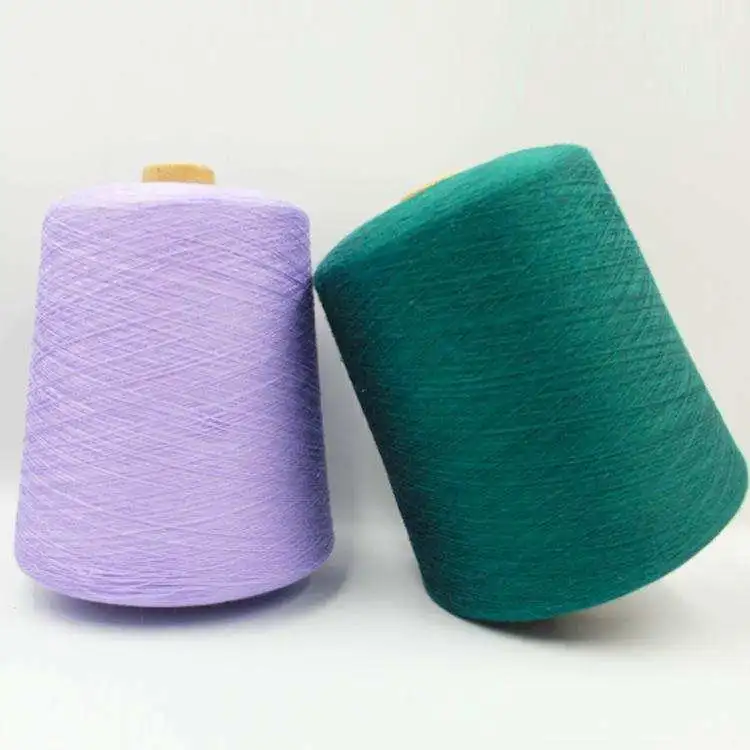
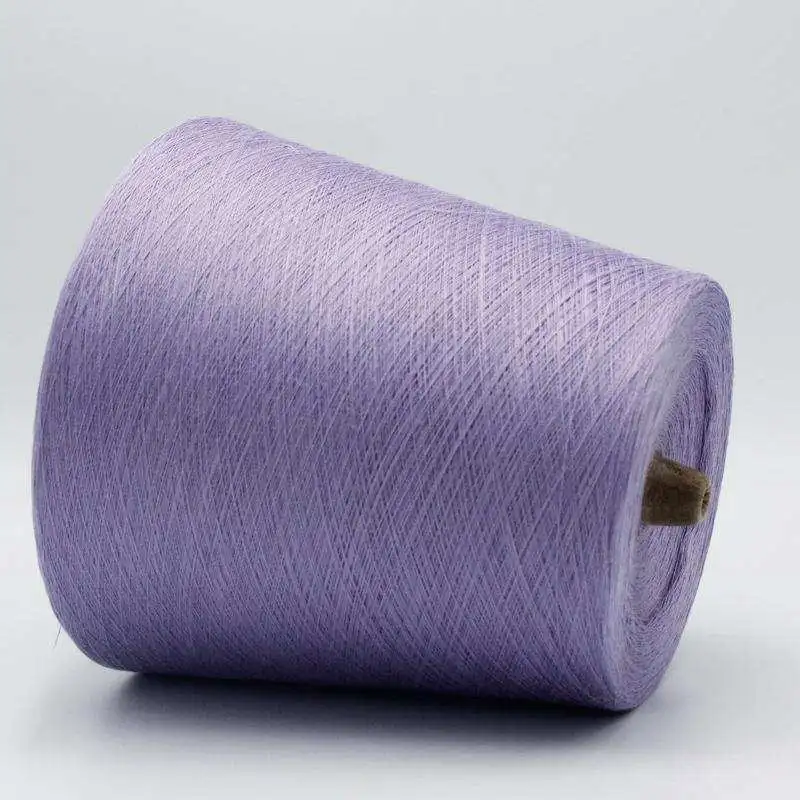
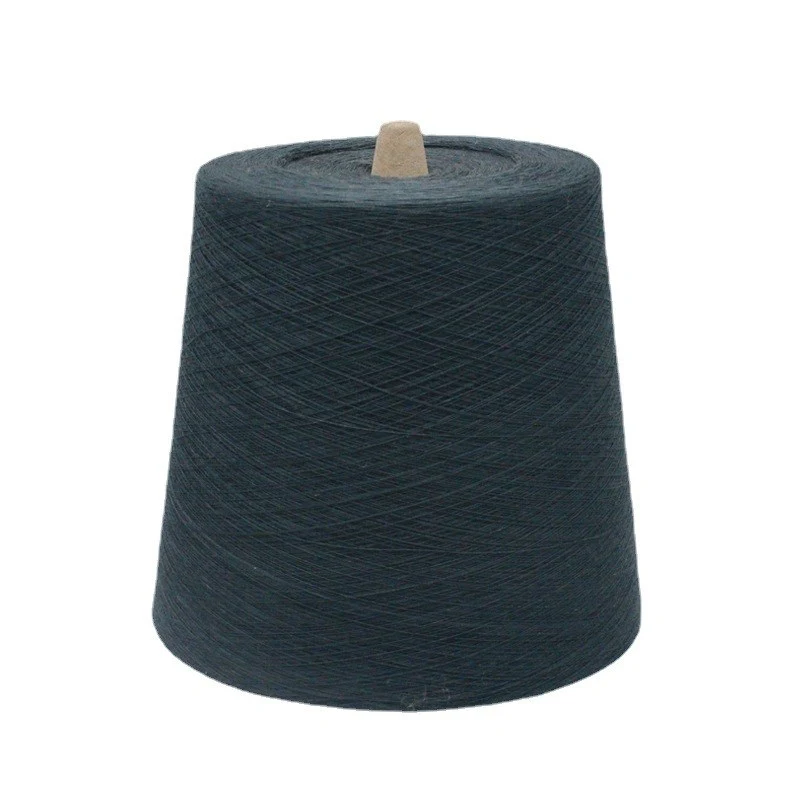
CoolSilk Quick-Dry Cooling Yarn in Polyester or Nylon
CoolSilk is a quick-dry cooling yarn made from modified polyester (PET) or nylon (PA6/PA66) filament. Instead of a round profile, each filament has a cross-shaped, Y-shaped or multi-groove cross-section. These grooves draw sweat along the yarn and spread it out, so the fabric dries faster and feels cooler on the skin.
We supply CoolSilk as DTY or FDY in counts from 30D to 300D. Since every machine and fabric behaves a little differently, we match the polymer, denier, filament count, luster and intermingle level to your application before sampling.
How Quick-Dry Cooling Yarn Moves Sweat
Polyester holds very little water. Its moisture regain is only about 0.4%. A polyester fabric therefore stays dry by moving sweat, not by soaking it up. That is the job of the grooves in CoolSilk. When moisture reaches the fabric, the channels act like small capillaries and pull it along the filament surface. As the wet area grows, more water meets the air and evaporates, and that evaporation pulls heat away from the skin.
Labs usually report cool touch as a Q-max value. It shows how much heat a fabric draws from the skin at the first moment of contact. However, it does not show how cool a garment stays during a long run. That is why a higher Q-max does not always mean a cooler fabric in real wear.
Still, the yarn is only one part of the result. Fabric structure, weight, dyeing and finishing decide how fast the final fabric wicks and dries.
Polyester or Nylon: Which Base Should You Choose?
Polyester CoolSilk is the faster-drying option. Because it absorbs almost no water, it works well in running tops, base layers and other high-sweat garments. In addition, it keeps its shape after repeated washing and takes disperse dyes.
Nylon CoolSilk feels smoother and softer in the hand. Nylon has the best abrasion resistance of the common textile fibers. For that reason, it is a strong choice for sock heels and toes, close-fitting underwear and seamless garments. With a moisture regain of about 4.5%, however, it dries a little slower than polyester.
For nylon, the choice between PA6 and PA66 mostly comes down to heat and dyeing. PA66 melts at about 260 °C, compared with about 220 °C for PA6, so it handles heat setting better. PA6, on the other hand, takes acid dyes more easily.
Shaped Filament vs. Wicking Finish
Many quick-dry fabrics get their wicking from moisture-wicking finishing agents applied after dyeing. CoolSilk takes a different route, because the channels are part of the filament itself.
Point
Topical wicking finish
CoolSilk shaped filament
Where the function comes from
A hydrophilic chemical applied to the fabric
Grooves built into the filament cross-section
After repeated washing
The finish can gradually wear off
The groove shape stays, since washing cannot remove it
Extra processing
Needs a finishing step after dyeing
No extra step, because the function comes with the yarn
Main limit
Wicking weakens when the finish wears off
Polyester stays hydrophobic, so first wetting can be slower
In practice, many sportswear programs use both. A quick-dry cooling yarn such as CoolSilk gives the fabric permanent channels, while a light finish helps the first drop of sweat spread faster.
Applications and Machine Fit
CoolSilk quick-dry cooling yarn runs on circular knitting, warp knitting, seamless and weaving machines when the yarn specification matches the machine. DTY is the usual choice for circular and seamless knitting, because its crimp adds bulk and stretch. FDY, by contrast, is smoother and flatter and suits warp knitting, linings and woven fabrics.
Sportswear and base layers
Socks and seamless garments
Underwear and linings
Knitted and woven performance fabrics
Why Work with VI-TEX
Vi-Tech Global, the company behind VI-TEX, has focused on functional yarn development and supply since 2003. We run a complete in-house production process. Our R&D team works closely with textile universities, including Donghua University and Jiangnan University.
Before recommending a quick-dry cooling yarn specification, our technical team reviews your machine type, fabric structure and test plan. After you approve the sample, we record the polymer, yarn type, count, filament number, luster and intermingle level in writing. As a result, repeat lots match the yarn you approved. You can start with a stock cone for a machine trial, then move to custom or bulk production once the fabric passes.
Quick-Dry Cooling Yarn Specifications
Product type
Moisture-wicking, quick-dry cooling filament yarn
Material
Modified polyester (PET) or nylon (PA6/PA66)
Yarn type
DTY or FDY
Count range
30D to 300D; filament count confirmed per order
Cross-section
Cross-shaped, Y-shaped or multi-groove
Luster
Semi-dull, full-dull or bright
Intermingle
NIM, SIM or HIM, matched to the knitting or weaving process
Tenacity
Standard or high tenacity
Colors
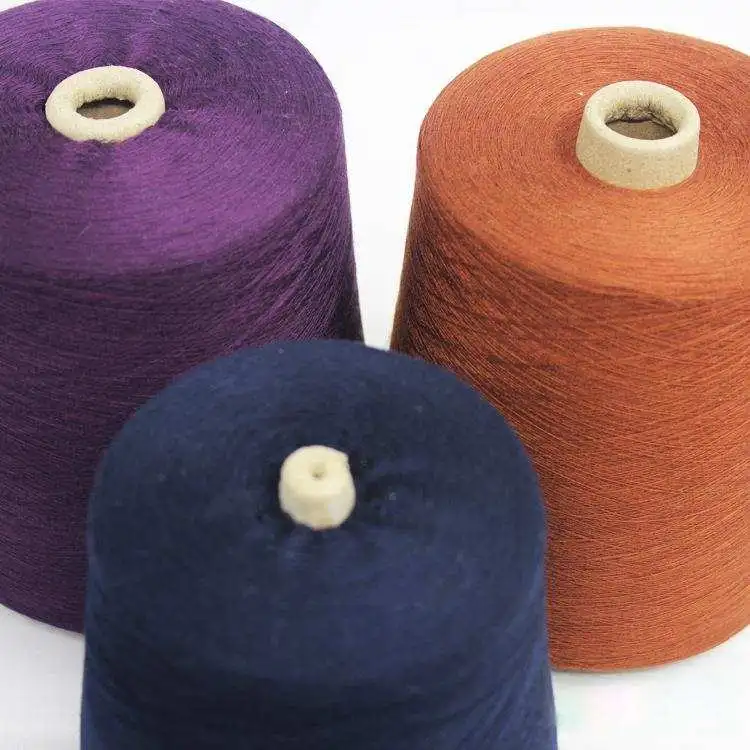
Stock shades or custom color development
If your team works in cotton counts, denier converts roughly as D ≈ 5315 ÷ Ne. For example, 150D sits close to a 35S spun yarn, while 300D is close to 18S.
Samples, Testing and Documents
Before bulk production, we confirm the yarn specification, color standard, packing, labeling and inspection plan with you. At the same stage, we can agree the fabric tests for wicking, drying time, Q-max and wash durability. We then approve the bulk lot against those results. Our guide to quick-drying yarn standards explains how lab data relates to real comfort.
OEKO-TEX information is available for applicable specifications. If your program needs recycled content, ask us about a GRS-certified grade. Certificate scope differs by product and order, so please request the current scope before you make a compliance claim. Neutral labels, custom labels and export packing are available as well.
For an accurate recommendation and quote, please send us:
Polymer: PET, PA6 or PA66
DTY or FDY, denier and filament count
Luster, intermingle level and color
Machine type and fabric structure
End use
Estimated quantity and destination
Required test methods, certificates, packing and labeling
CoolSilk Quick-Dry Cooling Yarn FAQ
Does the wicking effect wash out?
The grooves do not wash out, because they are part of the filament’s shape rather than a coating. Even so, fabric results can shift over many washes, since softeners, fabric density and finishing affect wicking too. If you plan to make a durability claim, check the finished fabric after the wash count in your specification.
When should I choose 30D quick-dry cooling yarn?
30D is the finest count in the CoolSilk range. It suits light constructions such as linings, fine-gauge seamless underwear and thin base layers, where a heavy yarn would add bulk. For sock bodies and heavier sportswear knits, mills usually choose 70D or heavier.
Which dyes work with CoolSilk?
Polyester CoolSilk takes disperse dyes, while the nylon versions take acid dyes. In addition, a shaped cross-section reflects light differently from a round filament. The same recipe can therefore look lighter or brighter on CoolSilk, so approve a lab dip before bulk dyeing.
Can I plate CoolSilk with cotton or add spandex?
Yes. A common setup puts CoolSilk on the skin side and cotton on the outer face. The filament moves sweat outward, and the cotton then absorbs and spreads it. Spandex can go in as well for stretch and recovery. Yarn position changes both hand feel and moisture movement, so run a machine trial first.
How is CoolSilk different from ice silk yarn?
“Ice silk” is a broad market name. It can describe viscose, nylon or blended yarns, and it does not tell you the polymer or the cross-section. CoolSilk instead comes with a defined polymer, yarn type, count range and groove profile. That lets a mill compare and test one clear specification instead of a trade name.
Is this the same as the 30S COOLSILK lyocell-silk yarn?
No. Our 30S COOLSILK lyocell-silk sock yarn is a spun yarn of 92% lyocell and 8% silk, measured in cotton count. The CoolSilk on this page is a continuous polyester or nylon filament measured in denier. Choose the lyocell-silk yarn for a soft, natural-fiber hand, and choose this filament when quick drying comes first.