WhatsApp : (+86) 19058080181 Email : info@vi-tex.com

Eco-Friendly Green Textile Fibers | Biomass Fibers for Textile Industry
I、What Are Biomass Fibers
In recent years, the term “biomass fibers” has frequently appeared in the textile and materials sectors. What exactly are they, and what unique advantages do they possess? Today, let’s take a quick look at them.
Simply put, biomass fibers are fibers made from renewable biological materials such as corn, wood and bamboo. By contrast, conventional synthetic fibers mainly rely on non-renewable fossil resources including petroleum and coal. Their production consumes massive energy, and these fibers barely break down naturally. As a result, they linger in the environment for decades and cause severe white pollution. Meanwhile, biomass fibers boast a wide range of raw material sources, covering agricultural waste, timber, seaweed and all kinds of crops.
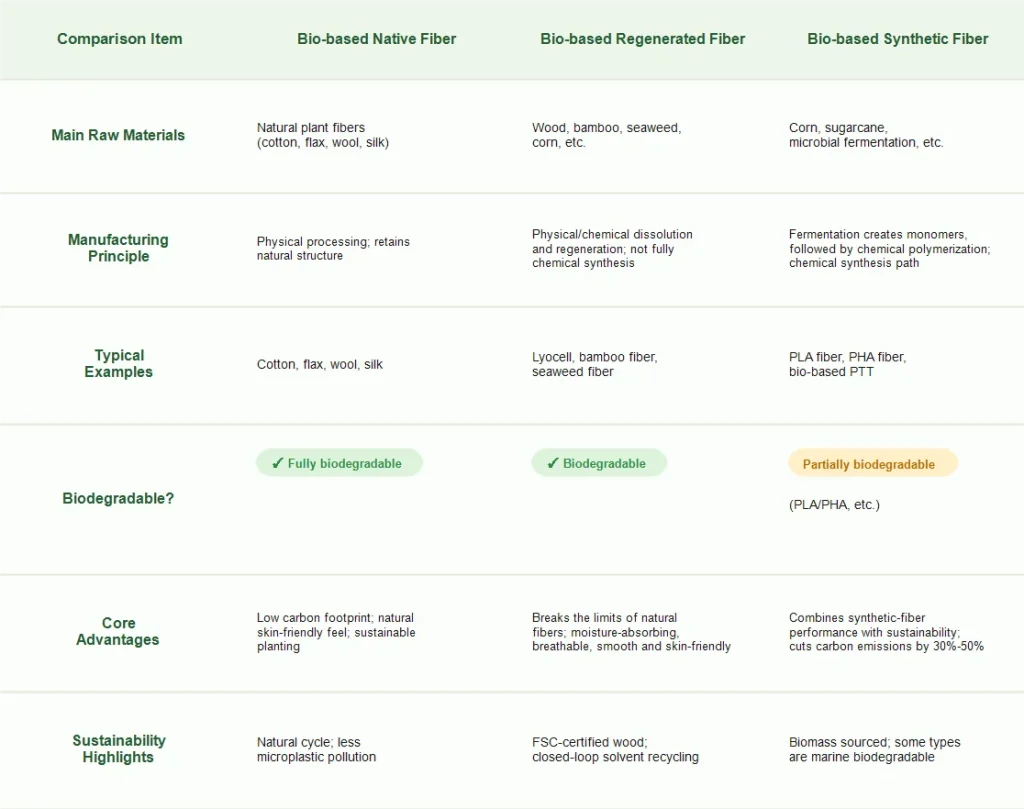
They fall mainly into three major categories based on processing methods and raw material sources:
1、Virgin Biomass Fibers
These fibers are extracted directly from nature and only require simple processing before use, including well-known varieties such as cotton, linen, wool and silk. They retain their complete natural structure and feature excellent biodegradability, yet their output is heavily restricted by seasons and geographical conditions.
2、Regenerated Biomass Fibers
They refer to fibers manufactured by dissolving natural animal and plant feedstock via physical or chemical processes, followed by re-spinning without altering the raw materials’ chemical composition. Typical examples include bamboo pulp fiber, Lyocell (made from wood), and seaweed fiber.
3、Bio-Synthetic Biomass Fibers
They are produced by turning biomass feedstock into chemical monomers through fermentation and other techniques, which are then polymerized to form fibers. Typical examples include PLA (polylactic acid) fibers made from corn and bio-based PTT fibers.
This comparison chart offers an intuitive overview of the similarities and differences between the three fiber categories.
II、Core Advantages of Biomass Fibers
Compared with traditional petroleum-based fibers, biomass fibers feature core advantages in four main aspects:
1、Renewable Raw Materials, No Reliance on Petroleum
Petroleum is a non-renewable fossil resource that is facing gradual depletion. In contrast, biomass fibers are sourced from renewable resources such as plants and animal by-products, enabling sustainable development.
2、Low Carbon Footprint, Contribute to Carbon Neutrality
Take plant biomass as an example. Plants absorb carbon dioxide from the atmosphere through photosynthesis as they grow. Later, whether these plant materials biodegrade naturally or get incinerated after use, they generate no extra carbon emissions over their full life cycle. Furthermore, life cycle assessments prove that bio-based composite materials cut carbon emissions by 30% to 50% compared with conventional petroleum-based alternatives.
3、Superior Degradable Performance to Eliminate White Pollution
Most fibers such as PLA fiber and seaweed fiber are biodegradable in soil or natural surroundings, making them environmentally friendly. Take PHA fiber as an example; it can fully break down into carbon dioxide and water within just three to six months under natural conditions.
4、Moisture-Absorbent & Skin-Friendly for Comfortable Wear
Generally deliver great moisture absorption and air permeability. Take regenerated cellulose fibers as an example; their moisture regain hits 13% to 15%. Known as “breathable fabrics”, they feel soft and smooth, rarely build static electricity, and are gentle and non-irritating to skin, making them ideal for undergarments and baby clothing.
In addition, certain biomass fibers carry special functions like antibacterial and flame retardant properties. Seaweed fiber, for instance, features inherent flame resistance and self-extinguishes once away from flames, with a limiting oxygen index of 45, classifying it as non-combustible fiber. Meanwhile, it can effectively inhibit common pathogenic bacteria such as Staphylococcus aureus.
III、Applications of Biomass Fibers
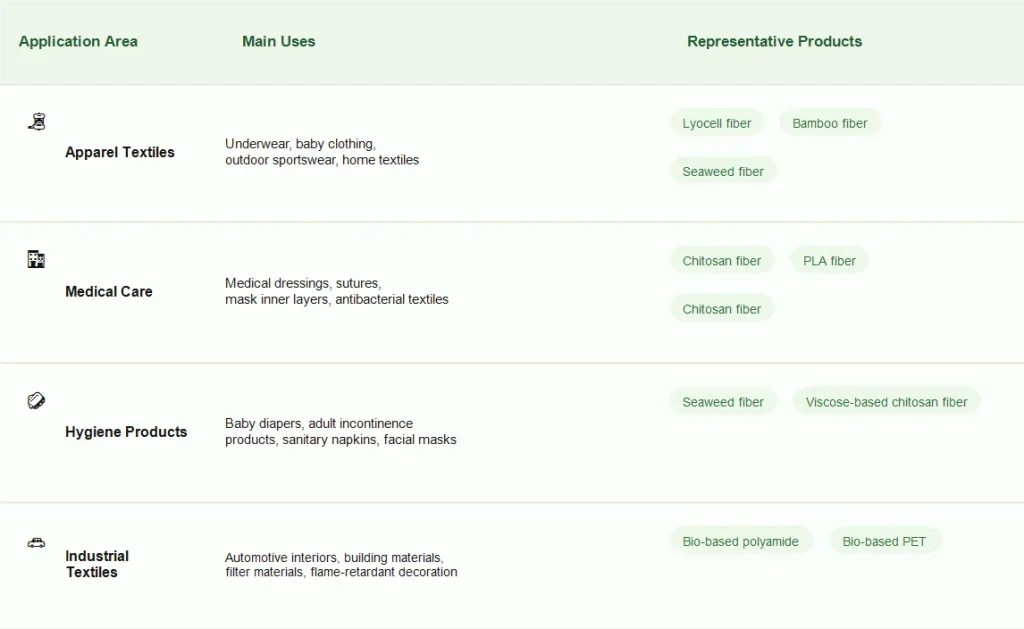
The application scope of fibers is constantly expanding beyond the traditional textile and apparel sector: