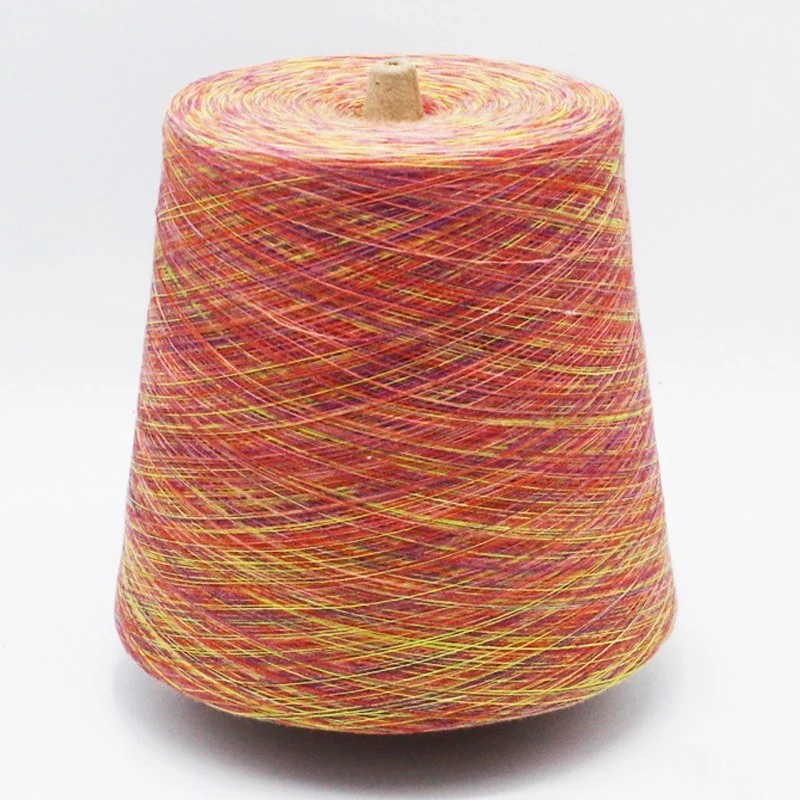
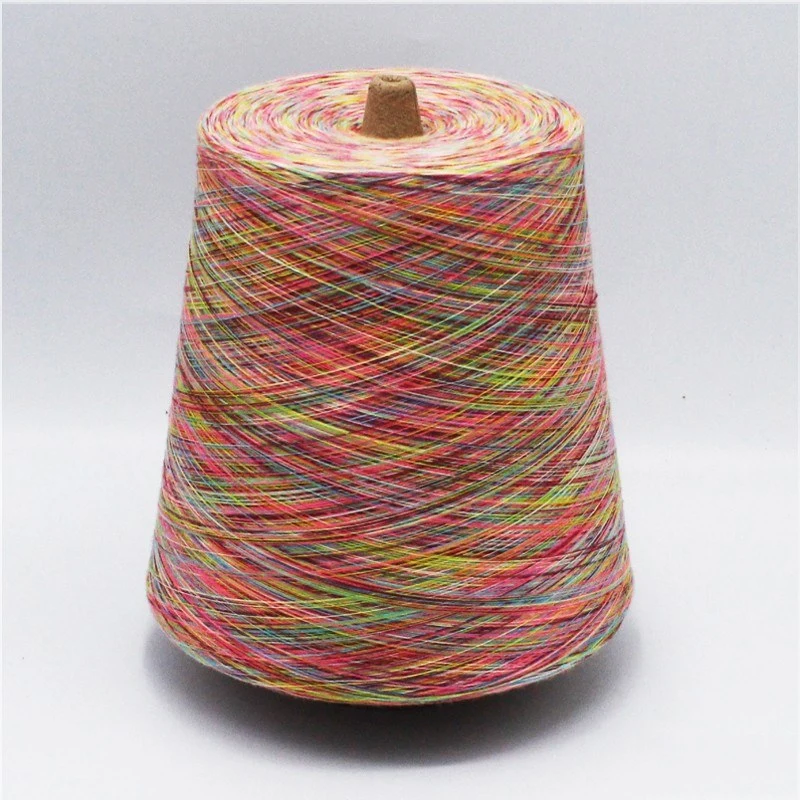
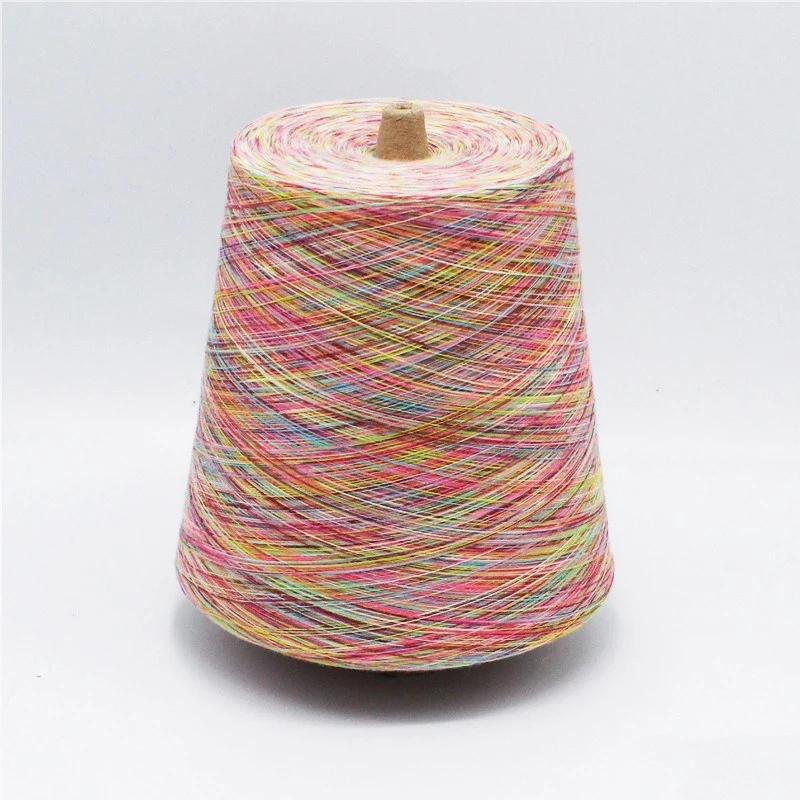
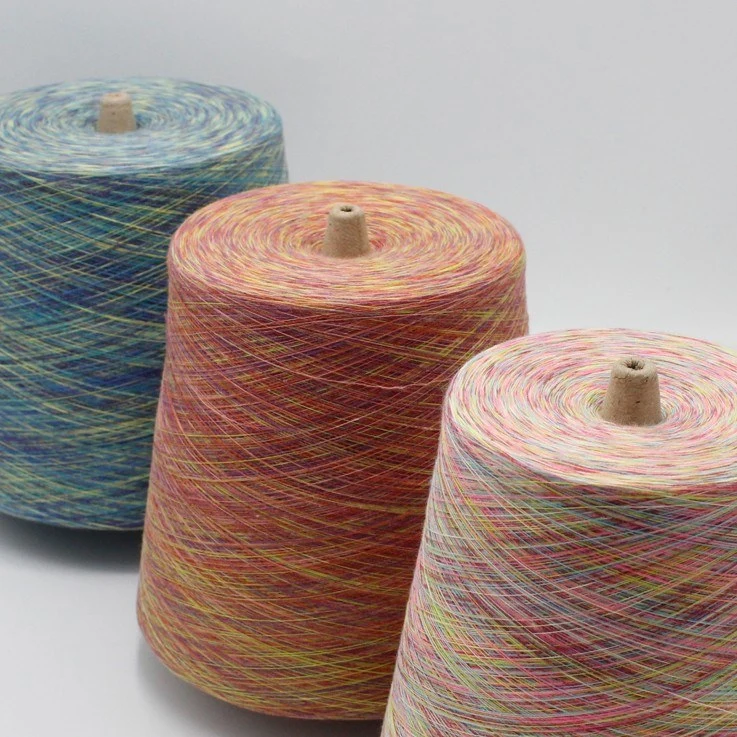
32S/1 Compact Spun Space Dyed Yarn for Socks and Knitwear
This compact spun space dyed yarn carries several colors along a single end, each in a set length. It blends 80% polyester with 20% cotton in a 32S/1 count. We spin it on compact frames, so the surface stays clean and low in hairiness.
On a sock machine, one feed of this yarn gives stripes, flecks or color blocks that would otherwise take several solid yarns. You choose the colors, their order and the length of each segment, and we then dye the yarn to that repeat. For more on color repeats and planned-random effects, read our guide to space dyed yarn for socks and knitwear.
Why Compact Spinning Suits a Multi-Color Yarn
Compact spinning adds a condensing zone in front of the drafting system. Airflow narrows the fiber bundle before twist goes in, so fewer fiber ends stick out of the finished yarn. Our overview of how compact spinning works covers the process in more detail.
In a space dyed yarn, that cleaner surface pays off in three ways:
Color changes look crisper in the knitted sock, because less fuzz blurs one segment into the next.
The machine sheds less lint and fly around feeders and needles, especially on long runs.
The yarn has higher strength than conventional ring spun yarn of the same count.
What the 80/20 Polyester-Cotton Blend Brings
Polyester makes up 80% of the blend. It holds bright segment colors, keeps socks in shape through repeated washing and resists wear at the heel and toe. The 20% cotton softens the hand, so the fabric feels less synthetic against the skin.
Compact Spun vs Conventional Ring Spun Space Dyed Yarn
Property
VI-TEX compact spun
Conventional ring spun
Surface hairiness
Low; fibers lie close to the yarn body
Higher; more fiber ends stick out
Yarn strength
Higher at the same count
Standard
Lint on the machine
Less fly around feeders
More fly to clean off
Color edges in fabric
Crisper changes between segments
Softer, fuzzier changes
Pilling tendency
Fewer loose ends to roll into pills
More loose ends that can pill
For a fair comparison, knit both yarns at the same count, composition, twist and machine settings.
Typical Applications
Fashion and casual socks with multi-color stripes or flecks
Sports socks that need visible color and a hard-wearing blend
Lightweight knitwear with changing color in simple structures
Beanies and scarves in repeat or planned-random patterns
Sweaters, when the design calls for decorative color movement
The final pattern depends on stitch length, fabric width and how the repeat lines up with each course. Judge a colorway from a knitted sample rather than from the cone.
Working with VI-TEX
VI-TEX has worked in yarn development and textile processing since 2003. One contact on our team handles your specification, color development, sampling, production follow-up and shipment, so technical and commercial questions go to the same person. Besides fancy yarns, we also develop cooling, thermal, moisture-management and recycled yarns.
Technical Specifications
Product name
Space dyed yarn (segment dyed fancy yarn)
Composition
80% polyester / 20% cotton (T/C 80/20)
Standard count
32S/1
Other counts
21S to 40S, after technical review
Spinning method
Compact spinning
Dyeing method
Space dyeing (segment or interval dyeing)
Colors
Stock colorways, or custom colors from Pantone codes or physical samples
Segment design
Color order, segment length and repeat cycle set for each order
Sock machines
144N, 168N and selected 200N
Applications
Socks, lightweight knitwear, beanies, scarves and sweaters
Stock lead time
1–2 business days after order confirmation
Custom lead time
3–15 days after sample approval
Packing
Paper cones; about 25 kg per carton or woven plastic bag
Shipping
20GP or 40HQ loading; export through Shanghai or Ningbo
Custom Colorways and Segment Repeats
Segment length decides how color falls on the finished product. On a small sock, short segments give frequent changes, while longer segments build wider bands. You might start with 3 cm or 5 cm segments, for example, and adjust them after the first knitting trial.
To sample a custom colorway, we need:
Target count and fiber composition
Pantone codes, a color card, a physical swatch or a reference sock
Our stock colorways let you test this yarn on your own machines before you commit to a custom colorway. For a custom order, the steps run like this:
Send the product type, machine needle count, target count and expected quantity.
Share your color direction: Pantone codes, a color card, a physical sample or a reference image.
Set the repeat: segment length, color order and repeat cycle.
Check the sample yarn and, if needed, knit a trial on your own machine.
Approve the bulk standard: specification, color reference, packing, quantity and shipping plan.
The approved knitted sample then becomes the reference for bulk dyeing and for every repeat order. Raw-material costs and dyeing needs change, so we quote each order against its confirmed specification. For an accurate price, send us the count, colors, quantity, destination and packing preference.
Packing and Shipping
We wind the yarn on industrial paper cones and pack them in cartons or woven plastic bags of about 25 kg each. Cartons protect cones from crushing, while woven bags work well for standard bulk transport.
For container orders, we plan 20GP or 40HQ loading and ship through Shanghai or Ningbo. Before dispatch, we confirm the packing method, cone weight, shipping marks and export documents with you.
Certifications and Documents
Document needs vary by market and end use, so tell us both before sampling. We then confirm which of these apply to your order:
OEKO-TEX STANDARD 100, depending on the yarn and certificate scope
ISO 9001 quality management documentation
GRS documentation for orders that use recycled polyester
OCS documentation for orders that use organic cotton
Each certificate covers specific products and does not transfer from one yarn to another. Our sales team confirms the exact document before quotation.
FAQ: 32S/1 Compact Spun Space Dyed Yarn
Which sock machines does this 32S/1 space dyed yarn run on?
It suits fine-gauge sock development on 144N and 168N machines, and on selected 200N setups. Needle specification, stitch density, tension, plating yarn and target fabric weight all affect the result, so run a trial on your own machine before bulk. For coarser constructions, we can also supply counts down to 21S or a plied version.
How do I tell you the segment length I need?
Send the finished sock size, your machine needle count and the color order you want, plus a reference sock or image if you have one. From those details, we propose a segment length and repeat cycle, then dye a sample. Stitch length and product size change how the colors stack up, so approve the knitted sample rather than the cone.
How does the 80/20 blend compare with a high-cotton sock yarn?
The polyester-rich blend keeps colors brighter, holds its shape better and wears longer at the heel and toe. It absorbs less sweat, though: polyester has a moisture regain of about 0.4%, against 8.5% for cotton. If absorbency comes first in your program, a higher cotton share will suit it better.
Can I trial a stock colorway before developing my own?
Yes. Knitting a stock colorway on your own machine shows how this yarn runs and how its segments fall at your stitch length. With that result in hand, you can brief a custom colorway using real reference points instead of guesses.
How do you check color fastness and pilling for my order?
Tell us the test methods and minimum grades your brand requires. We check the approved sample, or its test report, against those targets before bulk dyeing starts. Color, fabric structure and finishing all move the result, so we confirm grades order by order instead of quoting one figure for every colorway.