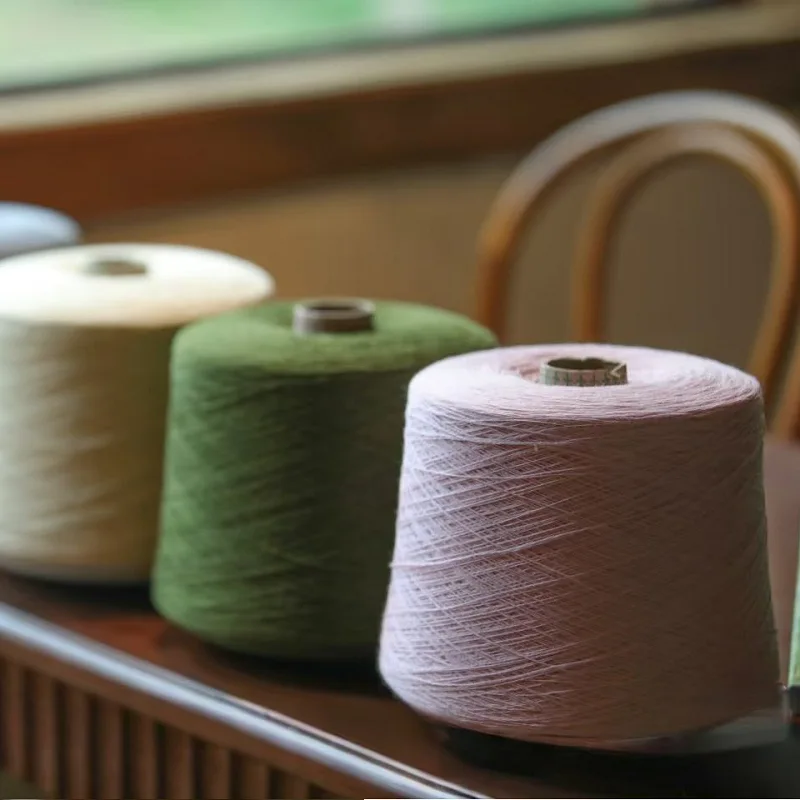
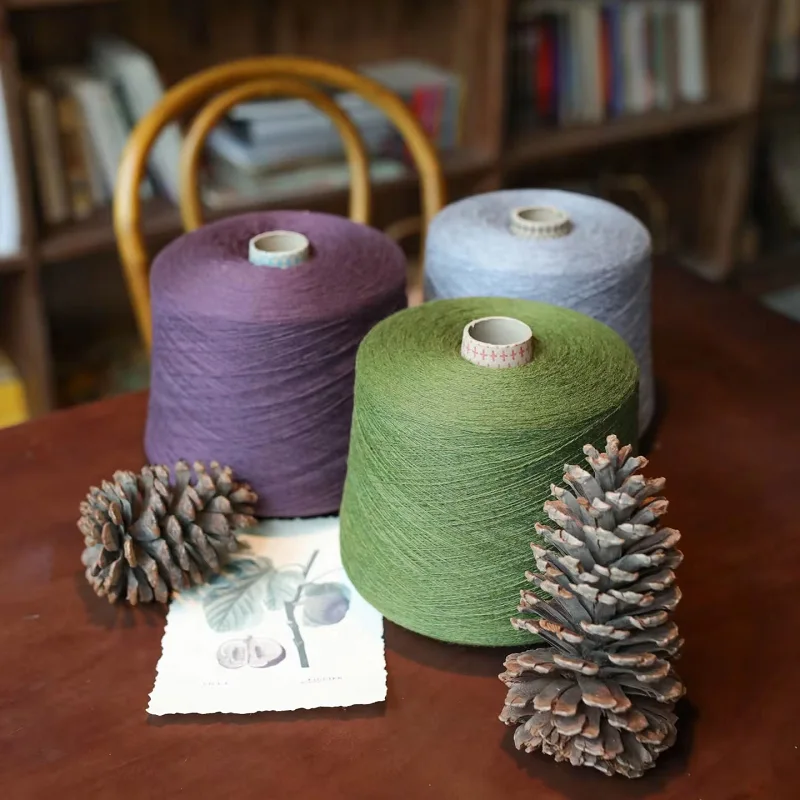
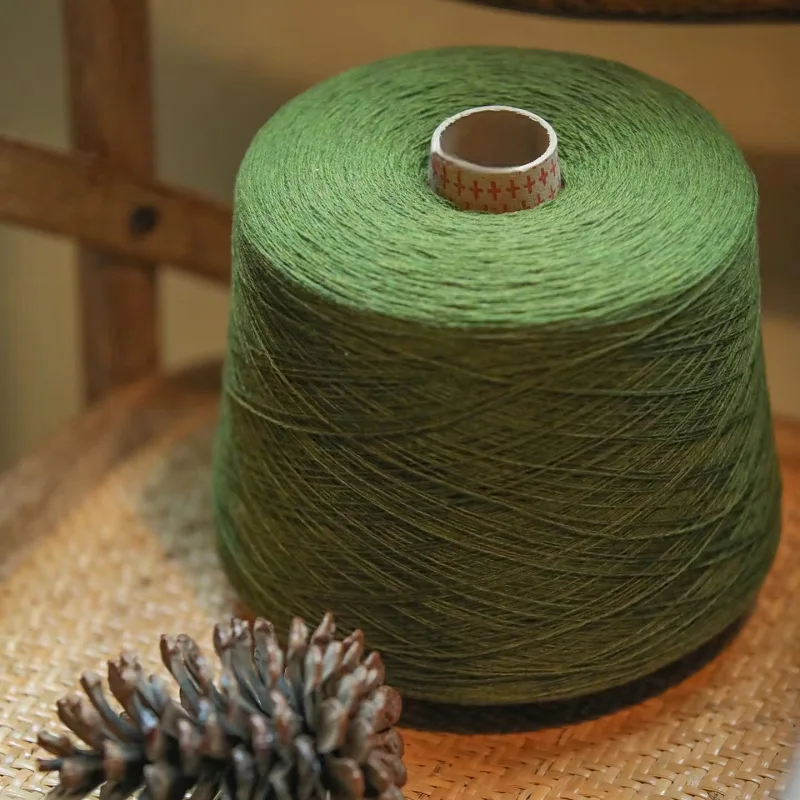
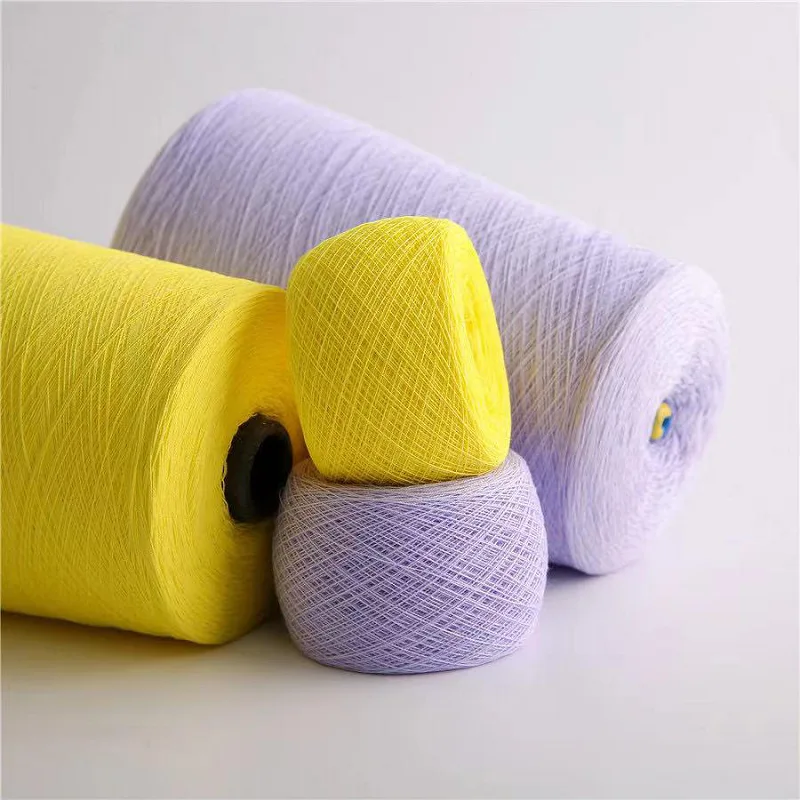
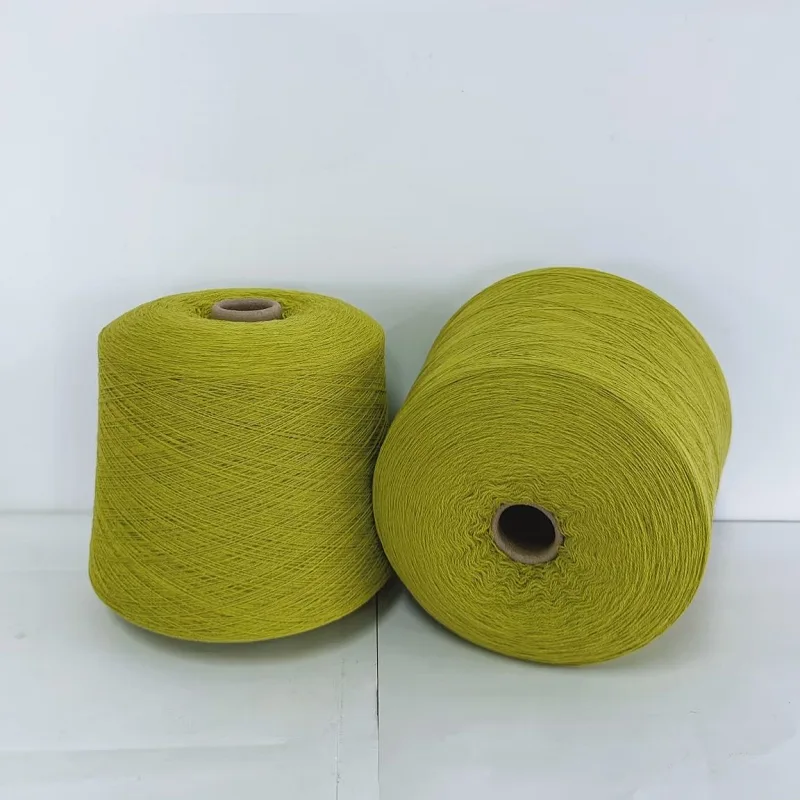
This 2/26 Nm wool yarn is spun from 100% wool and wound on cones for knitting and weaving mills. Because it combines two ring spun singles, the yarn is rounder and more even than a single yarn of the same weight. It also gives knitwear the full, springy hand that buyers expect from pure wool.
2/26 Nm Wool Yarn Specifications
Fiber
100% wool
Yarn count
2/26 Nm (two plies of Nm 26)
Approx. length
13,000 m per kg
Spinning
Ring spun, two-ply
Yarn form
Cone yarn
End uses
Machine knitting, hand knitting, weaving
Colors
Natural white, bleached white, red, blue, green, yellow, purple, cyan and mixed colors; custom shades by color card
Lead time
Stock shades: 1–2 days; custom colors: usually 3–15 days (from order confirmation)
Packaging
Carton packing
How 2/26 Nm Wool Yarn Performs in Fabric
Wool fiber has a natural crimp, so it traps still air between the fibers and keeps the fabric warm. It also stretches and springs back well, which helps ribs, cuffs and collars hold their shape after wear. In addition, wool has a moisture regain of about 15%, while polyester sits at only 0.4%. As a result, a wool knit feels drier against the skin than a polyester one in a heated room.
The two-ply build matters as much as the fiber. When two singles twist together, their thick and thin places tend to even out. The ply twist also usually runs against the singles twist, so the finished yarn is closer to torque-balanced. That lowers the risk of fabric twisting after washing, a common complaint when mills knit single jersey from singles yarn.
Knitting and Weaving Uses
Knitwear mills use this 2/26 Nm wool yarn for sweaters, cardigans, pullovers, scarves, hats and gloves. On flat knitting machines it can run as a single end for lighter pieces. For a thicker knit, many mills feed two or more ends together instead of switching to a coarser count.
Weaving mills use it for warm wool fabrics in autumn and winter apparel, such as coat cloth. However, weaving asks more of a yarn than knitting does, because the warp stays under loom tension for the whole run. Our guide on how knitting and weaving yarns differ explains why. So before sampling, send us your loom type and fabric construction, and we will check whether the yarn suits your warp, your weft or both.
Garment factories, fabric suppliers, textile traders and fashion brands also buy it for autumn and winter lines that need a 100% wool label.
Colors and Sampling
Stock shades tend to sell out during autumn and winter development, so it helps to send your target color and quantity early. We will check current stock first. If the shade you need is not available, we can quote custom dyeing instead.
For a custom color, send a Pantone number, a physical color card or a fabric swatch. We then prepare a lab dip for your approval before bulk dyeing starts. To get samples moving faster, also tell us the fabric use, machine type and delivery plan. A photo of the reference fabric helps too.
Frequently Asked Questions
What does 2/26 Nm mean on this wool yarn?
The first number is the number of plies, and the second is the metric count of each single. Nm 26 means 26 meters of single yarn weigh one gram. So 2/26 Nm is two of those singles twisted together. As a result, the finished yarn measures about 13 meters per gram, or roughly 13,000 meters per kilogram.
How does 2/26 Nm compare with cotton count and denier?
To convert metric count to cotton count, divide by 1.693. Each single is therefore about Ne 15.4, so in cotton terms the yarn is close to 2/15s. In denier, the plied yarn works out to roughly 690 D. Our yarn linear density guide shows how Tex, denier, Nm and Ne relate to each other.
Is 2/26 Nm wool yarn fine enough for hand knitting?
Yes, although it is a fine yarn at about 1,300 meters per 100 grams. Hand knitters often use a single strand for light shawls, or hold two or three strands together for a sweater-weight fabric. Since the yarn comes on mill cones, you may want to wind off smaller balls before you start.
Will the yarn shrink or felt when washed?
It can, because wool fibers felt in hot water with heavy agitation. Wool also does not tolerate strong alkali, so finished garments should carry a wool care label, such as cool hand wash with a neutral detergent. In addition, clothes moths feed on wool, so keep finished stock clean and sealed in storage. If your product needs a machine-washable or moth-resistant claim, raise it when you inquire. We will then confirm whether a suitable finish is available.
Which tests should I request for this wool yarn?
For knitting and weaving programs, start with linear density (ISO 2060), twist per meter (ISO 2061) and single-end breaking strength (ISO 2062). Then add colorfastness to washing (ISO 105-C06) and rubbing (ISO 105-X12). If pilling matters for your knitwear, also test a knitted swatch to ISO 12945. Our bulk yarn RFQ checklist covers the other specifications worth confirming. When you request samples, tell us which reports your customer requires.