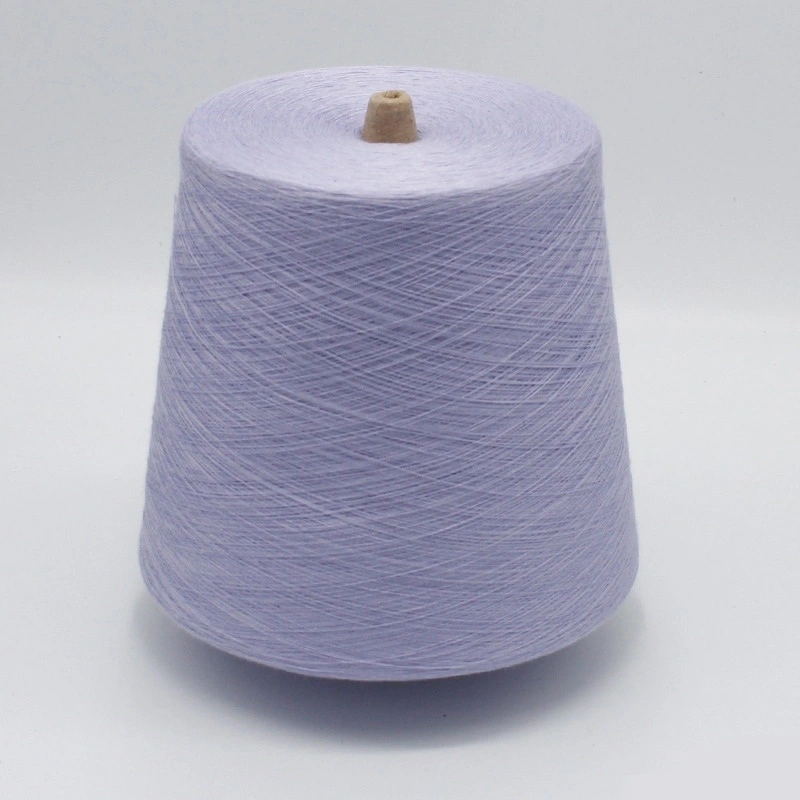
Nature’s Fresh Antibacterial Bamboo Cotton Yarn for Socks and Underwear
Nature’s Fresh is an antibacterial bamboo cotton yarn for socks, underwear, base layers and light activewear. It blends 80% bamboo-derived viscose with 20% cotton, and the regular count is Ne 32/1. The viscose gives a soft, smooth hand, while the cotton adds the body that commercial knitting and daily wear need.
The yarn also uses compact spinning. Before twisting, the frame condenses the fibers into a tighter strand, so fewer fiber ends stick out. As a result, the yarn sheds less fly at the feeders. The knitted surface also looks cleaner from the first sample.
Need another count or a matched color? Send your shade card, lab dip or buyer sample, and we will prepare sample cones for approval before bulk production.
How This Antibacterial Bamboo Cotton Yarn Compares with Cotton and Pure Bamboo
Sock mills usually weigh this blend against 100% cotton or 100% bamboo viscose. Cotton is the familiar choice, but it absorbs less moisture than viscose. Pure bamboo viscose feels even softer; however, it has less body and can run less steadily on some knitting setups. For a closer look at the cotton side, read how Nature’s Fresh bamboo cotton compares with regular cotton.
Feature
Nature’s Fresh 80/20
100% Cotton Yarn
100% Bamboo Viscose Yarn
Hand feel
Softer than cotton, with more body than pure bamboo
Firm and familiar
Very soft, but with less body
Moisture regain
Higher than 100% cotton
8.5% (standard value)
Higher than cotton
Yarn surface
Low hairiness, because compact spinning condenses the fibers
Depends on the spinning method
Depends on the spinning method
Product positioning
Antibacterial and comfort-focused sock programs
Basic programs without a functional claim
Natural-fiber story, although claims vary by supplier and test data
Typical uses
Socks, underwear, base layers, light activewear
Basic socks and knitwear
Soft knitwear and next-to-skin styles
If you plan to replace a yarn you already use, send us its count, color target and end use. We will then compare it with Nature’s Fresh before you order samples.
Antibacterial Bamboo Cotton Yarn Specifications
Fiber composition
80% bamboo viscose / 20% cotton
Regular count
Ne 32/1 single yarn (about Nm 54, 18.5 tex or 166 D)
Custom counts
Available on request
Spinning
Cotton system, compact spinning
Color
Stock shades, or custom colors matched to your shade card, lab dip or sample
Packing
Cartons or 25 kg plastic bags
Lead time
1–2 days for stock; 3–15 days for custom production
Suggested uses
Socks, underwear, base layers and lightweight knitwear
Sampling
Sample cones and shade cards before bulk orders
Working with VI-TEX on Samples and Color
At VI-TEX (Vi-Tech Global Company Limited), one team handles product selection, color matching, sampling and shipment follow-up. Because the same people follow your order from first sample to loading, you never have to repeat specifications. It helps most when a new sock line or a blend change runs close to a seasonal deadline.
Ask for shade cards and sample cones early. Your team can then approve hand feel and color while production slots are still open.
Packing and Lead Time
Standard packing is cartons or 25 kg plastic bags. We can also adjust it to your pallet standard or warehouse rules, so confirm the format before you approve the order.
Stock shades leave the warehouse fastest. Custom colors take longer, because each new shade needs matching and your approval first. When the ship date is tight, add it to your inquiry. We will then quote the earliest schedule we can hold.
Test Reports and Documents
On request, we supply shade cards, a fiber composition statement and test data on antibacterial performance and pilling.
Before you compare antibacterial results, check which method each report follows. ISO 20743 and AATCC 100 are the two you will see most often. However, they express results differently, so only compare reports that use the same method. Our guide to ISO 20743 vs AATCC 100 antibacterial testing explains the details. Also note how many wash cycles the sample went through, especially when you plan a wash-durability claim.
What is Nature’s Fresh antibacterial bamboo cotton yarn?
Nature’s Fresh is a VI-TEX yarn line for next-to-skin knits. This version blends 80% bamboo viscose with 20% cotton at Ne 32/1. It is a cotton-system yarn with compact spinning. Because the count is fine and the surface is clean, it suits socks and underwear better than bulky knitwear.
How does compact-spun Nature’s Fresh differ from ring-spun 80/20 bamboo cotton yarn?
Both can use the same fiber mix. However, compact spinning condenses the fibers before twisting, so the yarn has lower hairiness and higher strength than conventional ring yarn. To check a cone on arrival, untwist a short length by hand. Both types fall apart into loose fibers, but the compact yarn looks noticeably cleaner.
Why blend 20% cotton instead of using 100% bamboo yarn?
Pure bamboo viscose feels very soft, but it has little body, and some knitting setups find it harder to run. Adding 20% cotton gives the yarn more structure and more predictable knitting behavior. The finished sock therefore keeps most of the bamboo softness while gaining the body that daily wear needs.
Should we test the yarn or the finished socks for an antibacterial claim?
Test both when you plan to print a claim on the packaging. The yarn report shows how the fiber performs. Your claim, however, covers the finished sock, which usually adds nylon or spandex, dyes and softeners. For this reason, run ISO 20743 or AATCC 100 on finished socks after the number of washes your market expects.
How should we state the fiber content on sock labels?
Label the finished sock, not the yarn. In the US, FTC guidance on bamboo textiles asks for the generic fiber name, such as “rayon made from bamboo”. EU labels likewise use the generic name viscose. Also recalculate the percentages after you add nylon or spandex, since the sock no longer matches the 80/20 yarn.
What care instructions suit socks knitted with Nature’s Fresh?
Viscose loses part of its strength when wet, so gentle care helps socks last longer. Many brands recommend washing at 40°C or below, avoiding chlorine bleach and tumble drying on low heat. Still, base the final care label on a wash test of your own finished socks.