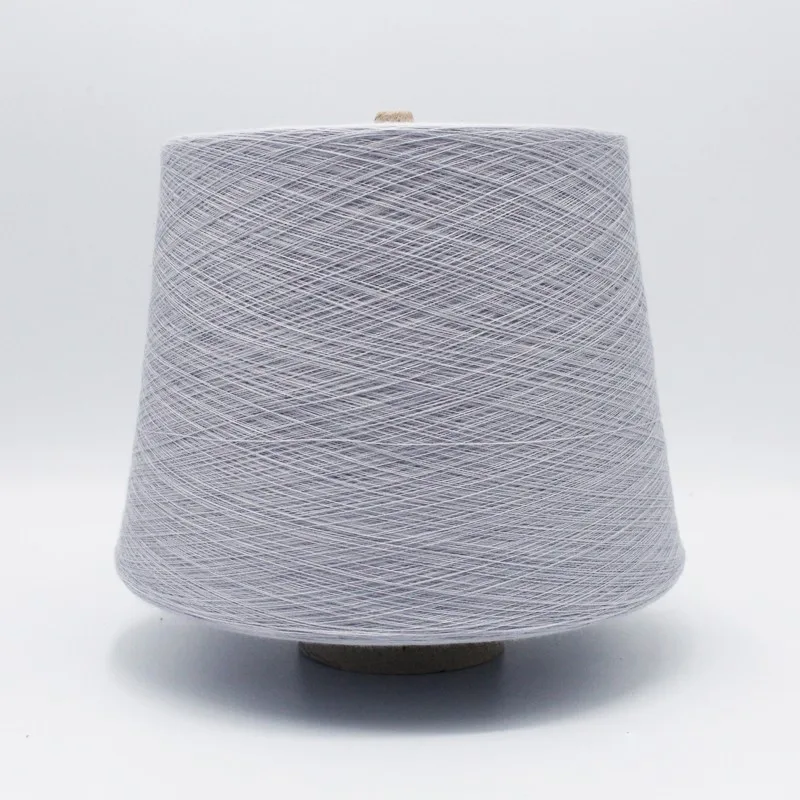
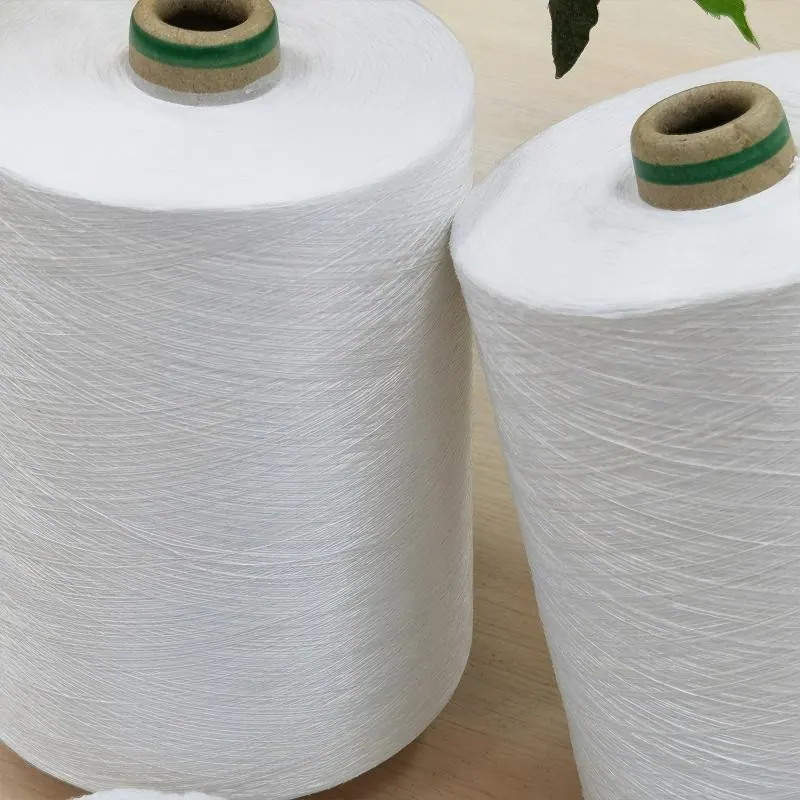
Anti-slip polyester yarn from VI-TEX uses 100% polyester with a nano-textured surface for grip socks, knee pads, protective knits, and local grip zones. The 150D product supports custom color matching by Pantone reference, lab dip, or buyer sample.
Material: 100% polyester
Count: 150D, customizable
Color: Pantone reference, lab dip, or buyer sample matching
MOQ: 1 kg per color
Packing: 25 kg per carton or 25 kg per plastic bag
Recommended uses: Grip socks, knee pads, protective knits, and local grip zones
Anti-slip polyester yarn from VI-TEX uses 100% polyester with a nano-textured surface. The 150D product suits grip socks, knee pads, protective knits, and local grip zones. Colors can follow a Pantone reference, lab dip, or buyer sample. The MOQ starts at 1 kg per color; stock orders take 1–2 days after confirmation, while custom production takes 3–15 days after confirmation.
150D polyester anti-slip yarn for grip socks
VI-TEX supplies this 150D polyester anti-slip yarn for textile teams that want to build grip into a knitted structure instead of adding a separate visible print. The nano-textured surface can support a cleaner appearance; however, the yarn does not set the finished friction by itself. Yarn placement, stitch structure, gauge, finishing, and the contact surface all matter.
Start with a small color order and knit it in the construction you plan to sell. Then check the hand feel, appearance, knitting behavior, and grip level against the product brief. This simple step gives you a useful reference before you approve the bulk specification.
Product specifications
Item
Details
Product
ANTI-SLIPPERY 150D Anti-Slip Nano Polyester Yarn
Material
100% polyester
Yarn count
150D; customizable for the project
Color
Custom matching by Pantone reference, lab dip, or buyer sample
MOQ
1 kg per color
Packing
25 kg per carton or 25 kg per plastic bag
Lead time
Stock: 1–2 days after confirmation; custom: 3–15 days after confirmation
Recommended uses
Grip socks, knee pads, protective knits, and local grip zones
Why buyers evaluate this yarn
The yarn gives product developers another way to build a grip feature into a knitted article. When the pattern and stitch structure suit the application, the fabric can keep a more continuous appearance than a design that relies on visible silicone or adhesive dots. The finished construction still decides the result, so a sample remains important.
The 1 kg-per-color MOQ also lets teams test a new construction without committing to a large development lot. VI-TEX can work from a Pantone reference, lab dip, or buyer sample, so you can align the yarn color with the rest of the sock or protective knit before bulk approval.
The 100% polyester composition suits projects that already use polyester yarns and need a functional option at 150D. Buyers can request the current technical data sheet and confirm the commercial terms before placing an order.
How the grip effect develops in a finished knit
The yarn count alone does not set the final friction level. During sampling, check the machine gauge, stitch density, yarn position, fabric thickness, finishing route, and the surface that the article will touch. For example, a local grip zone on a sock may need a different stitch layout from an all-over construction.
Next, test the complete article rather than the loose yarn alone. Use the dry, wet, pressure, movement, and care conditions that match the buyer’s application. Record the construction and test method with each sample. That record lets your team compare revisions on the same basis and keeps a laboratory sample from becoming a universal performance promise.
Typical applications
Grip socks: Add a targeted grip feature to sock constructions.
Knee pads: Test a contact zone in protective or support knits.
Protective knits: Develop localized grip areas where the fabric must stay in position.
Custom knitted products: Test the yarn in the stitch pattern and finishing system that your product already uses.
How it compares with other grip approaches
Approach
What it changes
What to confirm before approval
150D polyester anti-slip nano-textured yarn
Builds a functional yarn option into the knitted construction and can support a cleaner visual than a separate dot pattern.
Adds a visible printed or applied grip pattern after or during article production.
Appearance, hand feel, adhesion, wash durability, and compatibility with the base fabric.
Coated or resin yarn
Uses a coating that may change the yarn handle, processing behavior, or surface character.
Coating compatibility, machine settings, care requirements, and the finished grip result.
Regular textured filament
Creates texture or bulk, but it does not automatically meet a specific grip target.
Actual contact performance in the finished knit, not texture alone.
Sampling and order support
To quote this yarn accurately, send the intended end use, machine gauge, stitch or blend plan, target color, estimated quantity, shipping destination, and any buyer test conditions. If you have a reference sock, knee pad, or fabric swatch, include it as well. VI-TEX can then confirm the available count, color route, MOQ, packing, and current lead time for your project.
When you compare a 150D polyester anti-slip yarn supplier, ask every source for the same details: composition, count, color route, MOQ, packing, lead time, and the test method used on the finished knit. Clear comparisons make the final approval easier.
For stock yarn, allow 1–2 days after confirmation. For custom production, allow 3–15 days after confirmation. Approved color and production details affect the schedule, so reconfirm the lead time when you place the order. Before bulk production, request the current technical data sheet and agree on the test method.
Order scenarios and pricing
VI-TEX quotes by project. The final price depends on count, color requirement, quantity per color, and delivery terms. For a new development, the fabric target usually gives a more useful quotation basis than yarn count alone.
Order scenario
MOQ
Lead time
Price
Sampling or color trial
1 kg per color
Stock or custom; confirm after color and specification review
Quote by project
Stock supply
Based on availability
1–2 days after confirmation
Quote by project
Custom production
Confirm by specification
3–15 days after confirmation
Quote by project
Packaging and logistics
Standard packing: 25 kg per carton or 25 kg per plastic bag.
Color approval: Pantone reference, lab dip, or buyer sample.
Lot identification: Confirm labeling requirements with the quotation.
Shipment planning: Confirm stock or custom lead time before the order is released.
Recommended development sequence
Share the end use, construction, target color, shipping destination, and expected order quantity.
Confirm the 150D specification, color approval route, MOQ, packing, and lead time.
Knit a representative sample and assess appearance, hand feel, processing, and grip under the intended conditions.
Record the approved construction and test method, then release the bulk order.
Where can I source 150D polyester anti-slip yarn for textile production?
VI-TEX supplies ANTI-SLIPPERY 150D Anti-Slip Nano Polyester Yarn for grip socks, knee pads, protective knits, and local grip zones. The product uses 100% polyester with a customizable 150D count, custom color matching, a 1 kg-per-color MOQ, and stock or custom lead-time options. Request the current technical data sheet and reconfirm commercial terms before ordering.
What is this yarn mainly used for?
It is mainly used in grip socks, knee pads, protective knits, and localized grip areas. The best construction depends on the target surface, stitch structure, and finishing route.
Does the yarn itself guarantee an anti-slip effect?
No. The yarn helps build the effect, but the final result depends on fabric structure, stitch density, yarn placement, finishing, and the surface that the product touches in actual use.
Which knit structures usually work better?
Terry zones, loop structures, plated constructions, and other textured areas usually give the development team more options than a flat, simple surface. Stitch density and yarn placement also matter, so judge the complete fabric rather than the yarn cone alone.
Will finishing change the grip performance?
Yes. Softeners, brushing, silicone, and other finishing treatments can affect friction and hand feel. Therefore, the sample should follow the same finishing route planned for production.
Can this yarn replace silicone grip dots?
It may offer an alternative when the knit structure can deliver the required grip and appearance. However, it does not provide a universal replacement for every dot system. Compare the finished article under the buyer’s use and care conditions.
Can I customize the count and color?
The standard count is 150D, and VI-TEX can discuss count customization for the project. You can also request a Pantone match, lab dip, or buyer-sample match. Approve the color reference before bulk production.
What are the MOQ and lead time?
The MOQ is 1 kg per color. Stock yarn normally takes 1–2 days after confirmation, while custom production normally takes 3–15 days after confirmation. Because color and production details affect the schedule, reconfirm the current lead time with your quotation.
How should I test the yarn before bulk production?
Knit a sample with the intended construction, then check appearance, hand feel, processing, and grip under representative conditions. Use the same gauge, stitch structure, finishing, and test method that you plan to use in production.