Staple vs Filament Yarn: Fiber Shape Defines Fabric Quality and Longevity

1、What Are Staple Fiber & Filament Yarn?

You may have come across the terms “staple fiber” and “filament yarn” in fabric guides. To fully tell their differences, we need to start with the basic fiber itself.
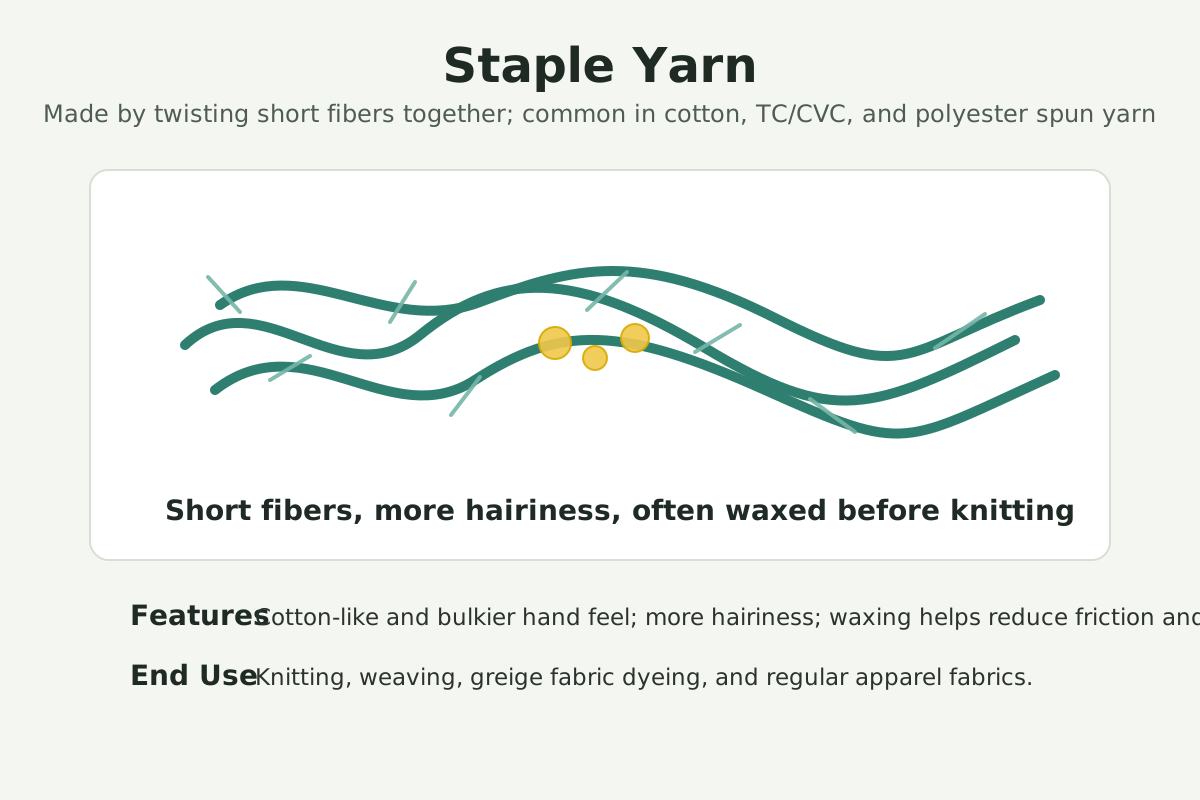
staple yarn

Staple fibers range in length from several millimeters to dozens of millimeters. Natural varieties such as cotton, linen and wool all fall into this category. Chemical filaments can also be cut into staple fibers after production, which are classified by usage into cotton type (25~38mm), medium-long type (51~76mm) and wool type (70~150mm). Since staple fibers have to go through spinning and twisting to bond together into continuous yarn, staple yarn naturally contains tiny joints and is inherently unable to achieve perfect uniformity.

Filaments are continuous strands produced directly after spinning without being cut, with lengths reaching several kilometers. Natural silk is a typical natural filament. Meanwhile, chemical fibers including polyester, nylon and viscose can also be made into filaments. Unlike staple fibers, filaments can be woven directly without spinning, so each filament yarn is a single unbroken strand from start to finish.
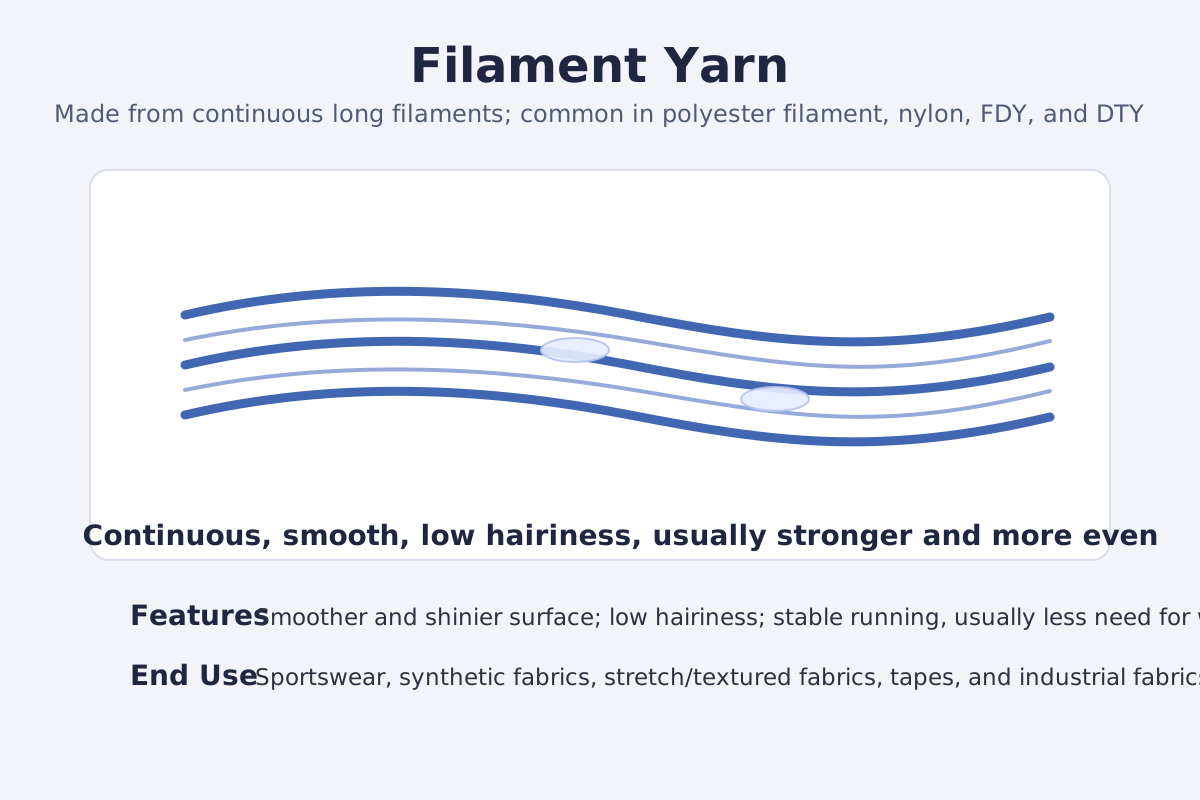
filament yarn

2、Appearance & Uniformity: The Visual Differences of Yarn

When viewing along the yarn axis, filament yarn features a more consistent diameter than staple yarn. This is easy to understand: filaments are continuous single strands, while staple yarn is made by twisting countless separate staple fibers together. As a result, the fibers inside can never be arranged perfectly evenly, leading to natural thick and thin spots along the yarn length.
The differences become even more obvious on the yarn surface. Filament yarn boasts a smooth finish with no lint and a bright luster. In contrast, staple yarn has plenty of protruding fiber ends, commonly known as yarn hairiness, which gives it a dull and rough texture. That explains why fabrics like real silk and polyester imitation silk woven from filaments deliver an upscale sheen, whereas cotton T-shirts show a soft and understated luster.

3、Strength & Durability: Filament Yarn’s Better Wear Performance
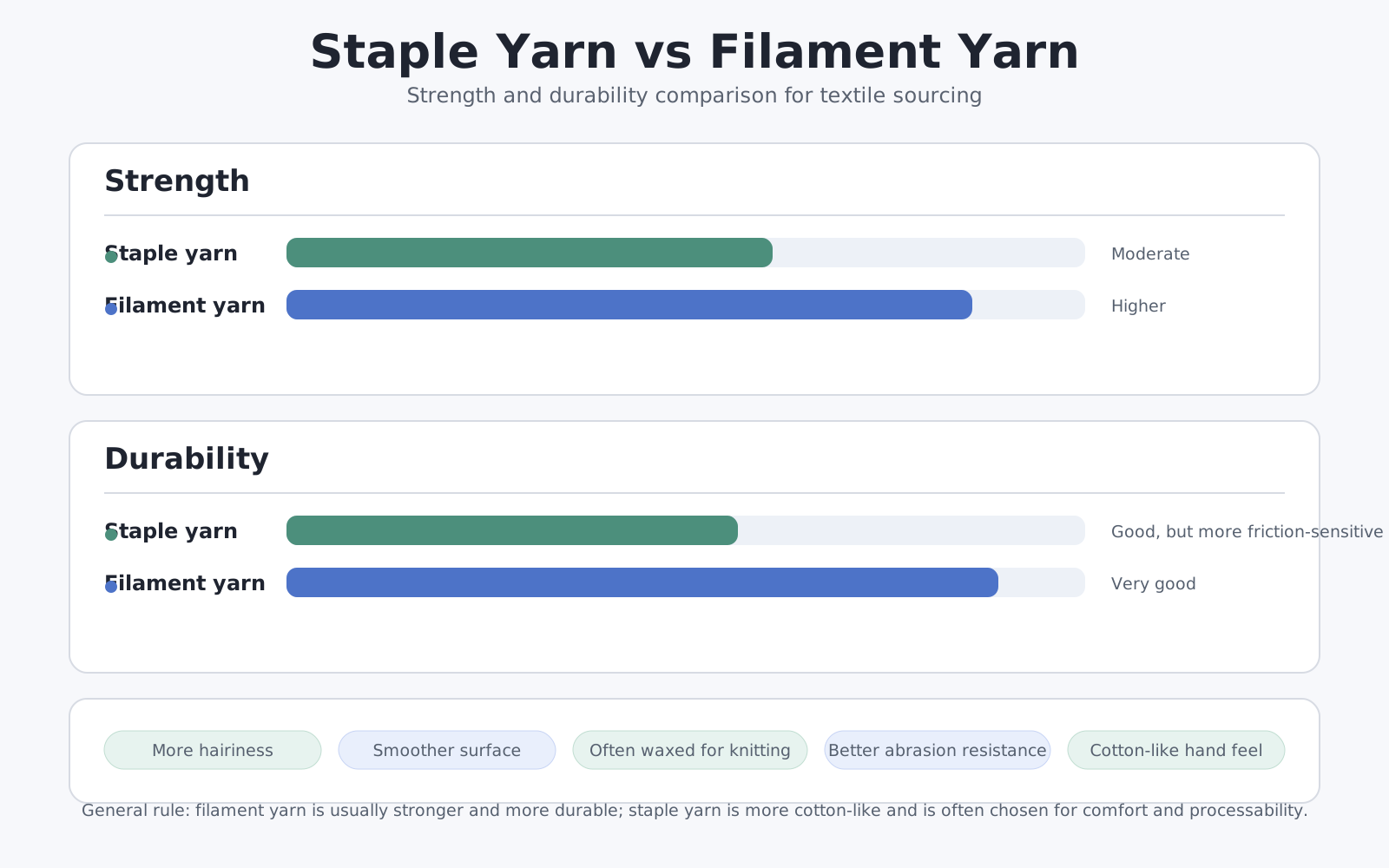
strength&durability between staple yarn and filament yarn
Filament yarn is stronger than staple yarn of the same fiber type and diameter. The difference lies in their breaking mechanisms. When staple yarn breaks, some fibers snap first while others slip out from the yarn structure. In comparison, all fibers in filament yarn bear tension and break at the same time. Besides, fibers inside filament yarn are highly oriented, whereas staple fibers arrange randomly with a low orientation degree, which further widens the strength gap between the two.
Fabrics made from filament yarn are more durable and resist pilling and fuzzing effectively. On the contrary, staple fiber fabrics wear out more easily and tend to develop fuzz and pills. Fabrics woven from twistless or low-twist filament yarn are more prone to snagging than staple fiber fabrics. Actually, staple yarn with moderate twist delivers the best durability. Too little twist makes the yarn loose, vulnerable to snagging and pilling. Excessively high twist will build up internal stress and reduce yarn strength instead.
Here is the durability ranking: regular polyester filament fabric > fabric of moderately twisted staple yarn > low-twist staple yarn fabric ≈ twistless/low-twist filament fabric (high risk of snagging). Though filament yarn has inherent high strength, it will snag easily without sufficient twist for protection.

4、Comfort & Hand Feel: How Fiber Structure Affects Warmth and Coolness

Filament yarn has a smooth surface, so its fabrics tend to cling to the skin. If the weave is tight, moisture can hardly pass through, leaving you feeling stuffy.
This is where staple yarn excels. The fuzzy fiber ends on staple yarn reduce direct contact between skin and fabric, which boosts air permeability for greater comfort. Fabrics made from staple fibers usually feature a looser structure. They feel full, fluffy and soft, and deliver a warm touch. In addition, staple yarn offers better coverage and lower transparency, so the fabrics feel thicker and warmer. By contrast, filament fabrics are lightweight and semi-sheer, ideal for summer wear.
Viscose staple fiber feels soft and skin-friendly with a cotton-like texture. Viscose filament, however, is sleek and drapes beautifully, boasting superior stiffness and drapability.

5、Textured Yarn: A Balanced Choice Between Two Types

To combine the strengths of filament and staple yarn, the textile industry has developed textured filament. Manufacturers use physical or chemical treatments to add bulk and crimp elasticity to originally smooth filaments.
Textured filament creates fluffy fabrics with subtle luster and a lint-free surface, blending the visual traits of both filament and staple fabrics. It also absorbs moisture better than regular smooth filament. Polyester Draw Textured Yarn (DTY) is a typical example. It features the strength and shape retention of synthetic filament, along with the fluffy feel and warmth similar to staple yarn. Today, it ranks among the most widely used synthetic filaments.
Textured filament strikes a nice middle ground. It never feels overly sleek and cool like plain filament, nor does it look limp like staple yarn. Most everyday polyester garments are made from this material.

6、Know Yarns, Pick the Right Fabrics

(1)Choose yarn types based on comfort needs. For cool, flowy dresses and shirts ideal for summer, go for filament fabrics such as silk, viscose filament and polyester imitation silk. For warmth, fluffiness and softness in autumn and winter, staple fabrics like cotton, wool and blended viscose staple are your top picks.
(2)Prioritize durability according to wearing occasions. For daily garments that require frequent washing, opt for fabrics made of moderately twisted staple yarn, as they stand up well to wear and resist snagging. For low-wear items like formal dresses and linings, choose filament fabrics to enjoy excellent luster and draping performance.