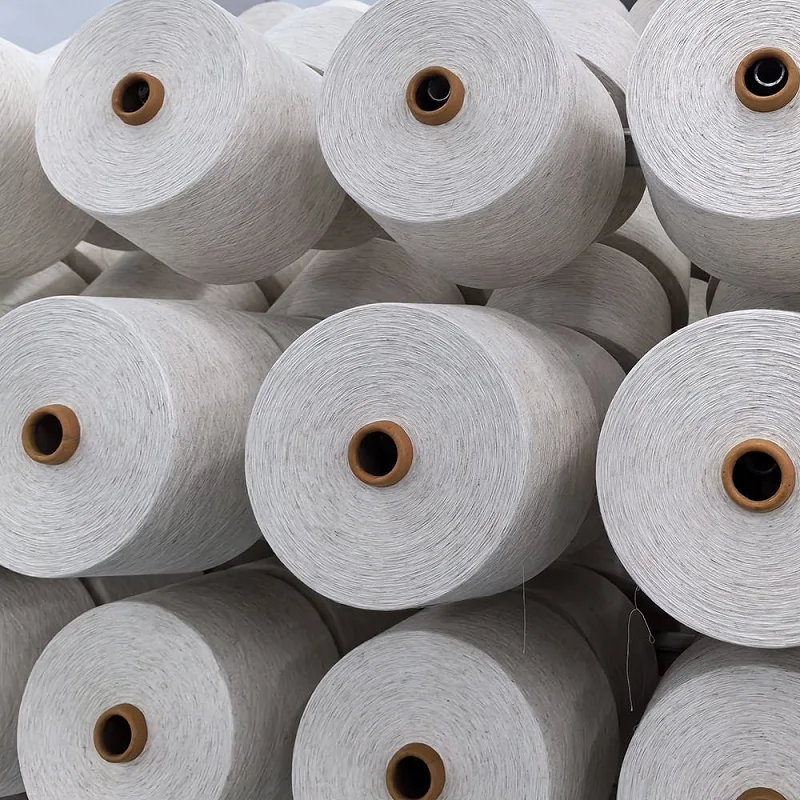
Viscose Linen Yarn 70/30 Ne 21/1 Compact Siro Spun
$899
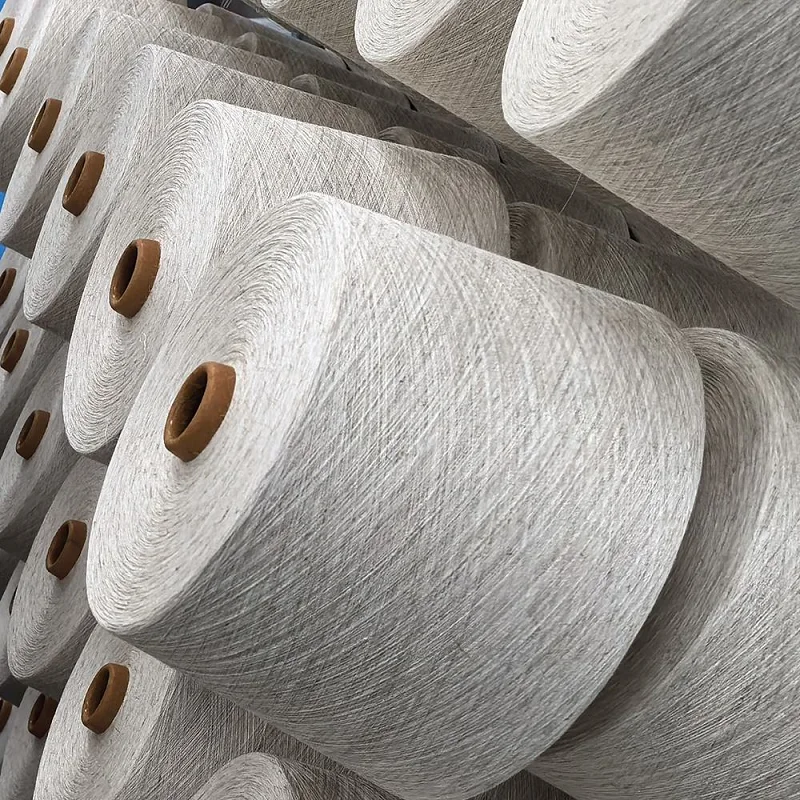
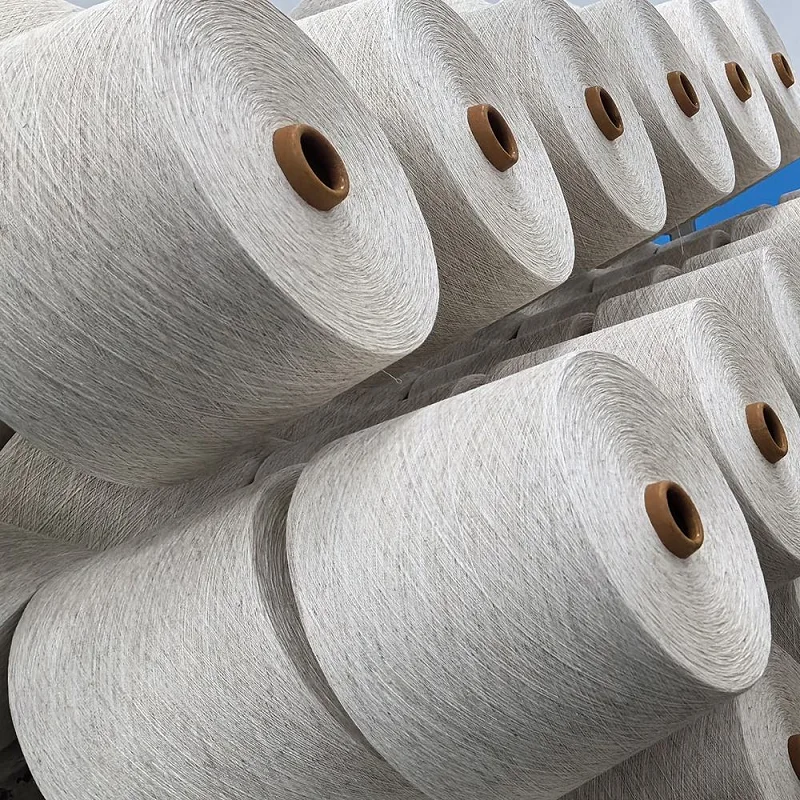
Viscose linen yarn in a 70/30 blend, compact siro spun at Ne 21/1 for knitting and weaving. The viscose gives a soft hand and good drape, while the linen keeps a dry, cool touch and visible slubs.
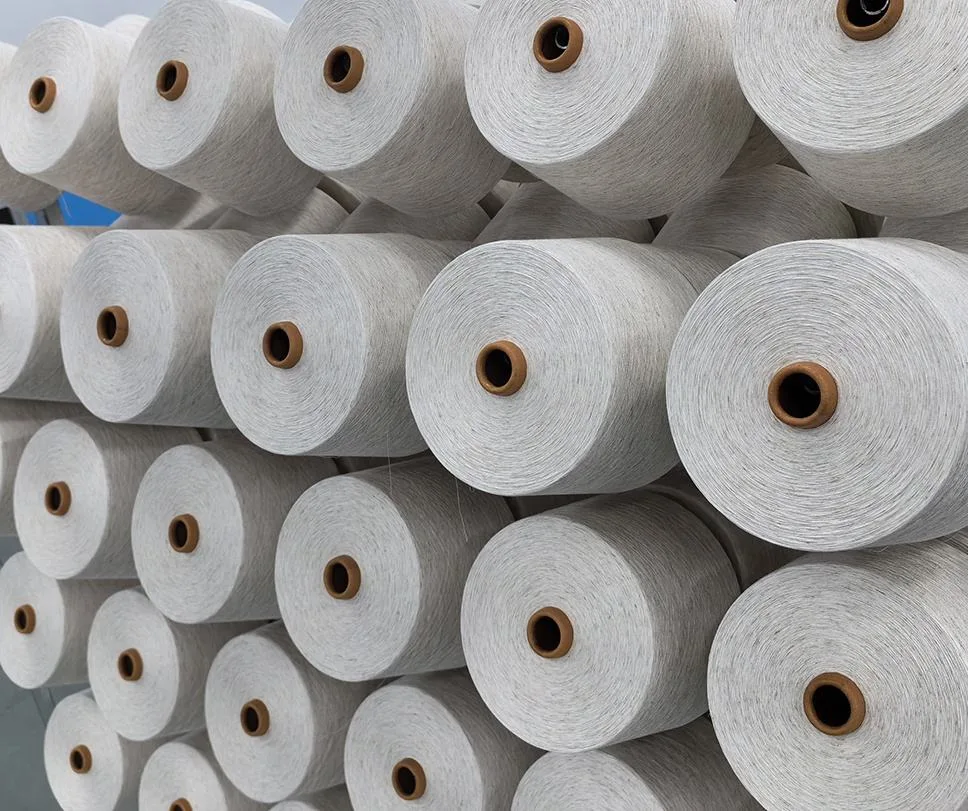
This viscose linen yarn blends 70% viscose with 30% linen at Ne 21/1. We spin it on a compact siro system and supply it on cones. Knitting mills, weaving mills, garment factories and fashion brands use it when they want a linen look without the stiff hand of pure linen.
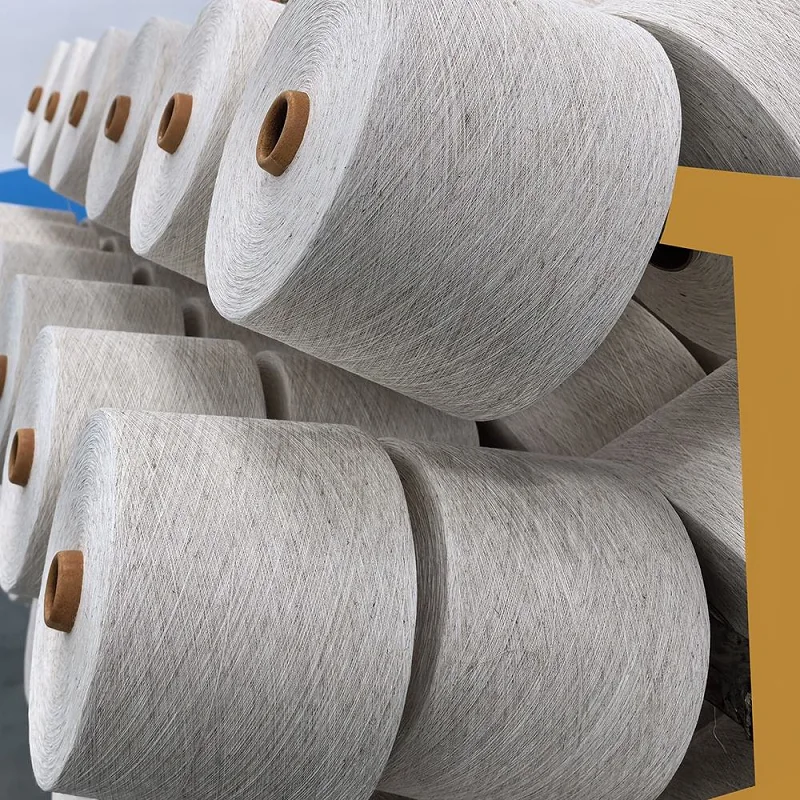
Most of the softness comes from the viscose, which also helps the fabric drape. The 30% linen share is enough to show natural slubs and give a dry, cool touch. The finished fabric still reads as linen rather than plain viscose.
Viscose Linen Yarn Specifications
Composition
70% viscose, 30% linen
Yarn count
Ne 21/1 (about Nm 35.6, 28 tex or 253 denier)
Spinning
Compact siro spun
Tenacity
11.6 cN/tex
End use
Knitting and weaving
Colors
Natural white, bleached white, red, blue, green, yellow, purple, cyan and mixed colors, as well as custom shades by color card
Form and packing
Single yarn on cones, packed in cartons
Lead time
Stock orders ship 1-2 days after confirmation, while custom orders usually take 3-15 days.
Why Blend Viscose with Linen
Pure linen at this count is hard to work with. Flax has low elasticity, so the yarn feels stiff and the fabric creases easily. It can also run poorly on knitting machines. Viscose fixes much of this because it is soft and smooth and drapes well. The blend knits more easily than pure linen, and the fabric hangs closer to the body.
The linen still does real work here. Its standard moisture regain is about 12%, and it moves heat away from the skin quickly. That is why the fabric feels cool when you first put it on. Its natural slubs also give the surface the texture buyers expect from linen.
There is a trade-off, though. Viscose and linen are both cellulose fibers with limited elastic recovery, so the fabric still creases in wear. It won’t feel as silky as 100% viscose either. For summer shirts, tops and dresses this is rarely a problem. After all, most buyers pick a viscose linen yarn for that texture.
How Compact Siro Spinning Helps This Linen Yarn
Compact siro spinning feeds two rovings into one yarn and condenses the fibers before twisting. Among ring-spun yarns, it gives the lowest hairiness and the smoothest surface.
That matters more for a linen blend than for cotton. Flax fibers are stiff, so their ends tend to stick out of a conventional ring yarn. When fewer ends stick out, the fabric face looks cleaner and feels less prickly on the skin. Knitters usually see less fly around the machine too. For a closer look at the methods, read our guide on how compact and siro spinning differ.
Applications for Viscose Linen Fabrics
Knitters use this viscose linen yarn for T-shirts, tops, pullovers and light knitwear. They get a soft hand with visible linen texture. On the weaving side, it goes into shirting, dress fabrics and other linen-look wovens, because the viscose adds drape while the linen keeps the surface lively.
Spring and summer lines, such as casual wear and resort wear, are where it fits best. The fabric absorbs moisture and feels cool when the weather turns warm. Scarves and shawls are another good match, since the blend drapes softly against the skin.
Ne 21/1 is a medium count. Depending on gauge, fabric density and finishing, it works for knitted tops as well as medium-weight shirting and dress fabrics.
Quality Checks, Colors and Supply
Before each shipment we check every lot of viscose linen yarn for count accuracy, evenness, softness and surface texture. We focus on these points because an uneven count or a rough surface shows up fast on the mill floor.
Besides the stock shades listed above, we can develop custom colors from your fabric swatch or color reference. We also help with sampling, order planning and bulk production. For each project, we agree on packing and shipping details with you.
Viscose Linen Yarn FAQ
Is the 70% fiber in this yarn viscose or TENCEL™ lyocell?
It is viscose. Both belong to the regenerated cellulose family, but they come from different processes, and lyocell keeps more of its strength when wet. If your program calls for lyocell, our 70% Tencel 30% linen version is the better match.
Will the fabric wrinkle less than pure linen?
Don’t count on it. The viscose softens the hand, but it also has poor crease recovery, so the fabric still wrinkles in wear. If wrinkling matters for your garment, plan an easy-care finish at the fabric stage. Our article on why linen wrinkles explains the fiber side of this.
Does fabric made from this yarn shrink?
Yes, it can. Viscose swells when wet and often shrinks in the first few washes, and linen shrinks too. Shrinkage depends more on fabric construction and finishing than on the yarn itself. Run a wash test on your fabric sample, then use a relaxation or pre-shrink finish before cutting.
How does this blend take dye?
Both fibers are cellulose, so reactive dyes color them in the same bath. Linen usually dyes a little lighter than viscose, though. On solid shades this gives a soft, slightly uneven tone that suits a natural linen look. If you need a flatter color, tell us when you send your color reference.
How can I check that the yarn is siro spun?
Untwist a short length by hand. A siro yarn splits into two strands because it starts as two rovings. A conventional ring or compact yarn falls apart into loose fibers instead.