WhatsApp : (+86) 19058080181 Email : info@vi-tex.com

Germany Develops Innovative Textile Solution Capturing 98.5% Microplastic Fibers from Wastewater
German researchers recently unveiled a cascade filter made from textile materials, designed to trap microplastics directly from wastewater before these pollutants flow into rivers and oceans.
Developed by scientists at Germany’s DITF (German Institute for Textile and Fiber Research Denkendorf), this new filter can intercept loose fibers shed during regular laundry cycles.
Growing global concerns over microplastic pollution drove the launch of this invention. Research data reveals over 171 trillion microplastic particles exist across the world’s oceans, with traces even spotted in remote Antarctic zones.
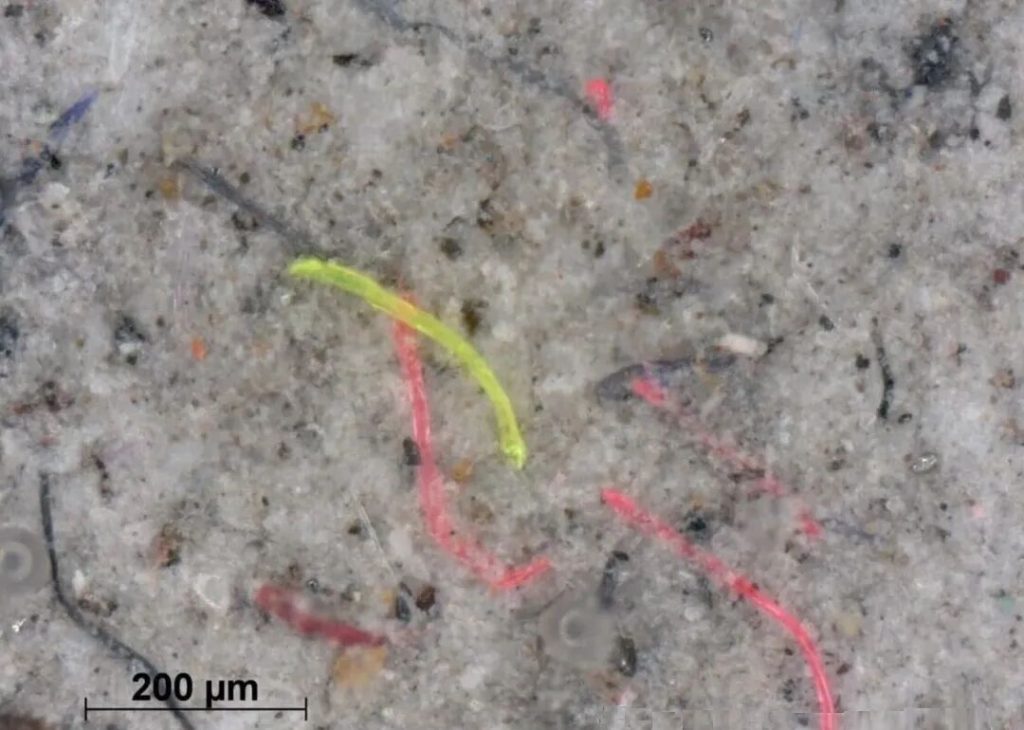
These tiny plastic fragments travel up the food chain and eventually enter the human body, posing potential health hazards. In particular, washing synthetic fabrics releases massive volumes of microfibers into wastewater, which then seep easily into aquatic ecosystems.
Water Purification Solutions
The team’s textile-based cascade filter targets worsening microplastic pollution. Experts forecast such pollution will surge 3.2 times by 2030 and tenfold by the end of this century.
According to researchers, the filter removes 89.7% to 98.5% of microplastic particles from wastewater. Lab assessments and field trials at commercial laundries and municipal sewage plants have verified these performance figures.
Synthetic microfibers shed quietly from garments with every wash cycle. Roughly 1 kilogram of textiles can release between 12 mg and 1,400 mg of these tiny fibers.
Conventional wastewater plants can filter out up to 99% of microplastics. Even so, massive processing volumes let plenty of microplastics escape into rivers and oceans.
For this reason, the new filter focuses on point-of-source filtration. It differs from standard treatment that relies on large-scale chemical or mechanical equipment. What’s more, the unit works efficiently under low water pressure.
The team adds that DITF’s composite textile filter material adapts easily for many other filtration applications beyond microplastic capture.
Stopping Ocean Pollution
The team builds this innovation around a three-stage filter system made of textile composites. Each stage features a 3D sandwich structure with polypropylene fabric and three-dimensional spacer layers.
As wastewater flows through the cascade setup, filter pores shrink gradually from one stage to the next. This design catches progressively finer particles and traps microplastics as tiny as 1.5 micrometers.
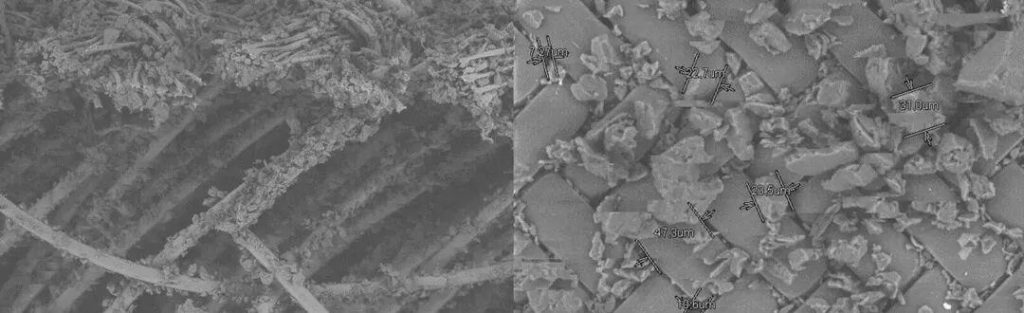
Left: Filter cake on 3D warp-knit cross-section (upstream) Right: Microplastics on upstream filter fabric
Over time, trapped particles build into what engineers call a filter cake. This accumulated layer actually boosts filtration efficiency. To ease buildup issues, the team adds an inclined setup.
Researchers noted in a press release: “We fit a compressed-air backwash system to clean filters and restore full performance. Since filter cake shifts from fabric into spacer layers, backwashing happens less often and runtime rises by 155%.”
Scientists see high separation efficiency and long service life making this filter medium promising for wastewater treatment. They conclude it fits diverse uses and scales while staying cost-effective and compact.
German researchers have recently developed an advanced textile-based cascade filter, a practical solution to stop microplastics from entering aquatic environments. This innovative device effectively captures microplastic contaminants directly from wastewater before they flow into rivers and eventually reach the ocean.
Developed by experts from the German Institute for Textile and Fiber Research Denkendorf (DITF), the new filter is specially designed to trap tiny synthetic fibers released during daily laundry processes. As global microplastic pollution continues to worsen, this eco-friendly technology fills an urgent market gap. According to relevant research, more than 171 trillion microplastic particles are currently present in global oceans, and these pollutants have even been detected in remote Antarctic regions.
D