WhatsApp : (+86) 19058080181 Email : info@vi-tex.com

How to Wash and Care for Lyocell Fabric
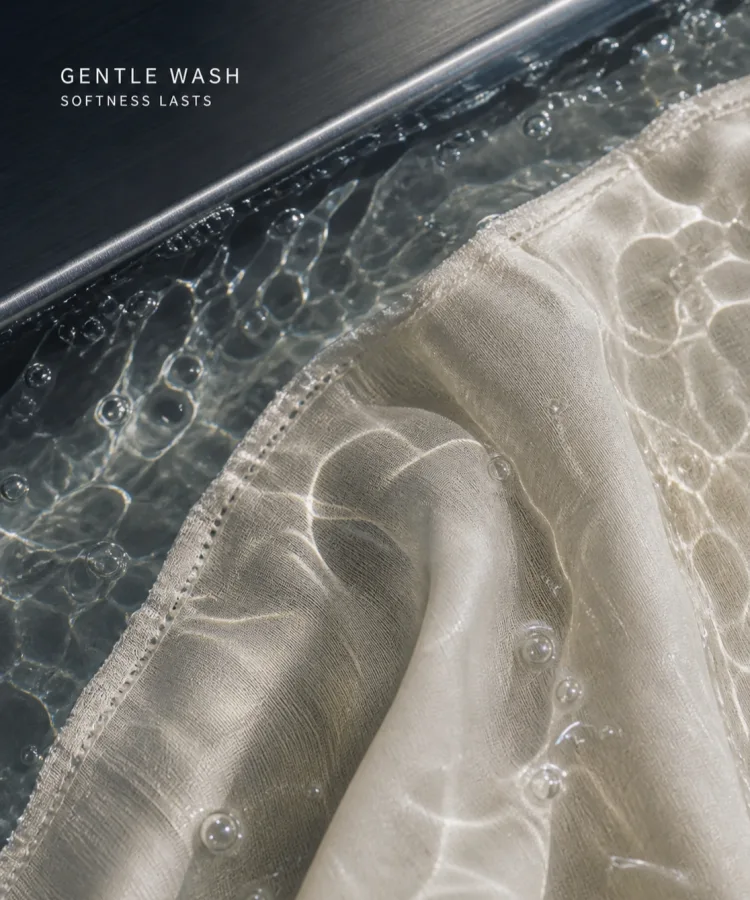
Knowing how to wash lyocell fabric correctly helps preserve its smooth surface, soft drape and cool touch. For most washable lyocell garments, we recommend a neutral detergent, water below 30°C and gentle handling. Long soaking, hard scrubbing and forceful wringing should be avoided because wet friction may cause surface fuzziness, pale marks or changes in appearance.
The care label still comes first. A lightweight lyocell shirt, a knitted top and a lined dress may require different treatment, even when their main fiber content is similar. Fabric structure, blend ratio, dyeing, finishing, lining and garment construction all affect the correct washing method.
What Is Lyocell Fabric?
Lyocell is a regenerated cellulose fiber normally made from dissolving wood pulp. It is known for its smooth hand, moisture absorption, soft drape and comfortable feel against the skin. These properties make it suitable for dresses, shirts, underwear, socks, lightweight knitwear, bedding and other close-to-skin products.
Lyocell and TENCEL™ should not be treated as identical terms. Lyocell is the generic fiber name, while TENCEL™ is a trademark used for specific branded fibers produced by Lenzing. A garment containing lyocell does not automatically contain TENCEL™ branded fiber.
The smooth appearance of lyocell fabric needs appropriate wet handling. Lyocell has a fibrillar fiber structure. When an unsuitable fabric experiences strong friction while wet, very fine fibrils may separate at the surface. This can create fuzziness, pale streaks or a slightly frosted appearance.
The response varies between fabrics. Yarn construction, knitting or weaving density, dyeing and finishing all matter. That is why two garments marked “100% lyocell” may not have exactly the same care instructions.
How to Wash Lyocell Fabric by Hand
Hand washing gives you more control over water temperature, soaking time and mechanical action. It is often a suitable choice for lightweight lyocell garments, dark colors and fabrics with a smooth surface, provided that the care label permits washing.
Use Water Below 30°C
Fill a clean basin with cool or lukewarm water. For most washable lyocell clothing, the water temperature should remain at or below 30°C.
Hot water may increase shrinkage, color loss and creasing, especially when the fabric has not been developed for high-temperature washing. It may also affect other fibers in a blend. A lyocell-silk, lyocell-wool or lyocell-elastane fabric can be more sensitive than a standard lyocell-cotton fabric.
Keep the temperature reasonably consistent during washing and rinsing. There is no need to move the garment suddenly between hot and very cold water.
Choose a Neutral Detergent
Add a small amount of mild, neutral detergent to the water and mix it before putting in the garment. Do not pour concentrated detergent directly onto the fabric. Direct contact can create uneven cleaning, residue or local shade changes.
Avoid chlorine bleach and strongly alkaline laundry products. These products may damage the color, affect the finish or cause problems with other fibers in the garment. More detergent does not produce a better result. Excess detergent takes longer to rinse and may leave the surface feeling less smooth.
When treating a stain, test the cleaning product on a hidden area first. Apply it gently and avoid rubbing one section repeatedly. Removing the stain is only half the job; the surrounding surface must also remain even.
Keep Soaking Time Short
Place the garment in the prepared water and press it gently so the water moves through the fabric. Do not leave it soaking for a long period. As a cautious household practice, keep soaking within about ten minutes unless the care label provides different instructions.
Extended soaking is especially unsuitable for dark shades, garment-dyed products and garments made with contrasting colors. Dye may move while the fabric remains wet, particularly if concentrated detergent or warm water is present.
Wash dark and light colors separately. During the first few washes, it is also sensible to wash a strongly colored garment on its own.
Press Gently Instead of Scrubbing
Move the garment slowly through the water and press it with your hands. Do not scrub it with a brush, rub the fabric against itself or use a washboard. Strong wet friction can disturb the smooth surface and make fibrillation more visible.
Pay attention to collars, cuffs and underarm areas, but do not clean them with aggressive rubbing. If these areas need more attention, apply diluted detergent and press them gently several times.
Rinse with clean water until no obvious detergent remains. Support the whole garment when lifting it because wet fabric is heavier and may stretch if held by one narrow section.
Can Lyocell Fabric Be Machine Washed?
Many lyocell garments can be machine washed, but the sewn-in care label must allow it. Machine washing creates more rubbing than hand washing, so the program, load and other garments in the drum need to be controlled.
Turn the Garment Inside Out
Close buttons and zippers, then turn the garment inside out. Put it in a clean laundry bag to reduce direct contact with the drum and other items.
Do not wash a smooth lyocell garment together with heavy towels, jeans, hook-and-loop fasteners or clothing with exposed metal parts. Rough products can rub against the wet surface and leave permanent marks.
Select a Delicate Cycle
Choose a delicate, gentle or silk-type program at 30°C or below. Use a low level of mechanical action and avoid overloading the machine. The garment needs enough room to move without being tightly compressed against other laundry.
A low-speed spin may be acceptable if the care label allows it. However, a high-speed extraction cycle can create deep creases, distortion and more surface friction. It is inaccurate to say that every lyocell garment must never be spun, but a slower and shorter cycle is usually safer.
Remove the garment promptly when the wash finishes. Leaving wet lyocell clothing crumpled inside the drum may set wrinkles and increase the risk of color transfer.
Machine Washing May Change the Appearance
Even with a delicate program, machine washing may gradually affect the surface of some lyocell fabrics. The change depends on the fiber grade, yarn structure, fabric construction, finishing process and number of wash cycles.
Dark, smooth fabrics tend to show pale friction marks more clearly than light or textured fabrics. A garment with pleats, a special coating, delicate trims or an unstable lining may also require professional cleaning rather than machine washing.
How to Remove Water Without Wringing
After hand washing, do not twist the garment tightly. Forceful wringing can distort seams, stretch knitted structures and create hard creases.
Instead, gather and support the complete garment, then press out excess water gently. Another practical method is to place the garment flat on a clean towel, roll the towel loosely and press it. The towel absorbs water without applying concentrated twisting force.
Handle fine straps, narrow shoulders and open knitted structures with extra care. A wet garment should not hang from one small area while you carry it to the drying place.
How to Dry Lyocell Fabric
After washing, reshape the garment while it is still damp. Straighten the seams, smooth the collar and cuffs, and return the body to its normal dimensions without pulling hard.
Dry the garment naturally in a shaded, ventilated place. Strong sunlight may affect some colors, particularly dark shades. Good airflow is more useful than direct heat.
Hang Lightweight Garments Carefully
A lightweight woven shirt or dress can usually be placed on a wide, smooth hanger if its construction is stable. Avoid narrow wire hangers because they may leave shoulder marks.
Check that the garment hangs evenly and that one wet section is not carrying most of the weight. Smooth the front, back and hem before leaving it to dry.
Dry Heavy Knitwear Flat
Lyocell knitwear can become heavy after absorbing water. Drying it from a hanger may stretch the body and shoulders. Lay heavier knitted garments flat on a clean drying surface, reshape them and turn them over when necessary.
Do not place the garment directly on a radiator or other strong heat source. Concentrated heat can cause uneven drying, shrinkage or changes in hand feel.
Check the Label Before Tumble Drying
Some lyocell garments permit low-temperature tumble drying, while others do not. Follow the label rather than applying one rule to every product.
High tumble-drying heat may increase shrinkage and creasing. It can also affect elastane, coatings, prints and delicate fibers used in a blend. When the drying performance has not been confirmed, shade drying is the lower-risk option.
How to Iron Lyocell Fabric
Lyocell often needs less ironing when it is reshaped carefully after washing. If wrinkles remain, turn the garment inside out and start with a low-temperature iron.
A temperature below approximately 110°C is a cautious starting point for many fabrics, but the care label must take priority. The correct temperature may be lower for blends containing silk, wool, elastane, coatings or heat-sensitive decorative parts.
Use a clean pressing cloth between the iron and the garment, especially on dark colors or smooth surfaces. Keep the iron moving. Holding it in one place for too long may create shine, flatten the surface or affect the shade.
Steam can help release wrinkles, provided that the care label allows it. A garment steamer or steam iron should not remain too close to one area for an extended period. Test an inconspicuous section first when the fabric has a special finish.
Daily Care for Lyocell Clothing
Good lyocell fabric care is not limited to washing. Friction during wearing and improper storage can also affect the surface.
Avoid repeated contact with rough bags, unfinished furniture, sharp accessories and abrasive outerwear. These surfaces may catch the fabric or create local fuzziness. Fine lyocell garments should also be kept away from hook-and-loop fasteners.
Wash clothing after perspiration, sunscreen or body oils have built up, but do not wash it unnecessarily after every short wear. Airing a clean garment in a ventilated place may be enough between uses.
Do not leave a damp garment folded overnight. Perspiration and trapped moisture may cause odor, shade change or mildew during storage.
How to Store Lyocell Garments
Make sure the garment is completely clean and dry before placing it in a wardrobe. Store it in a dry area with reasonable ventilation.
Use a wide hanger for lightweight woven garments. Fold heavier knitwear so the shoulders and body do not stretch. Avoid tightly packing lyocell garments between heavy items because long-term pressure can create creases.
Breathable storage is preferable for long periods. Do not seal a garment in a plastic bag while it still contains moisture. If a cover is needed, choose a clean garment bag that allows some airflow.
Check that shelves, hangers and storage boxes have no rough edges. The smooth surface of a fine fabric can catch on small splinters or damaged hardware.
Why Two Lyocell Fabrics May Need Different Care
Fiber content provides useful information, but it does not describe the complete fabric. A woven lyocell dress and a knitted lyocell top can respond differently to water, agitation and drying.
Blend ratio also changes performance. Silk may require lower mechanical action. Wool can introduce felting and dimensional-stability concerns. Elastane is sensitive to excessive heat, while polyester or nylon can change drying behavior and abrasion resistance.
Dyeing and finishing make another difference. Enzyme treatment, softener, resin, compacting and controlled fibrillation can all influence the finished surface. For that reason, a washing instruction taken from a raw-fiber specification should not automatically be applied to the finished garment.
In our sample room, we compare the fabric before washing and after a controlled 30°C cycle. Once the sample has dried naturally, we check its dimensions, shade, creasing and surface hairiness. This simple comparison often explains why two fabrics with the same lyocell percentage do not look identical after washing.
For a fine knitted development, we may also run a small panel on an 18G machine before confirming the recommended care method. The finished and washed panel gives more useful information than the yarn composition alone.
Common Mistakes When Washing Lyocell Fabric
- Using water above the temperature stated on the care label
- Pouring concentrated detergent directly onto the garment
- Using chlorine bleach or a strongly alkaline detergent
- Leaving the garment to soak for several hours
- Scrubbing stains with a stiff brush
- Twisting or wringing the wet fabric
- Washing it with towels, jeans or exposed zippers
- Using a high-speed spin without checking the label
- Leaving the wet garment crumpled inside the washing machine
- Hanging heavy knitwear from a narrow hanger
- Drying it with strong heat or prolonged direct sunlight
- Using a hot iron directly on the fabric surface
Frequently Asked Questions About Lyocell Fabric Care
Can lyocell fabric be washed in water?
Many lyocell garments can be washed in water. Use a gentle method, neutral detergent and water at or below 30°C, unless the care label gives different instructions. Some structured, lined or specially finished garments may require professional cleaning.
Does lyocell shrink when washed?
Lyocell fabric may show some dimensional change after washing. The amount depends on yarn construction, fabric density, finishing, water temperature, mechanical action and drying method. Excessive heat and unsuitable tumble drying can increase shrinkage.
Why does lyocell become fuzzy after washing?
Strong friction while the fabric is wet can separate fine fibrils at the fiber surface. This may create fuzziness, pale streaks or a frosted appearance. A gentle cycle, laundry bag and separation from rough items help reduce the risk.
Can lyocell fabric be dry cleaned?
Some lyocell garments can be dry cleaned, but dry cleaning is not automatically necessary or better. Follow the garment label. Construction, lining, pleats, trims and finishing may determine whether professional cleaning is required.
Can fabric softener be used on lyocell?
Use fabric softener only when the care instructions permit it. Too much softener may leave residue, affect moisture absorption or change the intended hand feel. A small amount of neutral detergent is normally enough for routine washing.
Can lyocell be ironed?
Yes, many lyocell fabrics can be ironed at a low temperature. Turn the garment inside out, use a pressing cloth and keep the iron moving. Always check the care label before applying heat.
A Simple Lyocell Care Routine
- Check the complete garment care label.
- Separate dark, light and rough laundry items.
- Use a mild neutral detergent.
- Wash gently at or below 30°C.
- Keep soaking short and avoid wet rubbing.
- Press out water without twisting the garment.
- Reshape it while damp.
- Dry it naturally in a shaded, ventilated place.
- Use low heat and a pressing cloth when ironing.
- Store the garment only when it is completely dry.
The safest way to decide how to wash lyocell fabric is to consider the complete garment, not only the fiber name. A gentle wash below 30°C, neutral detergent, low wet friction and careful natural drying work well for many washable products. The care label should still take priority because blends, colors, finishing and garment construction can change the result.
When developing a lyocell yarn or fabric, we recommend testing the finished sample through the intended washing and drying process before confirming the care label. If you are working on a new lyocell knitted product, send our team the blend, yarn count, machine gauge, fabric construction and expected washing method. We can assess the sample route and check the washed surface before the production specification is fixed.