WhatsApp : (+86) 19058080181 Email : info@vi-tex.com

Knitted Linen Fabric: Pros, Cons, and 6 Common Blends
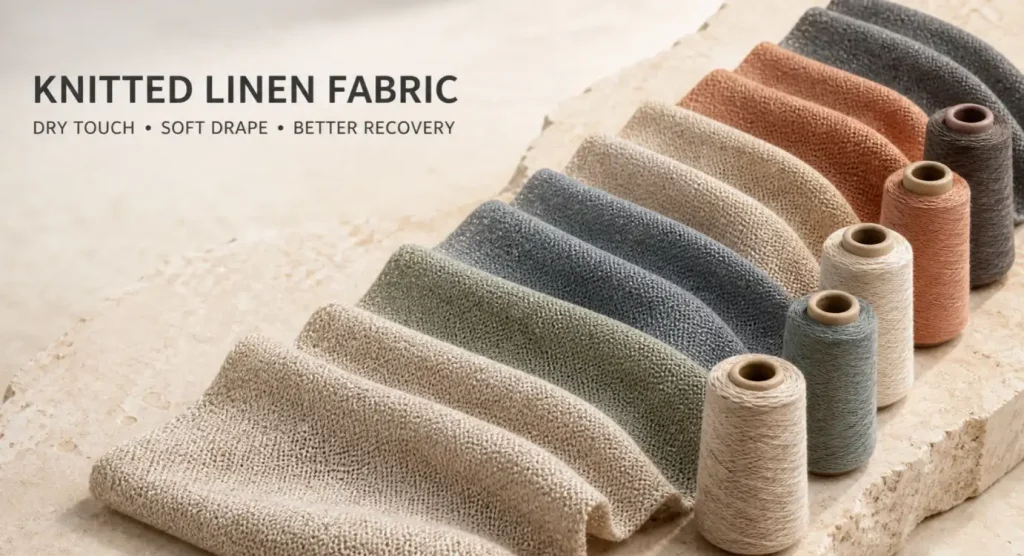
Knitted linen fabric has a clear appeal in spring and summer. It offers a dry hand, natural texture, and good air movement. It also has limits. Pure linen has little natural recovery, can crease during wear, and may feel sharp when the yarn or finishing is not well controlled. That is why product teams often compare linen with polyester, Tencel™ lyocell, cotton, rayon, or viscose before approving a yarn for bulk knitting.
From our factory view, the fiber name is only the starting point. Yarn count, spinning system, blend ratio, machine gauge, stitch density, finishing, and washing conditions can change the result more than a short material description suggests. Our sample room checks these details on a knitted panel, not only on a yarn cone or a small hand swatch.
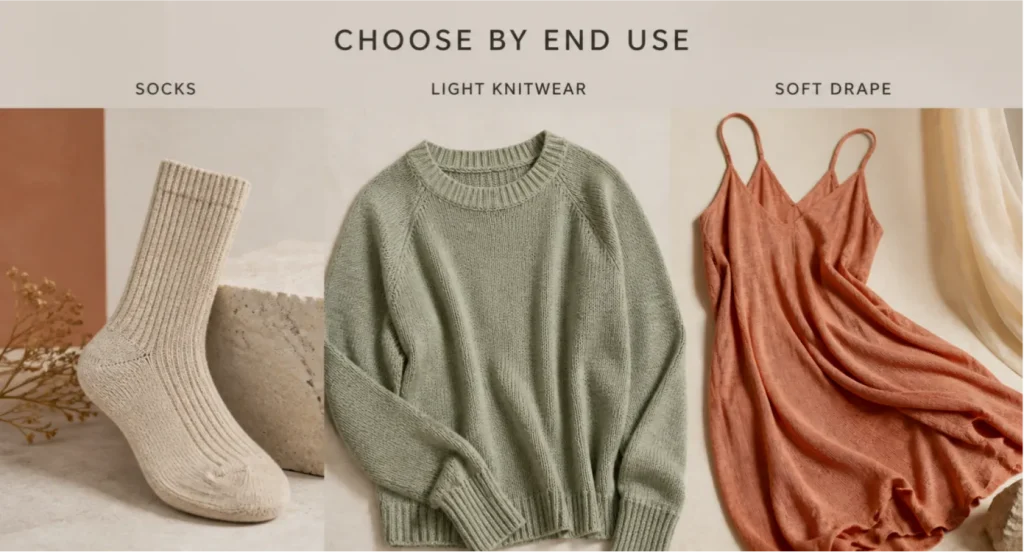
The practical choice depends on the end use. A summer sock may need dry touch, abrasion control, and stable recovery. A relaxed sweater may place more value on drape and visible natural texture. A close-to-skin top may need a softer surface and a controlled wash result.
Terminology note: here, linen means flax fiber. It is not a synonym for ramie or hemp. In Chinese textile trading, renmian usually means rayon and often refers to staple viscose. “Rayon” and “viscose” can therefore overlap. Ask for the exact fiber name, staple or filament form, percentage, and label wording before treating them as two separate materials. “TENCEL™” is a brand name. Use it only when the yarn contains the specified branded fiber and the relevant supply documents are available. Otherwise, use “lyocell.”
Knitted Linen Fabric Blends at a Glance
| Blend | What it usually adds | Main production benefit | Limit to check |
|---|---|---|---|
| 100% linen | Dry touch, cool feel, visible slub texture | Distinct natural texture and open knit character | Low recovery, creasing, hairiness, and abrasion pilling |
| Linen and polyester | Smoother surface, faster moisture transfer, better recovery | More stable knitting and easier care | Static, lower natural content, and ratio-dependent breathability |
| Linen and TENCEL™ lyocell | Soft drape, smooth touch, moisture comfort | Reduces the harshness of a linen-heavy hand | Brand documentation, wet processing, cost, and fibrillation control |
| Linen and cotton | Softness, body, and a familiar skin feel | Useful balance for socks and everyday knitwear | Shrinkage, slower drying, and possible pilling |
| Linen and rayon | Fluid drape and a smoother surface | Makes linen more comfortable in close-to-skin styles | Wet-state weakness, shape change, and care sensitivity |
| Linen and viscose | Moisture buffering, softness, and movement | Helps soften a firm linen structure | Confirm whether the commercial term means rayon, viscose staple, or filament |
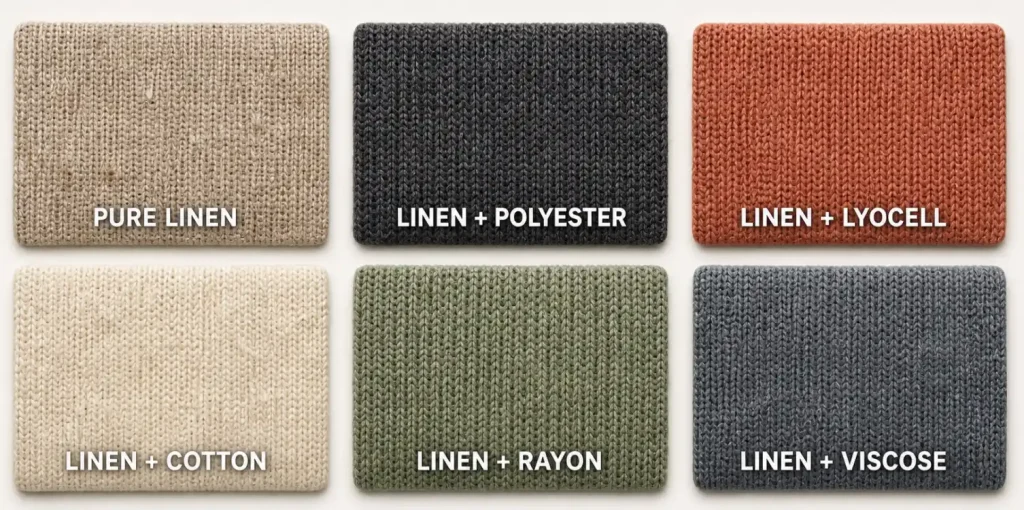
For a B2B team, knitted linen fabric is a construction decision as much as a fiber decision. The useful comparison comes from the finished panel after the intended process, not from the fiber name alone.
Why Blend Choice Matters in Knitted Linen Fabric
A blend does not automatically create a better fabric. It changes the balance between comfort, appearance, machine behavior, care, and cost. A 15% linen yarn can give a polyester or cotton base a drier surface without behaving like a 55% linen yarn. The same percentage can also feel different in an 18G sock, a 12G sweater, or a lightweight single jersey because loop length and fabric density change the result.
We normally review the target fabric before selecting the final yarn. The development brief should state:
- End use and garment construction
- Yarn count, ply, and spinning system
- Intended machine gauge and target GSM
- Blend ratio and exact fiber declaration
- Color direction and finishing route
- Expected care label and washing method
- Required compliance and certification documents
These details give the sample a clear purpose. Without them, two yarns with similar fiber names can produce very different knitted linen fabric.
1. Pure Linen Knit: Cool, Textured, and Less Forgiving
Pure linen knit fabric gives the strongest natural linen character of the six options. A pure knitted linen fabric often shows a slightly irregular or slub-like surface that works well for relaxed tops, summer cardigans, open structures, and casual accessories. Spaces between the knitted loops can improve air movement, so the fabric may feel less closed than a dense woven construction.
Some mill references describe linen as absorbing moisture three to five times as quickly as cotton, while others compare total absorption capacity. Those measurements do not describe the same property. A wet-state strength increase of about 30% also appears in some development references. We treat these figures as screening references rather than fixed fiber constants. The result depends on the test method, fiber preparation, yarn structure, fabric density, and finishing.
Before a buyer uses “cooling,” “quick dry,” or a numerical performance claim, the test file should record the method, temperature, humidity, specimen condition, and result. A claim based only on touch becomes difficult to defend during a bulk review.
What helps is the dry touch, natural cooling impression, open texture, and distinctive matte or slub appearance. The main concern is recovery. Linen fiber has very little elastic recovery. A particular knitted trial may show about 5–10% extension, but that result does not equal elastane stretch or reliable recovery after wear.
Enzyme washing or gentle sanding can reduce prickliness. The treatment also changes weight, absorbency, surface hair, and shade, so we approve it on the development sample rather than adding it after bulk confirmation. Repeated rubbing can raise hair and pilling, especially in a loose structure.
On an 18G reference trial, our team checks feeder tension, stitch definition, needle lines, and edge recovery before judging the hand. Pure linen may look attractive on a swatch and still need a looser garment fit. That early machine check prevents a common mistake: trying to solve low recovery with a pattern change after the fabric has already been approved.
2. Linen and Polyester Knit: Better Recovery and Production Control
Product teams often select linen-polyester knit fabric when the product needs a linen look but cannot accept all of linen’s care and stability issues. Linen brings the dry, natural surface. Polyester contributes strength, abrasion resistance, smoother feeding, and better recovery than a linen-only construction. Its smooth surface can also take the edge off linen’s roughness and bring the hand closer to cotton.
Polyester does not absorb moisture like linen. Its useful role is to help moisture move through the yarn and fabric while the knit structure provides room for evaporation. During blend trials, teams often look for an “absorb–transfer” balance, easier shape retention after washing, and better resistance to rubbing.
A 30% wet-state strength increase is sometimes quoted for the linen component. We treat that as a blend- and test-specific observation. A high polyester ratio can reduce the natural absorbent feel, increase static, or alter pilling behavior. Breathability does not come from the word linen alone. Stitch density, finishing, and the polyester percentage still decide the wearing result.
The same knitted linen fabric can therefore feel dry in one ratio and flat or warm in another. A linen-polyester route can suit summer socks, light knitwear, uniforms, and programs that need repeated washing and a cleaner appearance.
One of our production-oriented references uses 85% polyester and 15% linen in a compact 30/1 yarn. We use that ratio as a starting point, not as a universal recipe. If the fabric needs a stronger linen hand, a different count or higher linen percentage may work better. If machine stability is the priority, the reverse may be more suitable.
For a defined product reference, our 30s linen-polyester blended yarn provides a useful direction for count and composition. The finished fabric still needs a machine trial, shade approval, wash test, and pilling check.
Do not promise “antibacterial” or odor control simply because polyester is present. Use those words only when the finished yarn or fabric has the agreed test report.
3. Linen and TENCEL™ Lyocell: Softer Drape with Documentation Requirements
Linen and lyocell are paired when a team wants to keep visible natural texture but soften the surface and improve drape. Lyocell can make a linen knit feel smoother and more fluid, which is useful for dresses, relaxed shirts, fine-gauge tops, and close-to-skin layers. The knit structure adds another layer of comfort by allowing modest movement instead of the rigid feel associated with a tightly woven linen.
Development trials may show moisture comfort close to cotton, a smooth luster, less prickliness after treatment, and better crease recovery than pure linen. Lyocell also has relatively high wet tenacity among cellulosic fibers, but the finished blend still needs its own wet-strength, dimensional, and abrasion checks.
The word TENCEL™ needs care. It identifies a branded fiber family, not every lyocell on the market. Lenzing’s official TENCEL™ fiber information explains the branded fiber properties and production credentials. If the purchase specification does not include that branded fiber, write “linen-lyocell blend” instead.
Wet processing deserves attention. Lyocell can develop fibrillation or a changed surface if washing, dyeing, or finishing becomes too aggressive. A smoother hand after finishing may also come with different pilling or color behavior.
We compare the greige-style panel, finished panel, and washed panel before approving the hand. The purchase sheet should state the exact lyocell brand, percentage, staple length, spinning route, and certification documents.
4. Linen and Cotton Knit: Familiar Softness and Natural Texture
Linen-cotton knit fabric is usually easy for product teams to understand and easy to position. Cotton gives a fuller, softer base, while linen adds dry touch, airiness, and visible natural irregularity. The combination suits socks, T-shirts, baby basics, summer loungewear, and relaxed knitwear where a completely smooth synthetic surface would feel out of place.
Enzyme washing and silicone-based softening can reduce the sharp feel of linen. The finish may bring the hand closer to cotton, but it does not provide a free improvement. Too much softener can reduce moisture transfer or make the surface unstable after washing.
A particular knit trial may show about 5–8% extension and approximately 30% improvement in crease resistance over pure linen. We record those as trial results only after fixing the blend, gauge, fabric density, and test method. They are not universal values for every linen-cotton fabric.
Cotton can hold more water and dry more slowly than a linen-polyester option. Shrinkage and pilling can rise when the yarn, loop length, or finishing is not controlled.
A soft fiber blend alone does not prove suitability for babies or sensitive skin. Confirm chemical safety, colorfastness, and finished-product requirements before using that wording.
For buyers comparing commercial references, VI-TEX also lists a cotton-linen sock yarn with a defined count and blend. The value of the specification is not the ratio by itself. It is the ability to knit, wash, and compare the same reference before a bulk decision.
5. Linen and Rayon (Renmian): Fluid Hand Feel with Care Sensitivity
Rayon, often called renmian in Chinese sourcing conversations, gives linen a soft, silky movement and a more fluid drape. That makes the blend attractive for wide-leg trousers, draped dresses, loose tops, and soft casual layers. Linen supplies the dry surface and natural texture. Rayon fills in the smoothness that pure linen may lack.
An initial trial may show a combined air-flow effect, 5–10% knitted extension, and a reduction in prickly feel of more than 70% after suitable processing. Some teams start around 30% linen to give the fabric more backbone. These figures work as starting points for a trial, not as industry-wide rules.
The percentage required for a stable fabric changes with yarn count, rayon type, stitch density, and finishing. Rayon’s weak point often becomes visible after washing. Wet strength, shape retention, and recovery can fall short of a polyester or cotton support fiber.
The working comparison also cites roughly 30% higher wet strength for the linen component. Whether that offsets rayon’s wet weakness must be checked on the finished blend. Rayon-rich knits can crease, fuzz, or pill after repeated washing and abrasion.
A strong mechanical wash can turn a smooth sample into a stretched or distorted garment. We normally compare a gentle wash, a buyer-specified wash, and the proposed care label before deciding whether the blend suits direct-contact apparel.
Choose this route when drape and a soft, flowing hand matter more than rugged abrasion resistance. Control it with a defined rayon type, tested blend ratio, relaxed washing, and a dimensional-stability check. Do not assume that “rayon” means the same thing as every viscose or every regenerated-cellulose yarn.
6. Linen and Viscose: Similar Trade Language, Different Specification Checks
Linen-viscose knit fabric follows a similar comfort logic. Linen dries quickly and feels airy, while viscose adds moisture absorption, smoothness, and a softer fall. Many teams consider this route for humid weather, air-conditioned rooms, and situations with a large day-to-night temperature change.
That is a reasonable product direction, but the actual comfort still depends on the fabric’s mass, openness, and finish. Viscose can soften the rough linen surface and create a gentle sheen. A knitted structure may provide roughly 5–10% extension in a particular development, easing the stiff feel of a woven-like linen.
That result should not become a stretch claim unless the team measures recovery after repeated extension. Before approving a viscose blend, clarify whether the material is staple viscose, filament viscose, or a broader commercial rayon term.
Check wet-state strength, shrinkage, spirality, pilling, and shade change after washing. “Regenerated” describes the fiber family; it does not prove a lower-impact supply chain. Sustainability wording should follow the actual source, certificate, and chain-of-custody documents.
How We Test Knitted Linen Fabric Before Bulk Production
Start with a Technical Brief
Our sample room starts with a short technical brief rather than a fiber name. Every knitted linen fabric sample is logged with the blend percentage, yarn count, ply, spinning process, machine gauge, target GSM, color standard, and intended end use.
That information makes the sample repeatable and gives the buyer something concrete to compare with the next lot. It also helps us explain why two samples with similar fiber content may not produce the same fabric.
Run a Machine Trial
An 18G reference is useful for fine socks and light knitwear, but the actual gauge must match the product. We check feeder tension, end breaks, stitch length, needle marks, slubs, and edge recovery.
The first trial roll stays in the file instead of being discarded after a quick hand check. A cone can look clean while the knitted fabric shows feeding problems, uneven stitch definition, or excessive hairiness.
Approve Color and Finishing Separately
A lab dip or yarn shade approval should identify the light source, standard, and tolerance. We record enzyme wash, sanding, silicone, or other softening routes because each one changes handle and stability.
Color approval does not replace construction approval. A shade can look correct while the finished panel still shows unacceptable pilling, spirality, or shrinkage.
Wash a Panel, Not Just a Cone
We keep an unwashed panel next to a finished panel and a washed panel. The test record includes water temperature, detergent, load, machine type, drying method, and number of cycles.
When the buyer specifies a standard, we follow that method. ISO 6330:2021 provides a recognized reference for domestic washing and drying procedures.
Measure the Changes
Check dimensional change, spirality, GSM, width, pilling, shade, and hand after washing. For a moisture or cooling claim, define the test method before the sample is knitted.
A promise based on touch alone is difficult to defend during a bulk review. The file should connect the claim to the exact blend, fabric construction, and test result.
Keep the Approval Reference
The signed shade, fabric panel, test report, care instruction, and bulk retain sample should stay together. When bulk feedback arrives, the team can compare the lot against the same reference instead of relying on memory.
Which Knitted Linen Fabric Blend Fits the End Use?
| Product need | Starting direction | First checks |
|---|---|---|
| Strong linen texture and loose summer look | Pure linen or linen-heavy blend | Prickliness, recovery, abrasion, and wash shrinkage |
| Easy-care summer socks or light knitwear | Linen and polyester | Static, pilling, moisture transfer, and machine stability |
| Soft drape with a refined surface | Linen and lyocell or TENCEL™ | Brand documents, wet processing, fibrillation, and cost |
| Familiar softness for daily wear | Linen and cotton | Shrinkage, drying time, pilling, and skin-contact testing |
| Flowing dresses or relaxed trousers | Linen and rayon or viscose | Wet strength, shape retention, spirality, and care label |
Common Questions from Buying Teams
Is knitted linen fabric stretchy?
The loops can extend, but linen fiber itself has limited elasticity. A 5–10% stretch figure from a knitted linen fabric trial describes a fabric response under defined conditions. It does not replace elastane or guarantee recovery after repeated wear.
Are rayon and viscose two different fibers?
Often they are overlapping trade terms for regenerated-cellulose fibers. Confirm the supplier’s exact declaration, staple or filament form, and percentage before comparing a rayon blend with a viscose blend.
Which blend is easiest to care for?
Linen-polyester generally gives better shape recovery and abrasion tolerance, while linen-cotton often feels softer. The actual answer depends on the ratio, fabric construction, and finishing, so a wash panel remains necessary.
Can a linen blend be called eco-friendly?
Not from the fiber name alone. Use a narrower, documented statement about the material, source, or certification. Keep the claim tied to the exact yarn and supply chain.
What should we send for a sampling request?
Send the target blend, yarn count, gauge, end use, color reference, expected hand, estimated quantity, wash method, and required documents. With that information, our team can suggest a trial route and prepare a more useful comparison sample.