WhatsApp : (+86) 19058080181 Email : info@vi-tex.com

Lenzing TENCEL™ Lyocell Fiber Guide: Properties, Applications & Sustainable Value
What is TENCEL™ Lyocell Fiber?
TENCEL™ Lyocell is a regenerated cellulose fiber produced by Lenzing using wood pulp from certified sustainable forests. It belongs to the lyocell fiber family and is manufactured through a closed-loop process, where the solvent used in production is continuously recycled.
According to the official information from Lenzing, TENCEL™ Lyocell is produced from responsibly sourced wood pulp and developed under an environmentally controlled manufacturing system.
The fiber is widely recognized in sustainable textile systems and is often referenced in global certification frameworks such as Textile Exchange.
Compared with conventional viscose, lyocell has a more controlled molecular structure and improved production cleanliness, resulting in better strength, smoother fiber surface, and enhanced moisture management performance in finished fabrics.
In textile development, TENCEL™ Lyocell is often selected when brands require a balance between comfort, sustainability, and fabric performance.
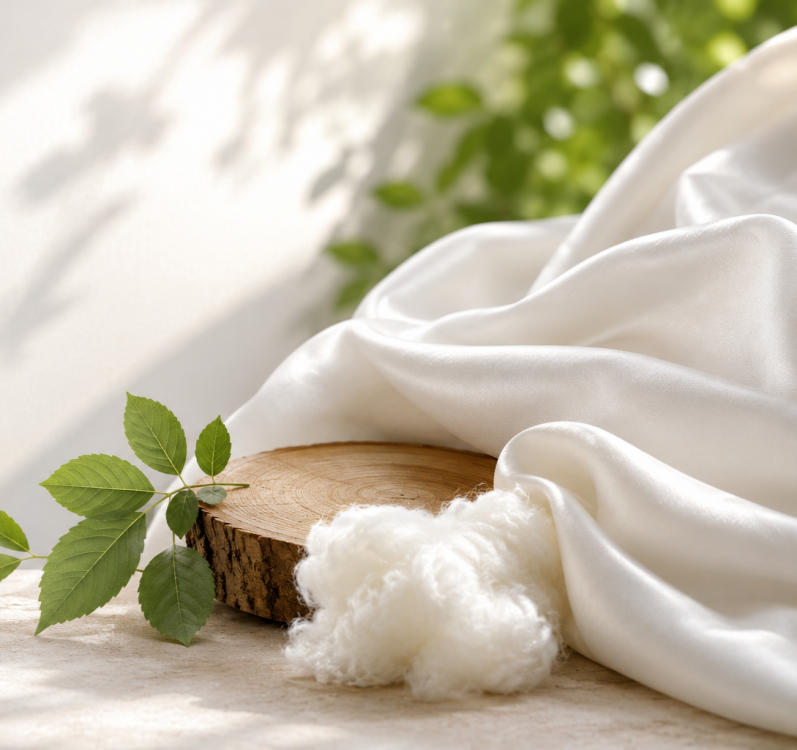
Key Properties of TENCEL™ Lyocell Fiber
Smooth Handfeel and Skin Comfort
TENCEL™ Lyocell fibers have a naturally smooth surface and low fibrillation tendency when properly processed. This results in a soft, cool touch, making it suitable for close-to-skin applications such as underwear, loungewear, and bedding fabrics.
Moisture Management Performance
The fiber structure allows efficient moisture absorption and release, helping fabrics maintain a more stable microclimate on the skin surface and improve wearing comfort in daily use.
Strength in Both Wet and Dry Conditions
Compared with traditional viscose, lyocell maintains stronger mechanical performance, especially in wet conditions, which improves fabric durability during washing cycles.
Breathability and Temperature Regulation
The fiber structure supports airflow within the fabric, helping garments remain breathable while maintaining softness and comfort.
Common Fabric Applications
- Apparel: shirts, dresses, casual wear, underwear, loungewear
- Home textiles: bedsheets, pillowcases, duvet covers
- Activewear blends: often combined with polyester or spandex for performance balance
- Fashion fabrics: especially in soft drapey woven or knitted constructions
In practical development, lyocell is often selected when designers require fabrics with a clean surface, soft drape, and natural skin-friendly touch.
Blending with Other Fibers
- Lyocell + Cotton: improves softness and moisture handling while maintaining natural cotton structure
- Lyocell + Polyester: enhances durability and dimensional stability, suitable for functional fabrics
- Lyocell + Spandex: adds stretch performance for fitted garments such as leggings and activewear
- Lyocell + Wool: balances warmth and softness for premium winter textiles
In production, blending ratio and finishing process play a key role in final fabric performance. Standard textile testing methods such as AATCC test standards are commonly used to evaluate shrinkage, strength, and durability.
Sustainable Manufacturing Process
One of the key advantages of TENCEL™ Lyocell is its closed-loop production system, where solvents used in the dissolution process are recovered and reused, reducing environmental impact.
From a compliance perspective, certification systems such as OEKO-TEX® are widely used in the textile industry to ensure material safety and environmental standards.
The fiber is widely applied in sustainable textile development and is often included in responsible sourcing programs across global apparel brands.
In some sourcing systems, fabric development and material selection are also aligned with internal product categories within the vi-tex fabric collection, ensuring consistent quality control across different textile applications.
Development Considerations in Fabric Production
- Fiber fibrillation control during finishing
- Enzyme or softener treatment selection
- Fabric construction (woven or knitted structure)
- Blending ratio adjustment based on end-use
- Shrinkage and dimensional stability testing
These factors directly influence fabric appearance, handfeel, and long-term performance after washing.
FAQ – TENCEL™ Lyocell Fiber
1. Is TENCEL™ Lyocell the same as viscose?
No. Both are regenerated cellulose fibers, but lyocell uses a different closed-loop production process. Compared with viscose, lyocell generally has higher wet strength and a cleaner manufacturing process.
2. What makes TENCEL™ Lyocell different from cotton?
Cotton is a natural fiber, while lyocell is a regenerated fiber made from wood pulp. In fabric performance, lyocell usually provides smoother handfeel and better moisture management, while cotton offers more structural stability and familiarity in wear.
3. Does TENCEL™ Lyocell shrink easily?
Shrinkage depends mainly on fabric construction and finishing rather than the fiber itself. Proper pre-shrinking and finishing control are important in production to ensure dimensional stability.
4. Is TENCEL™ Lyocell suitable for sensitive skin?
Yes. Due to its smooth fiber surface and low friction, lyocell fabrics are commonly used in products that are in direct contact with the skin, such as underwear and bedding.
5. Can TENCEL™ Lyocell be blended with polyester or spandex?
Yes. Lyocell blends well with polyester, spandex, cotton, and wool. The final performance depends on blending ratio and finishing techniques.
6. Why is TENCEL™ Lyocell considered more sustainable?
Because it is produced using a closed-loop system where solvents are recycled, and the raw material comes from controlled forestry sources. This helps reduce environmental impact compared to conventional fiber production systems.