WhatsApp : (+86) 19058080181 Email : info@vi-tex.com

8 Types of Cotton Fabric: Pros, Cons and Common Uses
The eight types of cotton fabric below appear frequently in clothing development: pure cotton, combed cotton, knitted cotton, washed cotton, organic cotton, mercerized cotton, cotton-elastane and ice cotton. Each name highlights a different part of the material. Some describe fiber content, while others describe yarn preparation, fabric construction or finishing.
This distinction affects hand feel, stretch, shrinkage, pilling, price and care. Two suppliers may both quote “cotton fabric” but offer very different qualities. For sampling and bulk production, we keep the familiar trade names and add the exact composition, yarn count, construction and finish.
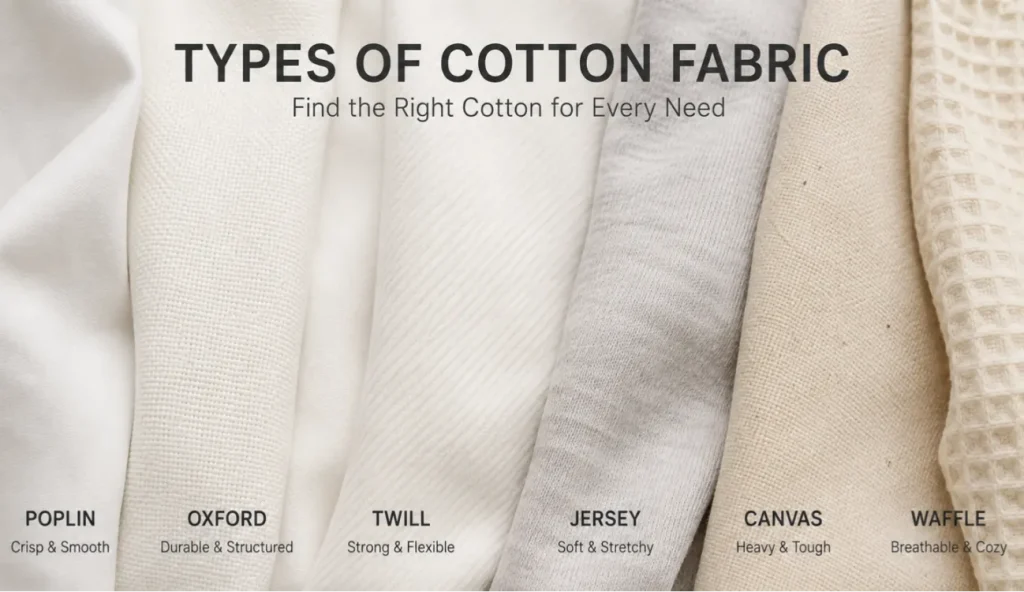
Some market names describe construction or finishing rather than fiber content. Our explanation of common cotton fabric names covers Oxford, denim, canvas and other labels that often cause confusion.
1. Pure Cotton Fabric
Pure cotton fabric uses cotton as its sole or main fiber, depending on the applicable labeling rules. It has a natural hand, absorbs moisture well and allows air to pass through the fabric. These qualities make it comfortable for T-shirts, underwear, shirts, socks, children’s clothing and home textiles.
Cotton also supports a wide range of colors because mills have mature dyeing and finishing processes for it. However, fiber content alone does not decide quality. Staple length, yarn count, twist, spinning method and fabric density all influence softness, strength and surface appearance.
A long-staple cotton yarn usually gives a smoother and cleaner surface than a basic short-staple quality. The yarn specification should identify the cotton source or grade where relevant, together with count, ply, twist and spinning method. Those details tell a factory much more than the word cotton alone.
Pure cotton has limited elastic recovery. Loose fabric may stretch at the elbows, knees or cuffs and fail to return fully to its original shape. Cotton also wrinkles more easily than polyester-rich fabric.
Many buyers expect 2% to 5% shrinkage, but this range cannot apply to every cotton fabric. Knitting tension, fabric density, dyeing, relaxation, compacting, wash temperature and drying method all affect the result. Preshrinking can reduce dimensional change, but a wash test should confirm the final tolerance. Some cotton surfaces also attract lint, while strong acids can weaken the fiber.
2. Combed Cotton Fabric
Combed cotton starts with the same cotton fiber as regular carded cotton. During preparation, the mill passes the fiber strand through a combing process. This step removes more short fibers, neps and remaining impurities before spinning.
The longer and more parallel fibers normally produce a smoother, cleaner and more even yarn. As a result, combed cotton fabric often shows fewer thick places, lower hairiness and more uniform color. It usually feels softer and looks neater than a comparable carded quality.
Combed cotton also tends to pill less because fewer loose short fibers sit on the yarn surface. Still, twist, knitting density, brushing and abrasion affect pilling as well. Combing reduces the risk; it cannot eliminate it.
In our sample room, we check lint around the yarn path as well as the knitted surface. A cotton cone may look clean on the table but release more loose fiber when the machine reaches production speed. This difference often becomes clearer after knitting and washing.
The combing process removes usable fiber and adds another production stage, so combed yarn usually costs more. The extra cost makes sense for underwear, fine socks, babywear, clean-surface jersey and garments where customers notice lint or surface fuzz. A lower-cost casual fabric may not need the same level of preparation.
3. Knitted Cotton Fabric
Knitting machines form cotton yarn into interlocking loops. Those loops give knitted cotton more stretch and flexibility than most woven cotton fabrics. Jersey, rib, interlock, pique and cotton terry all use loop structures, although each construction creates a different weight, surface and recovery.
Knitted cotton usually feels soft, light and comfortable. It absorbs moisture and allows good airflow when the construction remains reasonably open. The loops also help the fabric resist ordinary creasing better than a firm woven structure.
The word knitted does not guarantee high colorfastness. Dye selection, fixation, washing-off and finishing control the final result. Fabric structure mainly affects stretch, drape, weight and surface stability.
Loose loops can catch on rough objects, while hairy yarn can create fuzz and pilling. Fine-gauge fabrics show yarn faults more clearly. For a 32/1 cotton hosiery project, our sample room may use an 18G machine to check feeding tension, lint, broken ends and loop formation. A clean-looking cone can still produce an uneven knitted surface.
Before bulk production, we confirm machine gauge, stitch length, finished GSM, width and compacting conditions. These details help control shrinkage and keep repeat orders closer to the approved sample.
4. Washed Cotton Fabric
Mills wash or wet-finish cotton to create a softer hand and a more relaxed appearance. Depending on the required effect, they may use a controlled prewash, garment wash, enzyme treatment, softener or another finishing recipe.
The process reduces some of the tension left from knitting, weaving and finishing. It can also soften the surface, lower the initial luster and give the fabric a comfortable worn-in feel. Casual shirts, relaxed trousers, bedding, pillowcases and home textiles often use washed cotton.
A controlled prewash may reduce later shrinkage, but it cannot promise zero dimensional change. Washed cotton may also fade, wrinkle or lose part of its softener effect after repeated laundering. Some pigment-dyed and garment-washed products intentionally change color over time.
Long use can cause shape loss or seam distortion when the original fabric lacks stability. An aggressive enzyme or washing process may also reduce weight and strength. For this reason, we keep an unwashed control beside the tested sample and compare dimensions, shade, surface hair and hand.
The ISO 6330:2021 washing and drying procedures provide controlled options for textile testing. The buyer and supplier still need to agree on the exact wash cycle, detergent, drying method and dimensional-change limit.
5. Organic Cotton Fabric
Farmers grow organic cotton under an approved organic farming system. These systems control seed, soil management and agricultural inputs and restrict substances that the relevant standard does not permit.
Organic cotton retains the familiar properties of cotton. It absorbs moisture, allows airflow and gives garments a natural hand. Fiber length, yarn preparation and fabric construction still determine softness, strength, drape and abrasion resistance. Organic origin alone does not make every cotton yarn finer or stronger.
Organic certification also provides no automatic proof of antibacterial, deodorizing, temperature-regulating or hypoallergenic performance. Claims about eczema prevention require particular care because they move into medical territory. A supplier needs separate technical evidence for any additional function.
The Organic Content Standard from Textile Exchange verifies organically grown material and tracks it through the supply chain. OCS focuses on organic content and chain of custody; it does not cover every chemical, environmental or social issue in later textile processing.
Our OCS compact-spun organic cotton yarn combines the organic claim with an actual composition, count and spinning process. For a bulk order, our team also checks the certificate scope, validity date, product category and required transaction document.
Organic cotton usually costs more because farming, segregation, audits and documentation add work throughout the supply chain. It can also wrinkle like conventional cotton unless the mill applies a specific finishing process.
6. Mercerized Cotton Fabric
Mills mercerize cotton by treating the yarn or fabric with concentrated alkali under controlled tension. They then wash and neutralize the material. Careful process control changes the fiber structure and gives cotton a smoother surface and brighter luster.
Mercerized cotton accepts dye more readily, so colors can appear deeper and clearer. The process can also improve strength and dimensional stability. These properties suit fine socks, polo shirts, knitted tops, underwear and higher-count home textiles.
Many people compare its shine with silk. The fabric can also show better drape than a similar untreated cotton quality. However, yarn count, twist, density and finishing still influence the final hand.
Yarn mercerization takes place before knitting or weaving. Fabric mercerization happens after fabric formation. Suppliers often use the term “double mercerized” when they mercerize both the yarn and the finished fabric, but buyers should confirm the actual production route.
Mercerized cotton does not always require hand washing. A fine Ne 80/2 knit and a heavier polo fabric need different care instructions. Lightweight constructions may snag or suffer under aggressive washing, while stable qualities can handle normal machine washing. The extra processing also raises the price compared with ordinary cotton.
7. Cotton-LYCRA or Cotton-Elastane Fabric
A common cotton-elastane fabric contains 95% cotton and 5% elastane or 97% cotton and 3% elastane. Even a small amount of elastane improves extension and recovery. The fabric moves more easily with the body and returns closer to its original dimensions after stretching.
This combination works well for underwear, leggings, fitted T-shirts, waistbands, cuffs and socks. Cotton provides the main surface hand and moisture absorption, while elastane improves fit and shape retention.
LYCRA® names a specific brand. Elastane and spandex describe the generic fiber. If the order does not use authorized LYCRA® fiber, the specification should use cotton-elastane or cotton-spandex instead.
Elastane does not always reduce comfort. In a fitted garment, better movement and recovery may make the product more comfortable than a loose pure cotton construction. However, some dense fabrics feel firmer, warmer or less natural.
Heat and harsh processing can damage elastane. Its position inside the fabric also matters. Mills may use covered yarn, core-spun yarn or plating, and each method creates different stretch and recovery. The fiber percentage alone cannot predict bagging at the knees, waistband growth or recovery after washing.
8. Ice Cotton Fabric
Ice cotton describes a light cotton fabric with a smooth, dry and cool first touch. The market does not use one fixed construction for this name. Some suppliers use fine cotton around 60s with a light surface treatment or PU coating. Others create the effect through high twist, gassing, mercerization or another finishing process.
A fine, smooth ice cotton fabric can feel thin, cool and comfortable in summer. Common applications include lightweight shirts, tops and selected knitwear. High-twist or mercerized versions often feel crisp and less clingy against the skin.
A coating changes the result. It may increase the cool sensation at first contact, but it can also reduce air permeability or change moisture behavior. The coating may weaken after repeated washing. For that reason, buyers should ask the supplier to state the yarn, construction, finish and coating details.
A 60s yarn count does not prove cooling performance, and the term ice cotton does not guarantee zero shrinkage. Preshrinking and finishing may improve stability, but the finished fabric still needs a wash test. If a buyer requires a measurable cooling value, the specification should name the test method, target result and wash-durability requirement.
For a yarn-based cool-touch route, our 26S–60S cotton cool-touch yarn gives mills a defined count range for sampling. It should not be treated as the definition of every ice cotton fabric.
Some ice cotton qualities offer a narrower color range because the selected finish affects shade development. Like other cotton fabrics, they also need dry, clean storage. High humidity can encourage mildew, while poor long-term storage can expose the material to insects.
What to Confirm Before Approving a Cotton Fabric
Each of these types of cotton fabric needs a clear specification. A fabric name can start the discussion, but it cannot control a bulk order by itself.
- Fiber content: Record the exact cotton, elastane or other fiber percentages.
- Yarn details: Confirm yarn count, ply, twist and spinning method where they affect the product.
- Fabric construction: State the knitting gauge, stitch, weave, finished GSM and width.
- Finishing: Identify washing, mercerization, coating, compacting or other treatments.
- Color: Approve the lab dip or fabric shade under the agreed light source.
- Wash performance: Set limits for shrinkage, skew, shade change and surface appearance.
- Stretch: Measure extension, growth and recovery for cotton-elastane products.
- Documents: Check composition reports, certification scope and transaction records where applicable.
During a machine trial, we record the yarn lot and compare feeding, lint, loop formation and fabric appearance. Washing comes next. We keep the original sample beside the washed piece so that we can measure dimensional change and judge shade, hand and surface hair under the same conditions.
For repeat orders, we retain the approved swatch, lab-dip record, yarn lot and relevant test results. These records make bulk feedback easier to investigate and give both sides the same reference when they compare production with the approved sample.
Common Questions About Cotton Fabric
Is combed cotton the same as pure cotton?
No. Pure cotton describes fiber content, while combed cotton describes yarn preparation. One fabric can contain 100% cotton and also use combed yarn.
Which cotton fabric has the lowest pilling risk?
A well-controlled combed or compact-spun cotton yarn often produces a cleaner surface with lower pilling risk. Yarn twist, fabric density, finishing and abrasion during wear still affect the result.
Does washed cotton still shrink?
Yes, it can. Prewashing releases part of the production tension and may reduce later shrinkage. The remaining dimensional change depends on the fabric construction and the wash and drying conditions.
Does organic cotton provide natural antibacterial performance?
Organic certification does not prove antibacterial performance. An antibacterial claim needs a defined material or treatment, an appropriate test method and an agreed result.
Can mercerized cotton be machine washed?
Some mercerized cotton fabrics can handle machine washing, while very fine or loosely knitted qualities need gentler care. Yarn count, ply, fabric density and finishing determine the correct method. Check the approved care instruction and wash-tested sample instead of assuming that all mercerized cotton requires hand washing.
Does 5% elastane guarantee good recovery?
No. Elastane percentage provides only one part of the specification. Yarn structure, elastane placement, knitting settings, heat exposure and finishing all influence stretch and recovery.
Does ice cotton always use a PU coating?
No. Some qualities use a coating, while others rely on fine yarn, high twist, gassing, mercerization or another finish. The supplier should identify the actual production route.