A 90/10 Recycled Polyester Cotton Blend for Socks and Uniforms
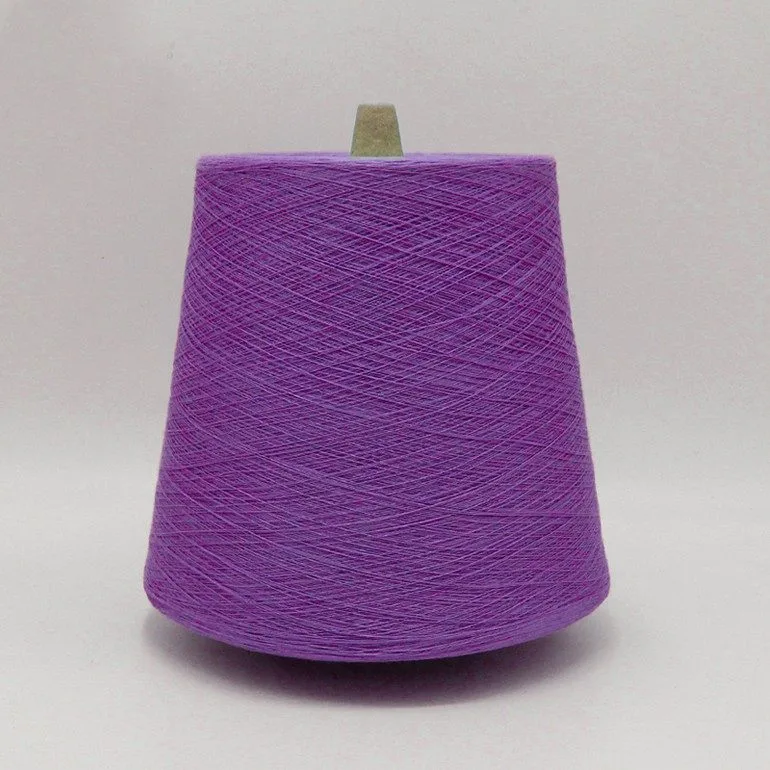
TC 9010, our GRS recycled polyester cotton yarn, blends 90% recycled polyester with 10% cotton. We compact-spin it and wind it on cones. We developed it for socks as well as school uniforms, knitwear and hats.
The standard count is Ne 32/1. For thicker socks and uniform fabrics, we can spin the same blend as coarse as 21S. For thin, fine-gauge socks, we can go as fine as 60S. Any count other than 32/1 runs as a custom spin, so we confirm the count, shade and delivery date with you first.
You can also choose raw white, melange, yarn-dyed stock shades or a custom color.
Why Compact Spinning Suits a Recycled Polyester Yarn
Compact spinning is ring spinning with one extra step. Just before the twist goes in, a suction airflow pulls the fiber strand narrower. So more fiber ends stay inside the yarn, and fewer stick out. Our overview of how compact spinning works and where it falls short goes into the details.
This matters more for a high-polyester yarn than for cotton. Polyester fibers are strong, so pills on a polyester-rich fabric tend to hang on instead of breaking off. A cleaner yarn surface gives pills less to start from. Recycled polyester also varies more in fiber length than virgin fiber. The condensing step keeps those short fibers under better control.
Spinning still does not decide everything. Twist, knit structure, dyeing and finishing also shape the final fabric, so judge the yarn on a knitted sample.
What compact spinning changes
What you see in production
How to check it on your sample
More fiber ends tucked into the yarn
A cleaner surface with less visible hairiness
Compare it with a ring-spun yarn of the same blend and count
More fibers share the load
Higher yarn strength and fewer breaks
Ask for a strength report on your lot before you buy
A more even yarn body
Steady feeding and even stitches on the machine
Run a trial on your own machine before bulk
Fewer loose surface fibers
Fewer starting points for pills
Test the finished fabric to your pilling standard
Why Buyers Work with VI-TEX
We have supplied yarn since 2003. Research, spinning, dyeing, lab color matching and quality inspection all happen in-house. So one team can answer your questions on the specification, shade, samples and paperwork. Our R&D team also works with Donghua University, Jiangnan University and other universities on new fiber and yarn projects.
Shade control: our lab matches colors and keeps batch records, so a repeat order can follow the approved shade.
Stock and custom in one place: stock shades ship fast, while custom colors and counts follow their own production plan.
GRS paperwork up front: we check your Transaction Certificate needs before the order, not after shipment.
GRS Recycled Polyester Cotton Yarn Specifications
This table lists the standard values for GRS TC 9010 recycled polyester cotton yarn. Your approved sample and signed order set the final specification.
Product code
GRS TC 9010
Fiber composition
90% recycled polyester / 10% cotton; other ratios on request
Spinning process
Compact spun
Standard count
Ne 32/1 (about Nm 54, or 166 denier)
Custom count range
21S to 60S (about Nm 36 to Nm 102)
Yarn form
Single yarn on industrial paper cones
Cone weight
About 1.67 kg; we confirm it for each order
Color options
Raw white, melange, yarn-dyed stock shades, custom colors
Main uses
Socks, school uniforms, knitwear, hats
Documents
GRS documents and Transaction Certificate for qualifying orders; OEKO-TEX® STANDARD 100 and ISO 9001 on request
Packaging
Export cartons
Using TC 9010 in Socks, Uniforms and Knitwear
With 90% polyester, this yarn behaves mostly like polyester. It holds its shape, dries fast and stands up to wear at heels, toes and cuffs. Polyester also takes up very little moisture. Its standard moisture regain is about 0.4%, while cotton sits at 8.5%. So the 10% cotton share mainly softens the hand.
For sock knitting, 32/1 is the usual starting point. Choose a coarser count toward 21S for thicker socks and uniform knits. For thin socks on fine-gauge machines, go finer toward 60S. Before we suggest a count, send us your machine gauge, needle count, fabric structure, target weight and finishing route. Our guide to matching fiber, count and machine gauge for custom sock yarn shows how these choices connect.
We then prepare a sample for your trial. If you have targets for pilling, color fastness, strength or shrinkage, tell us the test method and pass level at the start.
Lead Time and Ordering
Tell us early whether a stock shade works or you need a new color. That matters because the two run on different schedules.
Stock shades: usually ship 1–2 business days after you confirm the order.
Custom colors or counts: usually take 3–15 days after we agree on the color and production details.
Large or special orders: uncommon counts, special colors and certification work can add time. Your quotation shows the confirmed date.
Packaging and Shipping
We wind the yarn on industrial paper cones, then pack the cones in export cartons. For each order, we confirm the cone weight, cones per carton, net weight and carton size. The packing protects the cones from crushing and dirt during handling, transport and storage.
We plan container loading around your confirmed volume. Before dispatch, we can send the packing list, carton marks and weights. We also add any other details your warehouse or customs broker needs.
GRS Documents for Recycled Yarn Orders
If you plan to make a recycled-content claim, agree on the certificate scope and transaction documents before you place the order. Fixing paperwork after shipment takes much longer than getting it right at the start.
GRS: we supply GRS documents for qualifying orders of this recycled polyester cotton yarn.
Transaction Certificate: you can request a GRS TC when the order meets the certification conditions.
OEKO-TEX® STANDARD 100: ask for the current certificate and check that its scope covers this yarn.
ISO 9001: this covers our factory quality system but does not replace product testing.
Certificates expire and scopes change, so check the current copies before you print a label or make a compliance claim. If your brand reports the recycled feedstock, ask us which source the current lot uses. Our article on bottle-to-textile vs textile-to-textile recycling explains why that difference matters for recycled polyester yarn.
What to Send for a Quote
The more of this you include in your first message, the fewer rounds we need:
Yarn count and the range you can accept
Blend ratio, if you need something other than 90/10
Color reference: color card number, Pantone code or a physical swatch
Stock shade or custom production
Machine gauge, fabric structure and end use
Sample quantity and expected bulk quantity
Test standards or performance targets
GRS Transaction Certificate or other document needs
Packaging, destination and target delivery date
FAQ: GRS TC 9010
What does “TC 9010” mean?
In the yarn trade, TC (or T/C) means a polyester/cotton blend: T for polyester, C for cotton. The number 9010 gives the ratio of 90% polyester to 10% cotton. This yarn uses GRS recycled polyester for the whole polyester share.
Can you spin this GRS recycled polyester cotton yarn in 21S?
Yes, as a custom spin. 21S works out to about Nm 36, or 253 denier. It suits thicker socks and uniform knits that need more body. But it is not a regular stock count. Send us the blend ratio, color and quantity you need. We will then confirm the spinning plan and delivery date.
Should I choose 90/10 or a 65/35 blend?
Choose 90/10 when strength, shape retention and fast drying come first, such as in socks and uniform knits that see heavy washing. If the fabric needs to absorb more sweat and feel closer to cotton, choose a higher cotton share. Our 32/1 compact siro yarn in 65% recycled polyester and 35% cotton is one option.
Will the 10% cotton show as light specks in dark colors?
It can. Polyester and cotton take different types of dye, so a dark shade needs color in both fibers to look solid. If only the polyester takes the color, the cotton shows up as fine light flecks. Some buyers like that soft heather look. Tell us which effect you want before we start lab dips.
Does the yarn’s GRS certificate cover my finished socks?
No. Our GRS Transaction Certificate covers the recycled polyester cotton yarn we ship to you. To carry a GRS claim on finished socks or garments, the knitting, dyeing and finishing sites after us also need GRS certification. Each sale along the chain needs its own TC as well. Your certification body can tell you exactly what applies to your supply chain.
How much yarn is on one cone?
A standard cone holds about 1.67 kg. At Ne 32/1 that comes to roughly 90 km of yarn, and at 21S about 59 km. We confirm the exact cone weight for each order, because it can change with count and packing.