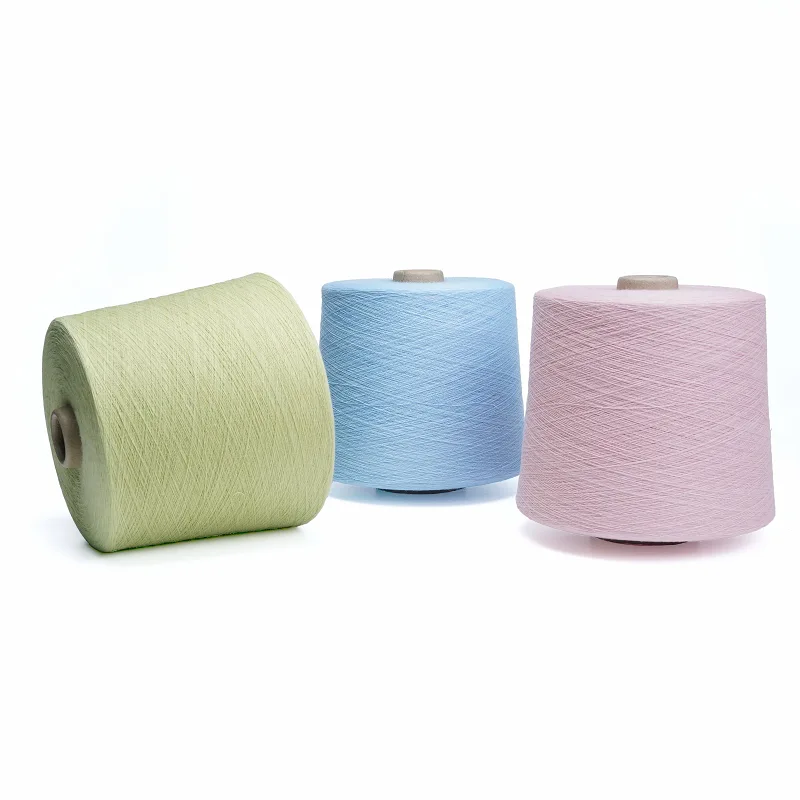
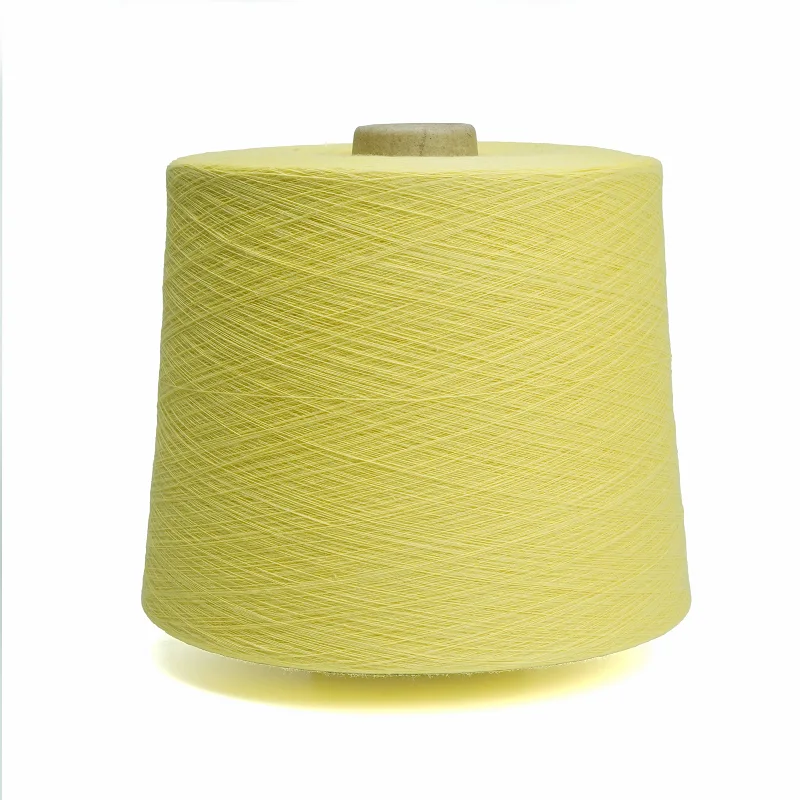
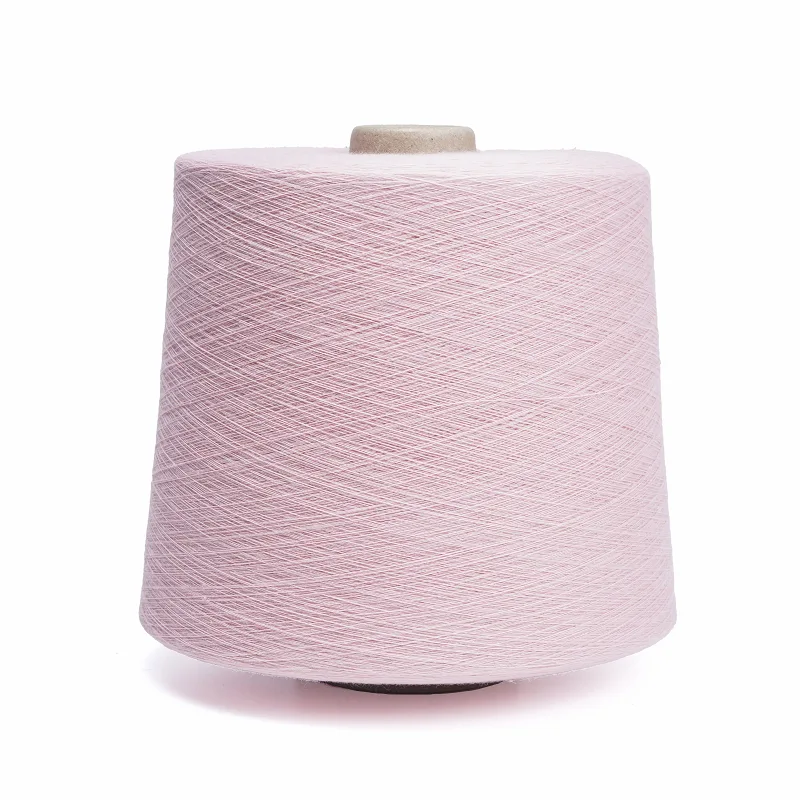
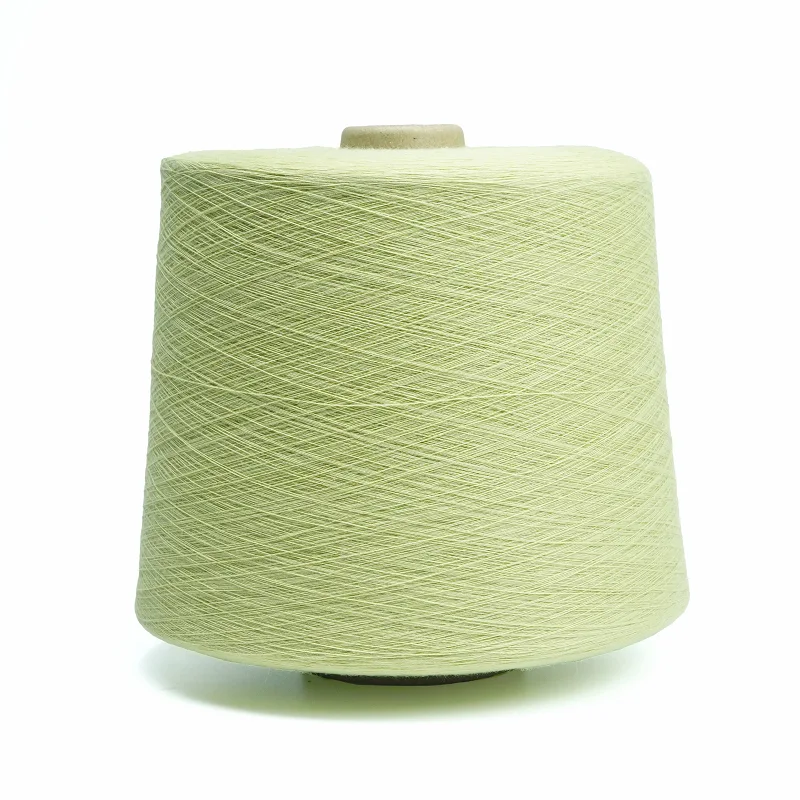
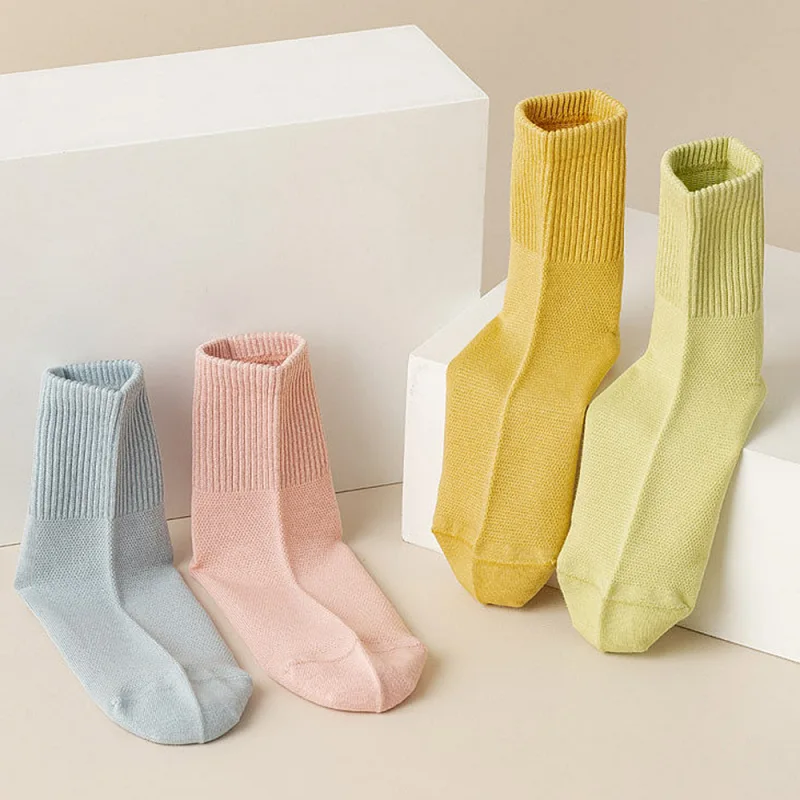
20/1 Bamboo Yarn for Sock Knitting, Dyed & Natural White
$485
Ring-spun 20/1 bamboo yarn for sock knitting and weaving, wound on cones in natural white, bleached white or dyed shades. Because bamboo viscose absorbs more moisture than cotton, the finished socks stay soft and feel less damp through the day.
This 20/1 bamboo yarn is a single, ring-spun yarn made from bamboo viscose and wound on cones. Sock factories use it mainly for everyday sock bodies. Knitting mills also run it for underwear and loungewear fabrics. Because it comes in natural white, bleached white or dyed shades, striped designs can go straight onto the knitting machine.
20/1 Bamboo Yarn Specifications
Material
100% viscose made from bamboo
Yarn Count
Ne 20/1 (20S), equal to about Nm 34, 266 denier or 29.5 tex
Spinning and Form
Ring spun single yarn, wound on cones
Main Use
Sock knitting and other knitted products, as well as textile weaving
Fiber Properties
Soft hand, high moisture absorption, breathable, low static
Color Options
Natural white, bleached white, red, blue, green, yellow, purple, cyan, mixed colors, and custom shades by color card
Lead Time
Stock colors ship 1–2 days after order confirmation, while custom shades usually take 3–15 days.
What Bamboo Viscose Brings to a Sock
Bamboo is the source of the cellulose here rather than a fiber pulled straight from the plant. Mills first dissolve the pulp and then regenerate it into viscose staple. That process gives the yarn the smooth hand and fluid drape of regenerated cellulose. To see how bamboo viscose compares to modal and lyocell, read our guide to regenerated cellulose fiber types and testing.
Moisture is the main reason buyers choose it for socks. Viscose has a standard moisture regain of about 13%, compared to 8.5% for cotton. In practice, the yarn takes up more sweat vapor before a sock starts to feel damp. Because cellulose always holds a little moisture, it also builds up less static than polyester.
How the 20/1 Count Works in Sock Production
Ne 20/1 is coarser than the 32S and 40S counts used for thin dress socks. It suits everyday and casual socks with a fuller hand, especially with a nylon and spandex plating yarn.
The right count still depends on your machine gauge and stitch length. Before bulk production, knit a test sock on your own machine. Then check loop formation and how the fabric recovers after washing. Our article on matching fiber, count and machine gauge for custom sock yarn walks through these choices step by step.
When you order dyed cones, you can knit stripes, contrast heels or jacquard patterns directly. Garment-dyed socks, on the other hand, come out in one solid color. You also skip a dyeing step in your own schedule.
Applications for 20/1 Bamboo Yarn
Socks are the main use, from everyday to casual and comfort styles. In these, softness against the foot matters more than abrasion resistance. Beyond socks, the yarn works for close-to-skin knits such as underwear, sleepwear and loungewear. It also suits T-shirts, tops and scarves.
Typical buyers are sock factories, knitting mills, garment factories, fabric suppliers and yarn traders. Fashion brands building comfort collections order it too. Sample lots and bulk orders use the same 20/1 bamboo yarn, so an approved sample goes straight into production.
Quality Checks Before Shipment
Before each shipment, we check this 20/1 bamboo yarn for evenness, shade, softness and knitting performance. When one of these slips, it shows up later as broken ends, uneven loops or shade differences between pairs. Qualifying a new supplier? Our guide on how to verify sock yarn quality before buying lists the records and tests worth requesting.
FAQ About 20/1 Bamboo Yarn
Is this yarn bamboo viscose or mechanically processed bamboo?
It is bamboo viscose. Bamboo pulp goes through the viscose process and becomes regenerated cellulose fiber. Nearly all soft bamboo textile yarn starts the same way. Mechanically processed bamboo fiber is much stiffer, so spinners rarely use it for socks.
How should socks made from this yarn be labeled in the US?
Label them as “viscose made from bamboo” or “rayon made from bamboo”, not just “bamboo”. The same rules also ask for test evidence behind antibacterial or eco-friendly claims. Keep those off hangtags unless you hold a report for the finished sock. The FTC guidance on bamboo textile claims sets out the details.
Can I knit socks from 100% bamboo yarn without nylon or spandex?
You can, although most bamboo socks on the market use a blend. Viscose loses part of its strength when wet, so heels and toes wear faster in a pure bamboo sock. For that reason, mills usually add nylon for durability and spandex for the cuff and arch. A typical label reads 80% viscose from bamboo, 17% nylon and 3% spandex.
How does 20/1 compare with your Ne 32/2 bamboo yarn?
A 32/2 yarn is two 32S singles twisted together, with a resultant count of about Ne 16. That makes it slightly heavier than 20/1. The plied structure is also smoother, stronger and better balanced. Choose 20/1 when you want a single-end sock body at a lower cost per kilogram. For sweaters, or socks that need a rounder plied yarn, our Ne 32/2 bamboo yarn is the better match.
What is the difference between natural white and bleached white?
Natural white is the yarn without dyeing or bleaching, so it keeps the slightly warmer off-white of the fiber. Bleached white goes through a bleaching step for a brighter, cleaner white. Pick bleached white for white socks or as a base for pale shades. Natural white suits designs that want an ecru-like tone instead.