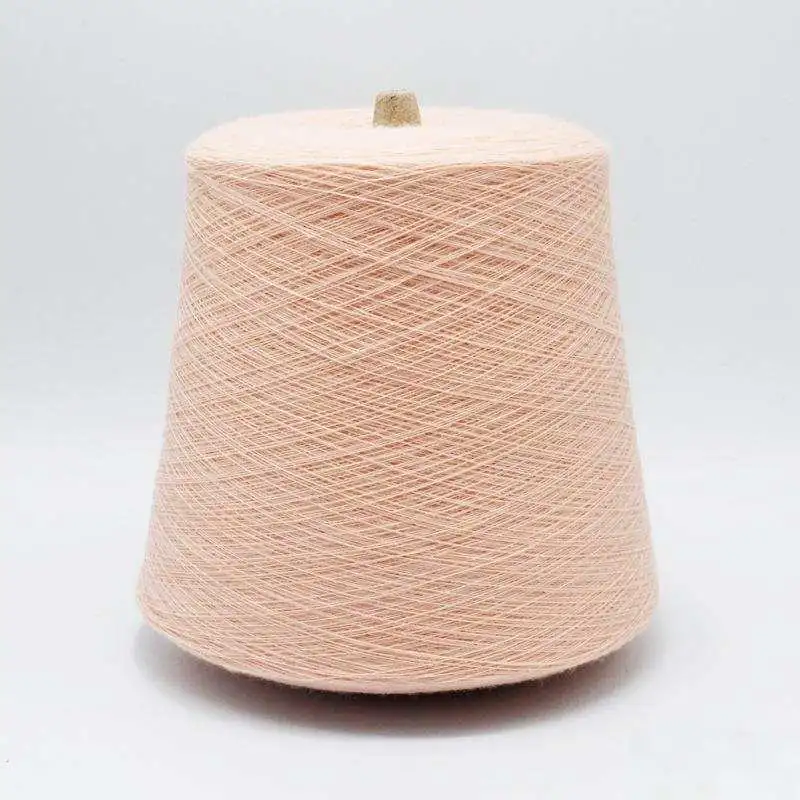
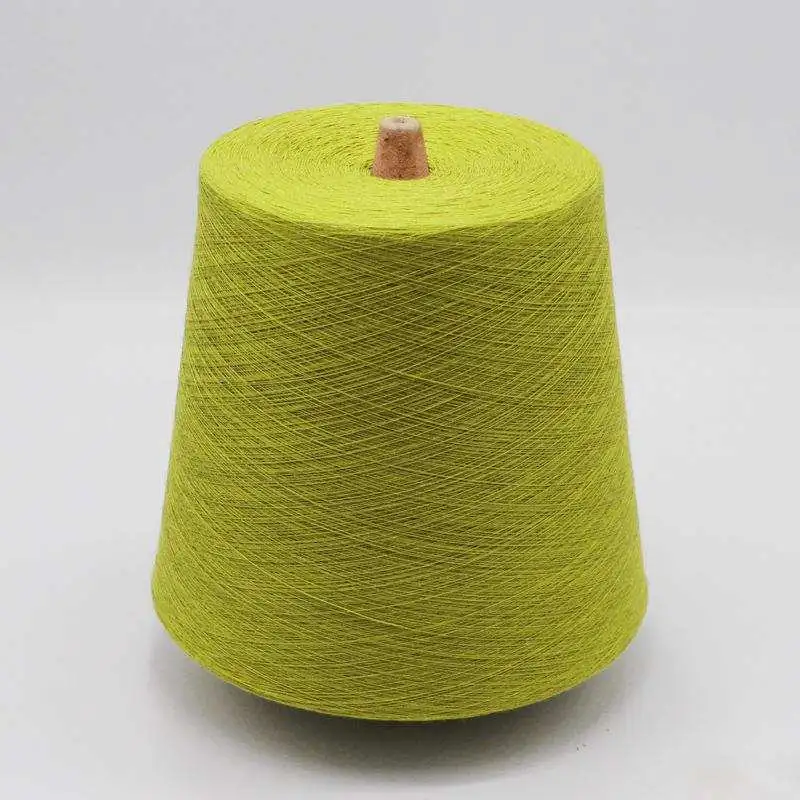
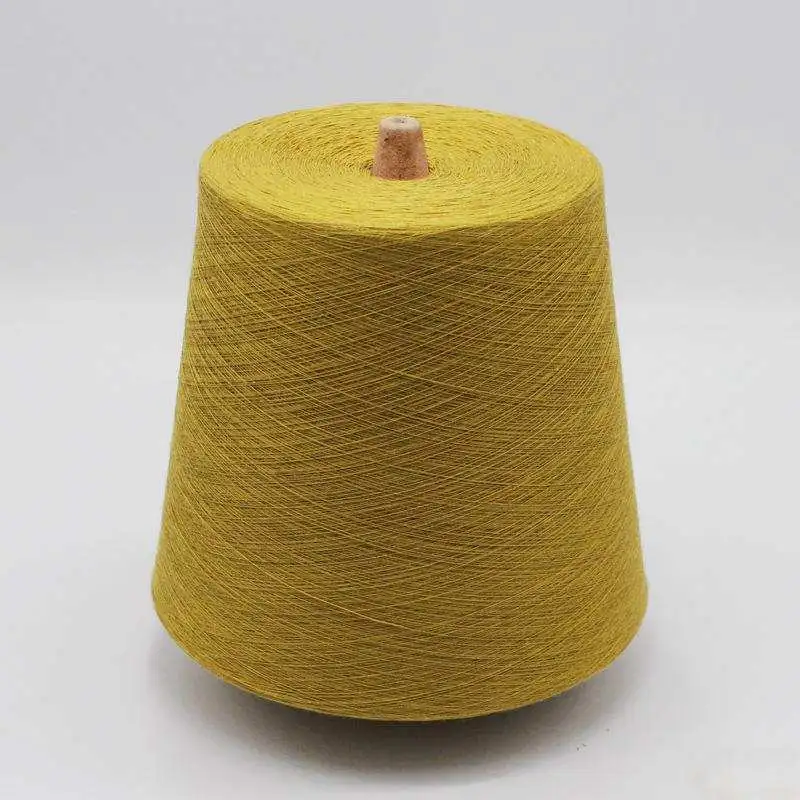
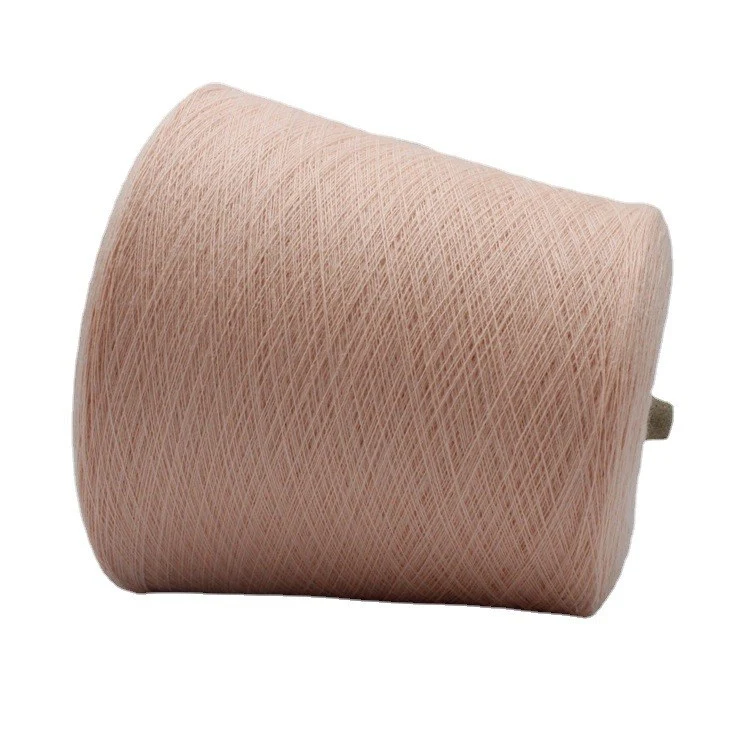
45S/1 Merino Blend Hosiery Yarn for Fine-Gauge Socks
This merino blend hosiery yarn is a 45S/1 single-ply yarn for sock mills that run 14G–18G machines. We spin it on a siro-compact system, so it feeds cleanly and the stitches stay sharp. The blend is 44% polyester, 30% anti-pilling acrylic, 20% nylon and 6% merino wool. As a result, finished socks keep a neater face after wear and washing, and they feel softer than a plain synthetic sock.
Most mills use it for fine dress socks, school socks, casual hosiery and seamless basics. In these programs, the sock has to feel good on the foot. At the same time, it has to run on the machine without constant stops.
What Each Fiber Does in the Blend
Every fiber in this merino blend hosiery yarn has a clear job. Polyester and nylon make up 64% of the weight, so most of the strength comes from them. The merino share is small, which means its role is touch rather than structure.
Fiber
Share
Role in the finished sock
Polyester
44%
Gives strength and shape retention, and it dries fast. However, polyester tends to pill on its own, so we pair it with anti-pilling acrylic.
Anti-pilling acrylic
30%
Keeps the sock face tidier through daily wear and repeated washing. It also adds a soft, full hand.
Nylon
20%
Adds abrasion resistance where socks wear out first, at the heel and toe. Among common textile fibers, nylon resists abrasion best.
Merino wool
6%
Brings a slightly softer, wool-like touch to the yarn.
Compared with a standard acrylic/polyester sock yarn, this blend gives you better surface control, a softer touch and extra abrasion resistance from the nylon. That balance is the main reason buyers move to it from a two-fiber blend.
Why Siro-Compact Spinning Suits Fine Gauges
Siro-compact spinning feeds two rovings into one yarn and condenses the fibers before twisting. Among ring-spun yarns, this method gives the lowest hairiness and the smoothest surface. You can check it yourself, too. Untwist a short length, and the yarn splits into two strands.
Low hairiness matters most at fine gauges, and it is the main reason this merino blend hosiery yarn runs cleanly. Loose fibers shed fly and lint, which builds up at the feeders and leads to machine stops. With a cleaner yarn, stitches look sharper and your team spends less time clearing fly. For a closer look at the trade-offs, see our guide to compact, siro and solo yarns.
In count terms, 45S/1 equals Nm 76, or roughly 118 denier. If you are pairing yarn with a new machine, our article on matching fiber, count and machine gauge walks through the main checks.
Pilling Resistance and Color Fastness
Pilling depends on more than the yarn. Fiber, yarn structure, knit construction, finishing and washing all play a part. For this reason, we give targets rather than fixed grades. On pilling, the yarn targets Grade 3–4 under ISO 12945-2. Dark shades target Grade 4 or better for wash fastness under ISO 105-C06.
We dye the yarn on cones under high pressure, because polyester needs high-temperature dyeing. In addition, the four fibers in this merino blend hosiery yarn take three different dye classes. Therefore, we confirm every custom shade with a lab dip before bulk dyeing starts. To see how pilling control works from fiber to finish, read our anti-pilling yarn guide.
45S Merino Blend Hosiery Yarn Specifications
Use these figures for sourcing review, color planning and machine trials.
Fine socks, school socks, casual hosiery, seamless basics
Pilling target
ISO 12945-2 Grade 3–4, depending on knit structure and finishing
Wash fastness target
Dark shades Grade 4 or better, ISO 105-C06
Dyeing method
High-pressure cone dyeing
Origin
China
Sampling, MOQ and Lead Time
We supply sample cones of this merino blend hosiery yarn for development, shade review and machine testing. Stock shades also cover small trial runs, so you can test the yarn on your own machines before you pick colors. Custom dye lots start from 25 kg per color.
Stock colors ship fast. Custom colors usually take 3–15 days, depending on shade and quantity. When your schedule is tight, send the target shade, gauge and planned quantity early. That way, we can plan the lab dip around your sampling date.
Packaging and Shipping
We pack the cones in moisture-proof PP bags or reinforced cartons. Separators inside each carton stop the cones from shifting, while the export packing also guards against damp during long-distance transit. For trade terms, we quote FOB and CIF. DDP is also possible for some destinations, depending on the order.
Documents and Custom Development
For programs that need compliance files, we can share OEKO-TEX Standard 100 and ISO 9001-related documents. Do you need a different count or color range? In that case, confirm the target specification before sampling, so the first samples already match your brief.
FAQ: 45S Merino Blend Hosiery Yarn
Which sock machines does this merino blend hosiery yarn run on?
It runs on 14G–18G sock machines. Because the siro-compact structure keeps hairiness low, the yarn feeds evenly at these fine gauges. When you ask for a trial, include your cylinder diameter and needle count. Then we can confirm the fit before we ship samples.
Can we plate it with spandex or ACY?
Yes. The compact structure and low hairiness keep plating with spandex or ACY more stable in fine-gauge hosiery. Still, test it with your target needle count and tension settings before you confirm bulk. Our article on spandex core-spun, covered and twisted yarns explains how each type behaves on the machine.
What does 6% merino actually add?
At 6%, merino will not turn this into a wool sock. Instead, it softens the hand slightly and lets you list merino on the fiber content label. Most of the strength and abrasion resistance still comes from the 64% polyester and nylon.
How does this hosiery yarn differ from 45S/2 merino blend yarn?
This merino blend hosiery yarn is a single ply. Our 45S/2 merino blend sock yarn plies two 45S strands together, so it weighs about twice as much for the same length. Choose 45S/1 for thin, fine socks on 14G–18G machines. On the other hand, choose the two-ply version when you want a fuller sock or knit on a coarser gauge.
Should we test pilling on the yarn or on knitted socks?
Test it on knitted socks. ISO 12945-2 is a fabric test, so knit structure, color depth and finishing affect the result as much as the yarn does. For the most useful data, knit test socks on your own machine and test them to your customer’s standard. Our Grade 3–4 target gives you a starting reference, not a guaranteed grade.
Can you raise the merino share or use recycled polyester?
We can review both at the sampling stage. For projects with sustainability targets, we can develop a recycled polyester version. We can also check RWS or similar wool options if your customer asks for certified wool. Keep in mind that a new blend ratio changes the hand, the price and the pilling behavior. For that reason, we treat it as a new development and sample it again.