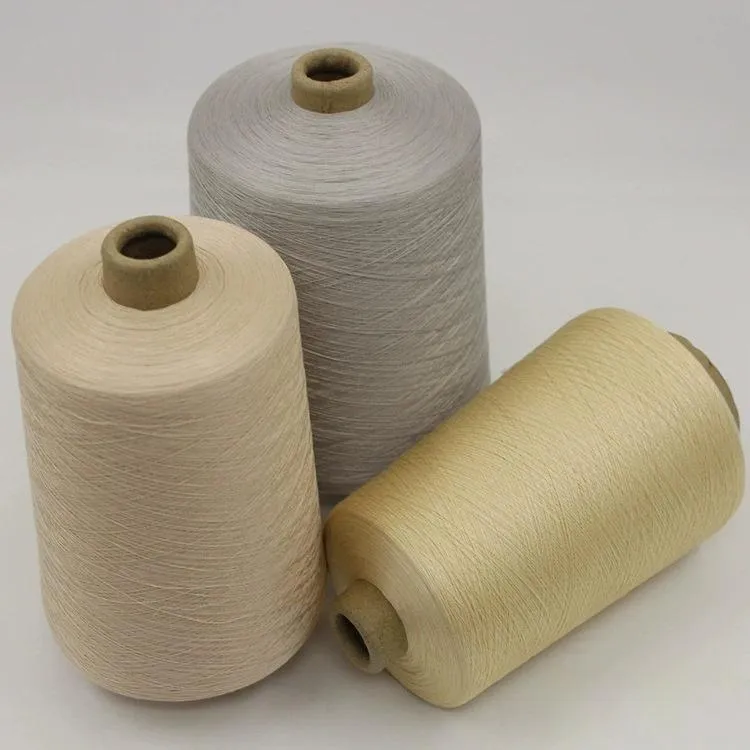
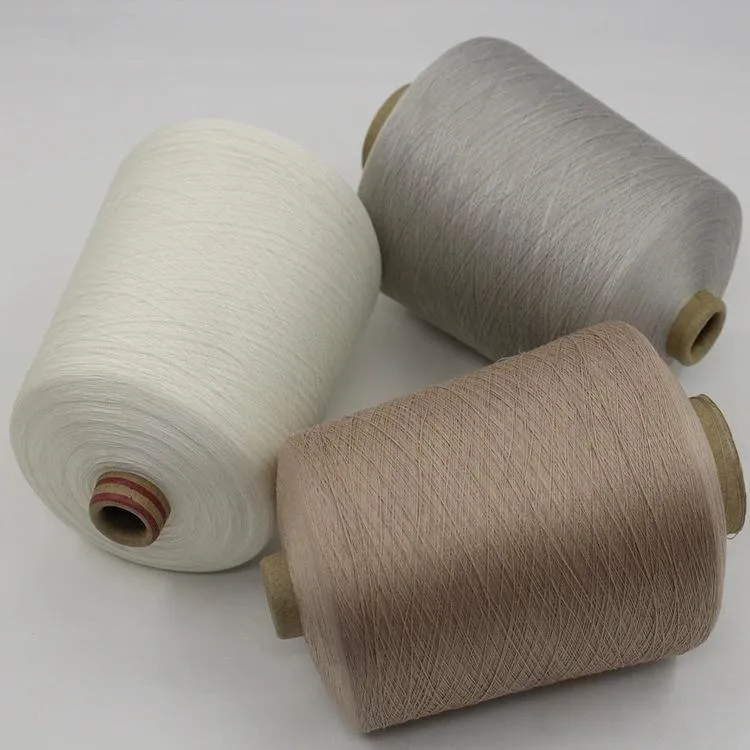
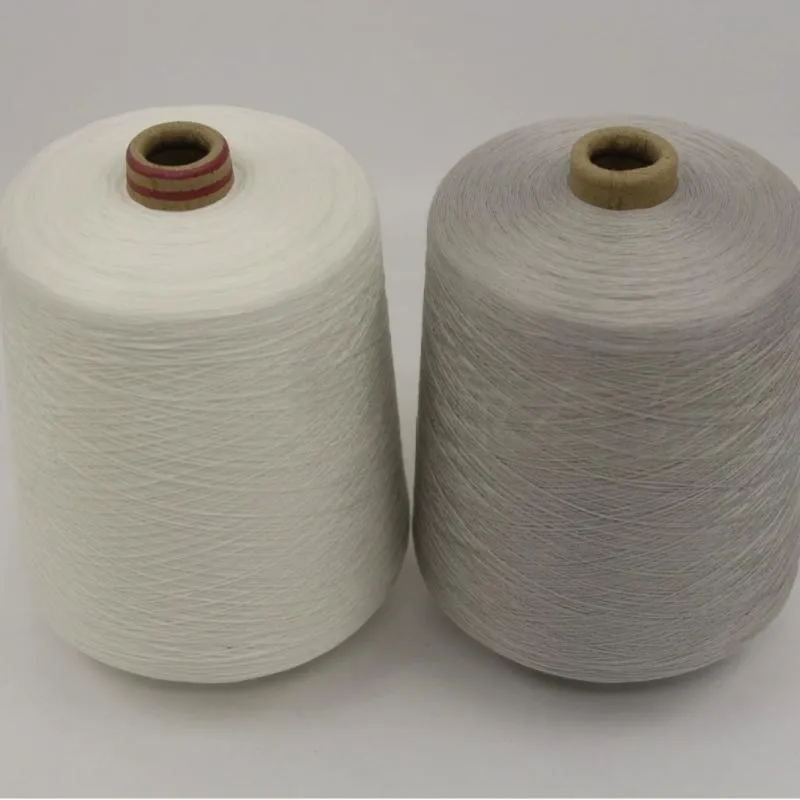
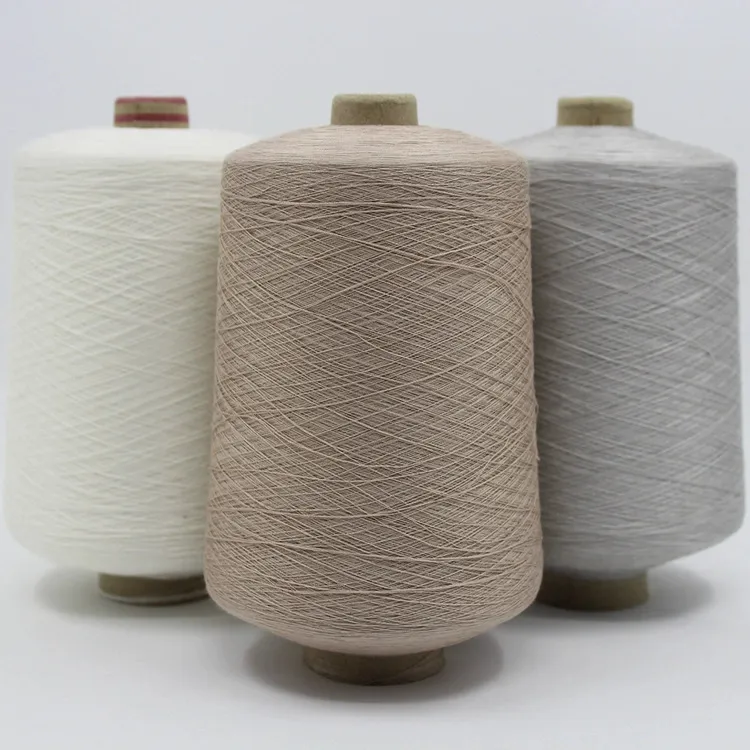
120s/2 mulberry silk yarn is a fine two-ply yarn made from 100% mulberry silk on the spun-silk system. In metric notation it is 2/120Nm, which means two 120Nm singles plied together with a medium twist. We wind it on cones for lightweight spring and summer knitwear. It also works in light woven fabrics, although the notes below focus on knitting.
Fine silk feels good on the skin, but it is less forgiving on the machine. Each single is only about 8.3 tex, so a thin place or a rough guide can break it. Plying two singles together gives the yarn enough cohesion to feed steadily. At the same time, the medium twist holds loose fiber ends in place without stiffening the hand. The knitted fabric therefore keeps the low bulk and natural luster of mulberry silk.
120s/2 Mulberry Silk Yarn Specifications
Fiber content
100% mulberry spun silk
Yarn count
120s/2, written as 2/120Nm in metric count
Resultant count
About 60Nm, roughly 16.7 tex or 150 denier
Length per kilogram
About 60,000 m before twist contraction
Construction
Two-ply, medium twist
Spinning system
Spun silk
Moisture regain
About 11% (standard reference value for mulberry silk)
Package
Cones in cartons or plastic bags
Machine reference
30 gauge as a trial starting point
Main uses
Fine-gauge knitwear; lightweight woven fabrics
Colors
Natural white, bleached white, stock shades and custom colors
What the Two-Ply Construction Changes
A fine single yarn can lose cohesion at guides, feeders or worn machine parts. When two singles are plied, they share the working load, and a thin place in one strand is carried by the other. Plying also evens out the yarn, which you notice quickly on a fabric as light as a summer silk top. Clean yarn paths and correct tension still matter, but the plied structure gives the operator more room to work with.
Feature
What it changes in production
100% mulberry spun silk
One fiber on the composition label, with the soft hand of spun silk
Two-ply construction
Steadier feeding and fewer stops caused by weak places in a single strand
Medium twist
Holds loose fibers in place while keeping the hand soft
Fine resultant count
Low fabric bulk for light tops and base layers
Cone package
Moves from incoming inspection to machine trials with less preparation
Running Fine Silk on a 30-Gauge Machine
Use 30 gauge as the first trial setting for 120s/2 mulberry silk yarn, not as a fixed recipe. Needle condition, feeder design, stitch structure and fabric density all shift the working range. So run at least one full cone on the machine you plan to use for bulk. Mulberry silk also snags easily, so one burr on a guide, eyelet or needle can break the yarn at the same point again and again. For that reason, clean and check the whole yarn path before the first cone goes on.
During the trial, a few habits make the results easier to read:
Take every trial cone from one production lot.
Start below normal production speed, then raise it in steps.
Measure feeder tension with a gauge rather than by feel.
Record stitch length, take-down, speed, tension and each break with its cause.
Inspect the first section of fabric before you run the full quantity.
If feeding becomes unstable, don’t simply raise the yarn tension. Higher tension usually brings more breaks and uneven loops. Instead, trace the cause through the contact points, cone unwinding, feeder alignment and needle condition.
Fabric Uses: Spun Silk Versus Filament Silk
Typical end uses for 120s/2 mulberry silk yarn are lightweight knitted tops, fine cardigans, base layers, scarves and other next-to-skin knitwear. Because the count is fine, the fabric stays light, while the mulberry silk gives it a soft hand and natural luster. Stitch structure decides the rest. For example, a tighter stitch improves cover but adds weight, whereas a more open stitch saves weight but shows uneven loops more easily. Finishing can also change width, hand, luster and dimensional stability, so approve the yarn on a finished fabric sample rather than on a cone or an unfinished swatch.
This is spun silk, not reeled filament silk, and the two should not be treated as interchangeable. Spun silk is made from silk staple fibers, so its surface is softer and carries fine fiber ends. Filament silk, on the other hand, is built from continuous reeled filaments and suits designs that need a smooth, continuous look. The difference starts with fiber length, which our guide to staple and filament yarn structures explains in more detail.
Stock Shades and Custom Colors
We keep 120s/2 mulberry silk yarn on hand in natural white, bleached white, red, blue, green, yellow, purple, cyan and mixed colors. Since inventory changes over time, please confirm the available quantity and dye lot before you fix a sampling date.
For custom colors, we match against an approved shade card or a physical reference. Send the target shade together with the end use and fabric structure, because silk luster changes how a color reads under different light. A yarn wrap alone may not show the final shade accurately. When shade control matters, approve the color on a knitted and finished sample, and check it under the light sources your customer uses, such as D65 and TL84.
Incoming Checks and Dye-Lot Control
When the cartons arrive, match the item code, color, dye lot and quantity against the packing documents. Then check the cartons and cones for crushing, moisture, oil marks and loose yarn ends. Any damaged carton should stay away from production until your quality team clears it.
Your purchase specification should cover:
100% mulberry spun silk composition
Count stated as 2/120Nm, two-ply, medium twist
Approved color and the dye-lot rule
Cone format and net yarn weight
Carton marks and packing quantity
Test methods, tolerances and the agreed delivery schedule
On the knitting floor, keep one dye lot within each visible garment panel, and don’t mix lots without a side-by-side shade check. Mark part-used cones with their original lot number so that repeat orders are easy to trace. After the trial is approved, keep one cone and one finished fabric cutting as control samples for the bulk order.
Storage and Handling
Silk is sensitive to sunlight and moisture. Store the cones in clean, dry cartons away from direct sun, heat, damp and chemicals, and protect the cone edges from crushing. Close open cartons after use and keep every lot label with its yarn. Move the yarn into the knitting room early enough for your normal conditioning time, since sharp changes between storage and production conditions affect how it runs. Until shade and knitting performance are both approved, keep old and new lots apart.
Ordering and Dispatch
For a new program, send us your machine type, gauge, target fabric, color, trial quantity and testing requirements. We suggest starting with a sample order and then using the knitting and finishing results to set the bulk standard. Before production starts, we confirm color, quantity, dye lot and dispatch date with you. Stock shades usually ship 1–2 days after confirmation, while custom colors and made-to-order lots take 3–15 days. Transit time then depends on the destination and shipping method.
On the purchase order, list the net yarn weight, cone quantity, carton marks and shipping documents you need. That way, your warehouse can receive and book in the 120s/2 mulberry silk yarn without guesswork.
120s/2 Mulberry Silk Yarn FAQ
Is 120s/2 silk as fine as 120s cotton yarn?
No, and the two numbers are easy to confuse. Spun silk is counted in the metric system (Nm), so 120s/2 means two 120Nm singles, or about 60Nm in total. That works out to roughly 16.7 tex or 150 denier. Cotton uses the English count (Ne) instead. A 120s cotton single is about 4.9 tex, and even a Ne 120/2 cotton is only about 9.8 tex. In cotton terms, this silk yarn sits closer to Ne 71/2. For the conversion formulas, see our guide to fiber and yarn linear density.
Will single jersey knitted from 120s/2 mulberry silk yarn skew after washing?
It is less likely to skew than a fabric knitted from a comparable single yarn. Plied yarn is usually twisted in the opposite direction to its singles, which cancels much of the torque that makes single jersey spiral. Stitch density and finishing still play a part, though, so measure the wale angle on a washed sample before you sign off bulk. Our article on twist direction and fabric skew after washing explains the mechanism.
How does wet processing affect mulberry spun silk?
Mulberry silk is noticeably weaker when wet than when dry. As a result, the knitted fabric needs gentle handling in washing, dyeing and finishing. Keep tension and mechanical action low in wet processes, and let the fabric dry fully before you judge its strength or appearance.
Why can the cone weight change between dispatch and arrival?
Silk takes up moisture from the air. Mulberry silk has a standard moisture regain of about 11%, so the same cone weighs more in a humid warehouse than in a dry one. To avoid disputes over net weight, agree in the purchase specification whether weight is taken as received or on a conditioned basis, and which conditioning procedure applies.
Which tests are worth requesting for dyed 120s/2 mulberry silk yarn?
For dyed silk that goes into next-to-skin knitwear, color fastness usually matters most. Ask for fastness to light, because silk is sensitive to sunlight, as well as fastness to washing and perspiration. Common methods include ISO 105-B02, ISO 105-C06 and ISO 105-E04. On the yarn itself, count, twist, single-end strength and elongation are the useful checks. Tell us the methods and limits you need when you place the order, so we can confirm them before production.