WhatsApp : (+86) 19058080181 Email : info@vi-tex.com

Textile Fiber Classification: Types, Properties and Uses
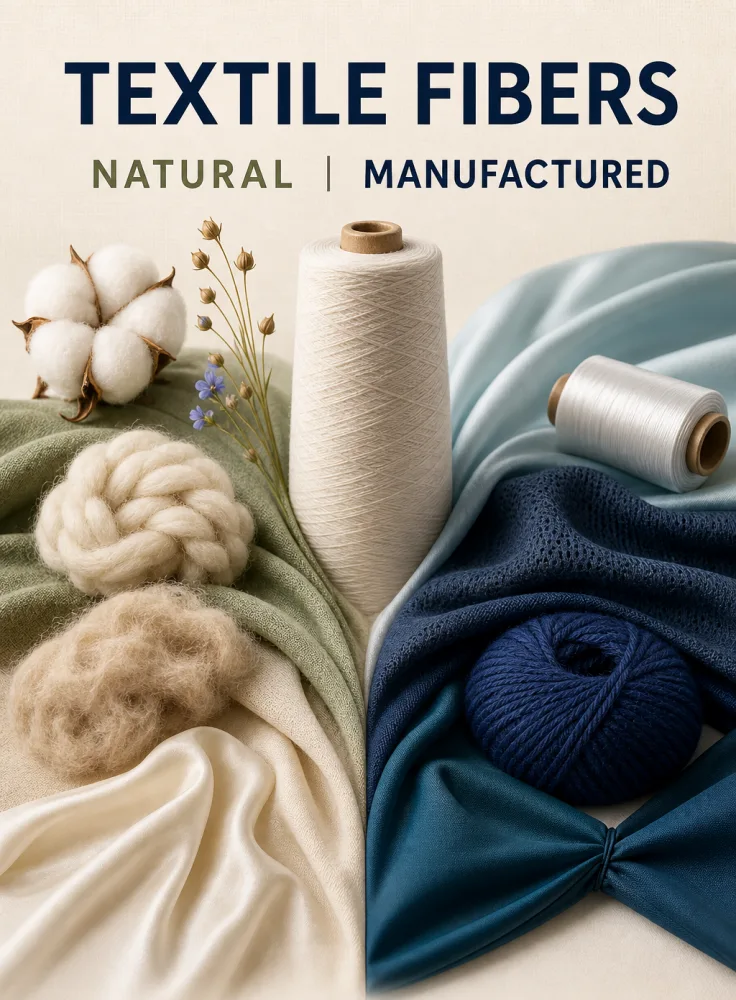
Textile fiber classification divides commonly used fibers into two main groups: natural fibers and manufactured fibers. Natural fibers include plant fibers, animal hair and silk. Manufactured fibers include regenerated cellulosic fibers, other modified natural-polymer fibers and synthetic fibers.
This classification gives us a starting point when selecting yarn, but the fiber name alone cannot determine the final fabric quality. Cotton can be soft or rather hairy. Wool can feel fine or coarse. Polyester can be smooth, bulky or highly elastic, depending on its structure and processing.
In our sample room, we normally compare the fiber content with yarn count, twist, spinning method and the intended knitted structure. A trial knit and a wash test often reveal differences that cannot be seen from the yarn label. This is especially relevant for socks, underwear, sweaters and other products worn close to the skin.
Natural Plant Fibers
Natural plant fibers consist mainly of cellulose. They are commonly divided according to the part of the plant from which the fiber is obtained.
- Seed fibers: cotton
- Bast fibers: flax, ramie and hemp
- Leaf fibers: sisal
Cotton
Cotton is a seed fiber and one of the most widely used natural fibers in knitting and weaving. It absorbs moisture, allows air to pass through the fabric and usually feels comfortable against the skin. Cotton also accepts dye well, so it is available in a broad range of colors.
These properties make cotton suitable for socks, underwear, T-shirts, shirts, towels, bedding and many other daily-use textiles. It is relatively easy to wash, although the correct care conditions still depend on the yarn, dye and fabric finish.
Cotton also has clear limitations. The fiber has limited elastic recovery, so cotton fabrics can wrinkle or lose shape. Knitted cotton may shrink after washing as the yarn and loops relax. A loose construction usually changes more than a stable, tightly controlled one.
Pilling performance cannot be decided from the word “cotton” alone. Short fibers and high yarn hairiness can create a fuzzy surface, while combed long-staple cotton generally produces cleaner yarn. Compact spinning can further reduce protruding fibers. Our comparison of Egyptian, Pima, Supima and other cotton types explains these differences in more detail under long-staple cotton yarn.
For actual production, we check whether the yarn feeds steadily and whether lint builds up around the knitting area. After the sample comes off the machine, we compare its measurements before and after washing. This gives a more useful result than judging softness from the cone only.
Flax and Linen
Flax is the plant from which linen fiber is obtained. In commercial textile descriptions, “linen” usually refers to the processed fiber, yarn or fabric.
Linen has good strength and transfers heat quickly. It normally gives fabric a cool, dry and crisp handle. It also has low static buildup and does not cling closely to the body. For these reasons, linen is widely used in summer garments, shirts, dresses, trousers, table linen and home textiles.
The same structure that gives linen its crisp character also creates several limitations. Linen has low elasticity, wrinkles easily and may feel rough when the fiber is coarse. Pure linen yarn can also be more difficult to process than cotton because the fibers have less flexibility and cohesion.
Blending linen with cotton can soften the fabric while retaining a natural appearance. Viscose may add drape, while polyester can improve dimensional stability and abrasion resistance. The blend should be selected according to the required handle rather than by composition alone.
Ramie
Ramie is a bast fiber, but it is not linen. The two names should not be used as translations of each other in specifications or product labels.
Ramie has high strength, natural luster and good moisture absorption. It dries relatively quickly and can provide a cool handle in summer fabrics. It is also more resistant to microbial deterioration than many other natural fibers under normal storage conditions.
However, ramie is stiff and has limited elasticity. The fiber can feel harsh in products worn directly against the skin, particularly when the yarn is coarse. It also has lower fiber cohesion during spinning, which is one reason ramie is often blended with cotton, viscose or polyester.
Sisal
Sisal is obtained from the leaves of the agave plant. It is strong, coarse and relatively stiff. Unlike cotton, linen and fine ramie, sisal is not normally selected for soft knitted clothing.
Its common applications include ropes, twine, floor coverings, reinforcement materials, polishing products and industrial textiles. When classifying plant fibers, intended use matters. Fibers from the same broad natural category may have completely different levels of fineness and flexibility.
Natural Animal Hair Fibers
Animal hair fibers consist mainly of protein. Their surface scales, natural crimp and internal structure affect warmth, moisture behavior, felting and dyeing performance.
Sheep Wool
Wool usually refers to fiber obtained from sheep. It has natural crimp, good elasticity and useful thermal insulation. Wool can absorb water vapor without immediately feeling wet, which helps the fabric manage changes in temperature and humidity.
Wool is used in sweaters, coats, scarves, socks, blankets and thermal underwear. Fine wool can feel soft against the skin, while coarser grades are more suitable for outerwear, carpets and heavy fabrics.
Merino wool comes from Merino sheep and is known for its relatively fine fiber diameter. Australian Merino is widely used in fine knitting yarn, although country of origin alone does not define quality. Micron, fiber length, vegetable matter, color and processing all affect the final yarn.
Wool needs careful washing. Heat, moisture and mechanical agitation can cause the scales to interlock, leading to felting and shrinkage. Wool may also pill when short fibers move out of the yarn and collect on the fabric surface. Higher twist can improve surface stability, but it may produce a firmer hand.
Wool is a protein fiber and can be damaged by moth larvae during storage. Clean, dry storage and suitable moth protection are important. Our factory checks the selected wool grade and blend ratio before spinning because changing the raw material during bulk production can alter the shade, hand and surface appearance. The main preparation and spinning stages are shown in our page on wool yarn production.
Cashmere
Cashmere is the fine undercoat fiber collected from cashmere goats. It is valued for being fine, light, soft and warm. A relatively small amount of cashmere can change the hand of a wool or synthetic blend.
Cashmere knitwear can pill, particularly when the yarn contains many short fibers or uses a loose twist. Some surface fuzz is normal for a soft cashmere product, but heavy and rapid pilling may indicate unsuitable fiber length, spinning or fabric construction.
Because cashmere is a delicate protein fiber, gentle hand washing or a suitable wool-care program is normally recommended. The garment should be dried flat and kept away from strong sunlight and high heat. Clean storage is also necessary because moth larvae are attracted to animal protein fibers.
Mohair, Alpaca, Camel Hair, Rabbit Hair and Yak
Mohair comes from the Angora goat. It is generally lustrous, resilient and warmer than many plant fibers. Its smooth surface can give yarn a clean sheen, although coarse mohair may feel prickly.
Alpaca fiber is warm, light and available in several natural colors. It has less obvious crimp than many sheep wools, so alpaca fabric may have good drape but less elastic recovery.
Camel hair is commonly collected from the soft undercoat. Fine grades feel warm and soft, while coarser hair may be used in heavier fabrics. Rabbit hair, including Angora rabbit fiber, is very fine and warm but has low cohesion. It is normally blended with wool or synthetic fiber to improve spinning stability.
Yak fiber can provide warmth and softness when the fine down is properly separated from coarse outer hair. As with cashmere, the commercial value depends heavily on fiber fineness, length, cleanliness and actual blend percentage.
Natural Silk Fibers
Mulberry Silk
Mulberry silk is produced by domesticated silkworms that feed mainly on mulberry leaves. Its long, smooth filaments give fabric natural luster, softness and a fluid drape.
Silk absorbs moisture and can feel comfortable in warm conditions. It is used in underwear, shirts, dresses, scarves, bedding and luxury blends. A continuous silk filament also has good strength for its fineness.
Even so, silk requires careful handling. It can snag on rough surfaces and lose strength under unsuitable chemical or wet-processing conditions. Prolonged sunlight may cause yellowing or fading. Strong alkaline detergents and high washing temperatures should be avoided.
Silk is not always free from static electricity. Static behavior depends on humidity, fabric construction and finishing. It is therefore better to describe silk as moisture-absorbent rather than claim that it never develops static.
Tussah Silk
Tussah silk comes from wild or semi-wild silkworm species. It is generally coarser and less uniform than mulberry silk. Its natural color often ranges from beige to yellowish brown.
The fiber has good strength, bulk and thermal performance. It is used in garments, decorative fabrics and silk-filled quilts. However, its surface is not as fine or smooth as high-quality mulberry silk, and natural irregularities are more visible.
Dupion Silk, Spun Silk and Silk Filament
Dupion silk is produced from double cocoons formed when two silkworms spin close together. The resulting yarn contains characteristic thick-and-thin places. These irregular slubs are part of the material’s appearance rather than a conventional spinning defect.
Spun silk is made from shorter silk fibers, including material left after filament processing. Its surface is softer and less lustrous than continuous filament silk. It behaves more like a fine staple yarn and can be blended with wool, cotton or cashmere.
Silk filament consists of long, continuous fibers. It generally gives a smoother, brighter and more uniform surface. Buyers should distinguish among filament silk, spun silk and dupion silk because their appearance, strength and cost are not the same.
Regenerated Cellulosic Fibers
Regenerated cellulosic fibers use cellulose obtained from natural raw materials such as wood pulp or cotton linters. The cellulose is processed into a soluble form and then made into fiber. Although the raw material is plant-based, these are manufactured fibers rather than natural fibers such as cotton or linen.
Viscose and Rayon
Viscose is one of the most common regenerated cellulosic fibers. “Rayon” is used as a broader category name in some markets, while viscose refers more specifically to fiber made through the viscose process.
Viscose has a soft hand, good moisture absorption and good dye affinity. It can produce clear, rich colors and normally generates less static than polyester in the same environment. Common applications include dresses, linings, underwear, socks and soft knitted fabrics.
Standard viscose has lower wet strength and poorer elastic recovery than cotton or polyester. Fabric may wrinkle, stretch or lose shape if the yarn structure and finishing process are not suitable. This does not mean that viscose cannot be washed. It means that washing conditions and dimensional stability need to be considered during development.
Cupro
Cupro is a regenerated cellulosic fiber commonly produced from purified cotton linters. It feels smooth, absorbs moisture and provides good drape. It is often used in lightweight clothing, linings and fabrics that need a silk-like touch.
Fine cupro fabric can be sensitive to abrasion and aggressive wet processing. It also requires suitable dyeing and finishing conditions. Care instructions should follow the finished fabric test rather than a general assumption about the fiber.
Lyocell and TENCEL™
Lyocell is a regenerated cellulosic fiber produced using a direct-solvent spinning process. TENCEL™ is a Lenzing trademark used for branded lyocell and modal fibers. Not every lyocell fiber should be called TENCEL™.
Lyocell offers good moisture absorption, relatively high strength and a smooth hand. It can produce fabrics with clean luster, good drape and comfortable skin contact. These properties suit shirts, dresses, denim, bedding and knitted underwear.
Lyocell may develop surface fibrillation under wet mechanical action. This can create either an unwanted fuzzy appearance or a controlled peach-skin effect, depending on processing. Fiber grade, enzyme treatment and finishing conditions affect the result.
Modal
Modal is another regenerated cellulosic fiber. It has a smooth surface, soft hand, good moisture absorption and better wet performance than conventional viscose.
Modal works well in underwear, socks, T-shirts, sleepwear and soft home textiles. It is frequently blended with cotton to improve drape and softness. Elastane may be added when stretch and recovery are required.
Modal is not automatically resistant to pilling. Low yarn twist, short fibers, loose knitting and surface friction can still create fuzz and pills. We normally check the fabric after washing because the initial smoothness of an unwashed sample can hide later surface changes.
The main commercial and technical distinctions are explained further in our comparison of modal, TENCEL™ and lyocell.
Acetate
Acetate is made by chemically modifying cellulose. It is therefore cellulose-derived, but its chemical structure and behavior differ from viscose, modal and lyocell.
Acetate has a silk-like luster, smooth hand and good drape. It can produce bright colors and is widely used in linings, dresses, formalwear and wedding garments.
Its moisture absorption is lower than that of viscose, and its abrasion and heat resistance are limited. High ironing temperatures may damage acetate fabric. Solvent resistance must also be considered when selecting cleaning and finishing processes.
Protein-Modified Fiber Materials
Milk-Protein and Soybean-Protein Fibers
Commercial names such as milk silk, soybean silk and protein fiber need careful interpretation. They do not always describe a fiber made entirely from milk or soybean protein.
Some products contain protein components introduced into a regenerated cellulose or synthetic polymer system. Others are blends containing viscose, acrylic, polyester, cotton or nylon. The exact composition should be confirmed through the technical specification and fiber-content test.
These materials may provide a soft hand and smooth surface, but a trade name cannot prove moisture, antibacterial or skin-care performance. Such claims need a stated test method and a result from the relevant yarn or finished fabric.
Synthetic Textile Fibers
Synthetic fibers are manufactured from polymers formed through chemical synthesis. They generally provide higher strength, shape retention or specialized performance than many natural fibers, although moisture absorption is often lower.
Polyester
Polyester has good strength, abrasion resistance and dimensional stability. It dries quickly, resists wrinkles and normally retains its shape after repeated use. These properties make it common in socks, sportswear, uniforms, home textiles, automotive interiors and industrial fabrics.
Its standard moisture regain is low, so polyester can feel warm or less breathable in some constructions. Static buildup and oil-based soil retention may also occur. Because polyester fibers are strong, pills formed on the fabric surface can remain attached for a long time.
Fiber cross-section, yarn texturing and fabric structure can change polyester performance. A textured polyester yarn feels and behaves differently from a smooth filament or staple-spun yarn. Blending polyester with cotton or viscose can balance durability, moisture absorption and cost.
Nylon or Polyamide
Nylon is the common English name for polyamide fiber. Its most notable properties are high strength and excellent abrasion resistance.
Nylon is often used in socks, hosiery, sportswear, swimwear, reinforcement yarn and industrial textiles. A small nylon percentage can improve the wear resistance of wool or cotton socks.
Compared with polyester, nylon absorbs more moisture and usually has better abrasion performance. However, heat and prolonged light exposure can cause yellowing or strength loss, depending on the nylon type and stabilizer. Static and pilling may also occur in dry conditions.
Acrylic
Often confused with nylon in translated material lists, acrylic is a distinct fiber valued for its lightweight warmth, sunlight resistance, vibrant color retention, and wool-like feel.
Common uses include sweaters, blankets, scarves, thermal socks and wool-blended yarn. Acrylic is often chosen when a product needs warmth and bulk at a lower material cost than pure wool.
Its moisture absorption and abrasion resistance are lower than those of nylon. Acrylic fabrics may pill because the fibers hold the pills on the surface. Anti-pilling acrylic grades, suitable twist and a stable knitted structure can improve the result.
Vinylon
Vinylon is mainly based on polyvinyl alcohol chemistry. It is sometimes called “synthetic cotton” because its moisture absorption is higher than that of many common synthetic fibers.
Vinylon has useful abrasion, light and chemical resistance. However, it is more difficult to dye than several other fibers and has limited elastic recovery. Poor recovery can cause wrinkles or permanent deformation.
Its resistance to dry and wet heat also requires attention. Processing temperatures should follow the supplier’s technical data rather than the settings normally used for polyester.
Polypropylene
Polypropylene is one of the lightest common textile fibers. It absorbs very little water and offers good resistance to many chemicals. It can provide warmth because the low-density fiber traps air while adding little weight.
Polypropylene is used in carpets, furniture fabrics, ropes, fishing nets, nonwovens, filtration materials and some functional base layers. It dries quickly and does not readily absorb water-based stains.
Conventional polypropylene has limited resistance to heat and prolonged sunlight. Heat setting, ironing and dyeing options are also more restricted than with polyester. UV-stabilized grades should be considered for outdoor use.
Chlorofibre
Chlorofibre refers to fibers made from chlorine-containing polymers, including certain polyvinyl chloride-based materials. Similar polymers are also found in rainwear, protective coverings and plastic footwear, although not every plastic product should be described as a textile fiber.
Chlorofibre offers chemical resistance, electrical insulation and low flammability. It can also provide thermal insulation in suitable constructions.
Its main weakness is poor heat resistance. High washing, drying or ironing temperatures may cause shrinkage, hardening or deformation. The exact temperature limit depends on the polymer and product specification.
Elastane or Spandex
Elastane, also called spandex, provides the highest stretch and recovery among the common apparel fibers in this classification. It improves garment fit, shape retention and freedom of movement.
Elastane is rarely used alone. It normally appears as a small percentage in core-spun yarn, covered yarn or plated knitting. Common applications include stretch denim, underwear, swimwear, socks and fitted sportswear.
The fiber has low moisture absorption and limited resistance to excessive heat. Chlorine, prolonged UV exposure and unsuitable dyeing conditions can also reduce elasticity. The elastane grade and percentage should match the required stretch, processing temperature and care conditions.
Comparing Fiber Properties in Yarn and Fabric
Textile fiber classification identifies the fiber family, but commercial selection requires several additional checks. Fiber fineness, staple length, yarn count, twist and spinning method all influence how the yarn behaves.
A soft fiber does not always produce a stable fabric. A strong fiber does not automatically prevent pilling. Likewise, good moisture absorption does not prove that a garment will dry quickly. The knitted construction and finishing process can change each of these results.
For a new yarn development, we normally confirm:
- the correct generic fiber name and blend percentage;
- the required yarn count, ply and twist direction;
- whether the yarn is staple-spun, filament, compact-spun or core-spun;
- the knitting-machine gauge and intended fabric structure;
- the required hand feel, strength and dimensional stability;
- the wash method used for the finished product.
A trial cone or knitted sample is useful before bulk confirmation. We check yarn feeding, broken ends, surface hairiness and visible irregularity during knitting. After washing, we compare shrinkage, shape, hand feel and pilling with the approved sample.
The final choice is usually a balance. Cotton gives moisture absorption and a familiar natural hand. Wool and cashmere provide warmth. Linen and ramie create a cooler, crisper character. Viscose, modal and lyocell add softness and drape, while polyester, nylon and acrylic contribute different levels of strength, wear resistance and easy care.
When discussing a new yarn, send us the target fiber content, yarn count, application, machine gauge and wash requirement. Our sample room can then prepare the correct trial direction and check whether the selected fiber matches the required knitted fabric.